Innovative Ocean Technology Initiatives in Lakshadweep Enhance Water Security and Clean Energy
Synopsis
The Ministry of Earth Sciences has unveiled ocean technology projects in Lakshadweep aimed at strengthening water security and advancing clean energy solutions. This initiative promises to transform the region's water resources and energy landscape.
Key Takeaways
Ocean technology initiatives in Lakshadweep focus on enhancing water security.
The LTTD technology converts seawater into drinking water.
OTEC-powered desalination aims to produce both potable water and electricity.
Projects will reduce reliance on diesel and improve access to safe drinking water.
Community involvement is crucial for the maintenance of these projects.
New Delhi, March 7 (NationPress) The Ministry of Earth Sciences announced on Saturday that the advancement of ocean technology initiatives in Lakshadweep will enhance water security and pave the way for innovative clean energy solutions in these island regions.
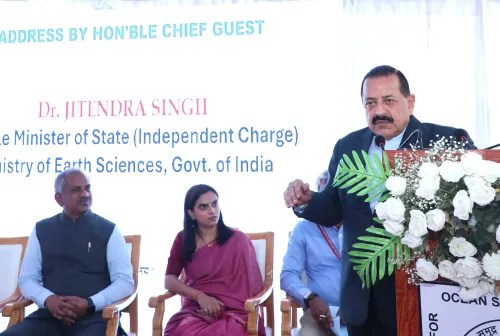
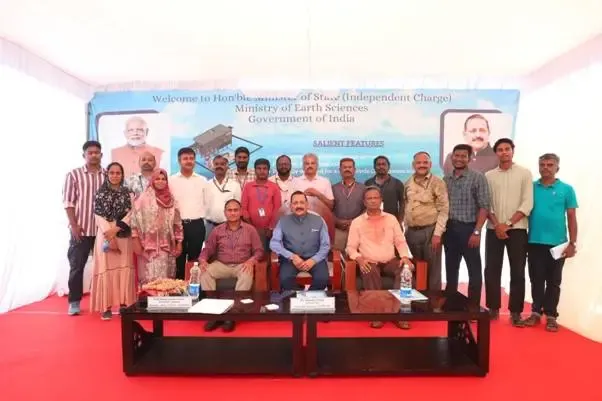
This announcement followed a review by Union Minister of State for Earth Sciences and Science and Technology, Dr. Jitendra Singh, who assessed the progress of significant projects executed by the National Institute of Ocean Technology during a meeting with scientists and officials in Kavaratti.
During this meeting, the minister evaluated the operations of the existing Low Temperature Thermal Desalination (LTTD) plants spread across the islands and reviewed the development of an upcoming Ocean Thermal Energy Conversion (OTEC)-powered desalination facility.
Officials indicated that the LTTD plants set up by the government via NIOT are currently functioning on eight islands in Lakshadweep, supplying a dependable source of drinking water in an area historically facing challenges such as limited groundwater availability, salinity problems, and dependence on seasonal rains.
“The LTTD technology transforms seawater into drinking water by utilizing the natural temperature difference between warm surface water and cold deep-sea water extracted from depths of about 350–400 meters,” the ministry stated.
Singh reviewed the operational efficiency of the plants and discussed maintenance strategies supported by trained local personnel under the Union Territory administration.
According to the ministry, officials highlighted that the availability of desalinated water has significantly improved access to safe drinking water and lessened reliance on rainwater harvesting systems throughout the islands.
Additionally, the minister examined the progress of the country's first OTEC-powered desalination plant being constructed in Kavaratti. This facility aims to generate both electricity and drinking water simultaneously by leveraging the ocean's natural thermal gradient, as stated by the government.
Officials informed the minister that civil construction for the plant is nearing its conclusion, and major processing equipment has been fabricated, with installation occurring in phases.
The project also includes the deployment of a nearly 3.8-km high-density polyethylene pipeline designed to draw cold seawater from depths exceeding 1,000 meters for the OTEC system, according to the ministry.
NIOT officials added that welding of pipeline sections is currently in progress along the southern side of the Kavaratti lagoon, with approximately 250 meters of pipeline already assembled.
Once operational, the plant is projected to produce around 100 cubic meters of potable water daily, functioning independently from the diesel-based power that currently supports much of the island’s infrastructure.
Officials conveyed that the project will assist in reducing fuel dependence while meeting the long-term water and energy demands of the island community.
Point of View
The initiatives undertaken by the Ministry of Earth Sciences reflect a significant commitment to improving water security and fostering clean energy solutions in Lakshadweep. These projects not only address the urgent needs of the island community but also exemplify a move towards sustainable development.
NationPress
28 Sept 2026
Frequently Asked Questions
What is the purpose of the ocean technology projects in Lakshadweep?
The ocean technology projects aim to enhance water security and provide clean energy solutions for the island territories.
How does the Low Temperature Thermal Desalination (LTTD) technology work?
LTTD technology converts seawater into drinking water by utilizing the temperature difference between warm surface water and cold deep-sea water.
What are the benefits of the new OTEC-powered desalination plant?
The OTEC-powered desalination plant will generate both electricity and potable water, reducing reliance on diesel-based power and addressing long-term water needs.
How many LTTD plants are currently operational in Lakshadweep?
Currently, there are LTTD plants operational across eight islands of Lakshadweep.
What impact will these projects have on the local community?
These projects will improve access to safe drinking water and reduce fuel dependence, thus supporting the long-term sustainability of the island community.