MCX CEO: Every commodity has unique supply chain, market dynamics
Synopsis
MCX CEO Praveena Rai used the Global Commodity Conclave in Mumbai to make a pointed argument: treating commodities as a monolith is a market-development failure. From crude oil to cardamom, each product carries a distinct risk fingerprint — and India's exchange infrastructure must keep pace. The electricity derivatives session added an urgent subplot: a segment that remains far behind global peers.
Key Takeaways
MCX MD & CEO Praveena Rai addressed the Global Commodity Conclave in Mumbai on 13 August .
Rai stressed that commodities such as crude oil , gold , copper , and cardamom each operate within entirely distinct supply chains and risk ecosystems.
The conclave brought together domestic and international stakeholders across energy, metals, and agricultural commodity segments.
Former CERC member Arun Goyal moderated a session on electricity derivatives, flagging that India's market in this segment lags global benchmarks.
Participants called for greater market depth and improved risk-management tools for India's evolving power sector.
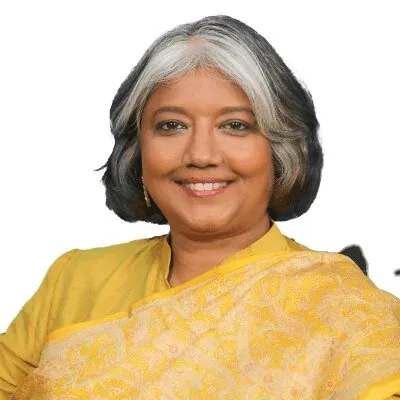
Multi Commodity Exchange of India (MCX) Managing Director and Chief Executive Officer Praveena Rai on Thursday, 13 August said that the Global Commodity Conclave serves as a vital forum precisely because no two commodities operate the same way — each carries its own supply chain, market structure, and risk profile. Speaking at the event in Mumbai, Rai underscored that industry-wide dialogue is essential for the sustained development of India's commodities markets.
Why the Conclave Matters
Rai described the gathering as a rare space where financial participants meet commodity specialists across the full value chain. 'This conclave is very important because there are financial participants on one side and you see each and every commodity. Suppose crude oil and natural gas or gold and silver, copper, aluminum, zinc or cardamom, each commodity is a separate supply chain,' she said.
The event drew both domestic and international stakeholders, covering a broad spectrum — from energy products such as crude oil and natural gas, to metals including gold, silver, copper, aluminium, and zinc, to agricultural commodities such as cardamom.
Distinct Ecosystems, Distinct Risks
Rai noted that each commodity functions within its own ecosystem, with differences in production dynamics, import dependence, refining processes, inventory management practices, industrial demand patterns, and exposure to price volatility. 'Their production, import, refining, inventory management, industry, and what is the volatility of the commodity, what is the impact of the global environment, what is the impact of the geopolitical environment, each commodity is different,' she said.
She added that global macroeconomic conditions and geopolitical developments affect individual commodities in markedly different ways, reinforcing the case for commodity-specific, focused market discussions rather than a one-size-fits-all approach.
Electricity Derivatives: An Underdeveloped Frontier
The conclave also featured a dedicated session on the future of electricity derivatives in India. Arun Goyal, former member of the Central Electricity Regulatory Commission (CERC), moderated a panel of experienced industry professionals who shared recommendations for deepening the country's electricity derivatives market.
Goyal observed that India's electricity derivatives segment remains relatively underdeveloped compared to global benchmarks. He stressed the need for greater market depth and broader participation to support the evolving power sector and to equip stakeholders with more effective risk-management tools.
India's Commodities Landscape: The Bigger Picture
The conclave reflects a broader push to strengthen India's commodities ecosystem at a time when global supply chains face heightened uncertainty from geopolitical tensions, climate-related disruptions, and shifting trade flows. For MCX — the country's largest commodity derivatives exchange — convening such cross-sector dialogue is both a market-development imperative and a regulatory responsibility.
With international participation adding a global lens to domestic market challenges, the conversations at this year's conclave are expected to inform policy recommendations and exchange-level product development in the months ahead.
Point of View
When the reality is far more granular. The electricity derivatives gap Goyal flagged is the more urgent story: India's power sector is undergoing rapid transformation through renewables and open-access reforms, yet the risk-hedging tools that global markets take for granted remain thin here. MCX has a commercial interest in expanding its derivatives suite, but that interest aligns with a genuine policy need. The question is whether regulatory bandwidth at CERC and SEBI will match the pace of sectoral change.
NationPress
27 Sept 2026
Frequently Asked Questions
What is the MCX Global Commodity Conclave?
The Global Commodity Conclave is an industry forum organised to bring together financial participants, commodity producers, traders, and international stakeholders to discuss market development, supply chain dynamics, and risk management across commodity segments. It is associated with the Multi Commodity Exchange of India (MCX), the country's largest commodity derivatives exchange.
What did MCX CEO Praveena Rai say at the conclave?
Praveena Rai said that every commodity — from crude oil and natural gas to gold, copper, and cardamom — operates within a distinct supply chain, with unique production, import, refining, inventory, and volatility characteristics. She argued that this complexity makes focused, commodity-specific industry dialogue essential for market development.
What is the state of electricity derivatives in India?
According to former CERC member Arun Goyal, who moderated a dedicated panel at the conclave, India's electricity derivatives market remains relatively underdeveloped compared to global benchmarks. Participants called for greater market depth and broader participation to support the country's evolving power sector.
Why do geopolitical and global economic conditions matter for commodities?
Different commodities respond differently to global macroeconomic shifts and geopolitical events — for instance, crude oil is highly sensitive to Middle East tensions, while agricultural commodities are more exposed to monsoon and trade-policy risks. Rai highlighted this divergence as a key reason why commodity-specific market discussions are necessary.
Who participated in the Global Commodity Conclave?
The conclave featured both domestic and international stakeholders spanning energy, metals, and agricultural commodity segments, alongside financial market participants and former regulators such as Arun Goyal of CERC.