Urban mobility must lead city planning, says Minister Manohar Lal at UMI 2026
Synopsis
At the 19th UMI Conference in Bhubaneswar, Union Minister Manohar Lal unveiled a 3-I framework — Integration, Inclusiveness, Intelligence — for India's urban transport future, backed by 9 new metro projects worth ₹59,000 crore and a total operational network of 1,185 km across 26 cities. With India's urban population heading toward 600 million, the push to make mobility a planning input rather than an output may define how liveable its cities become.
Key Takeaways
Union Minister Manohar Lal addressed the valedictory session of the 19th UMI Conference in Bhubaneswar on 24 October 2026 .
The Centre has approved 9 metro rail projects covering 174 km at a cost exceeding ₹59,000 crore since December 2025 .
India's total operational metro network now stands at 1,185 km across 26 cities , with 102 km added in the recent period.
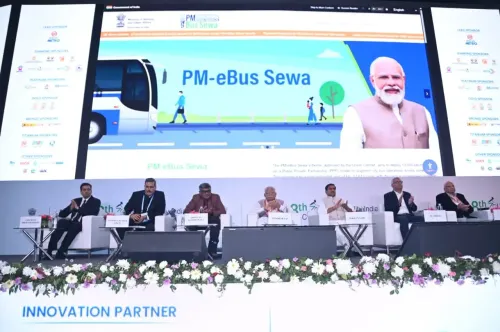
The PM e-Bus Sewa scheme has deployed 1,100 electric buses in 28 cities , serving around 2.5 lakh passengers daily .
Delhi's Transit-Oriented Development (TOD) Policy , approved in April 2026 , covers nearly 207 sq km along metro, RRTS, and railway corridors.
The conference drew approximately 1,500 delegates from India and abroad.
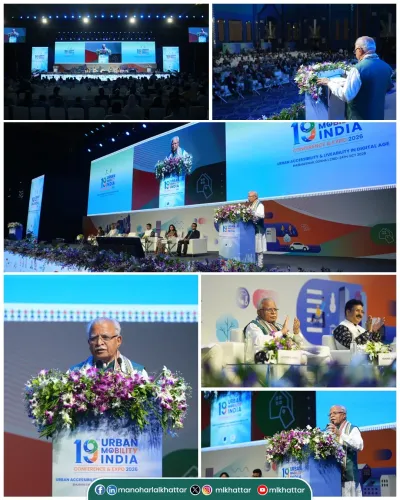
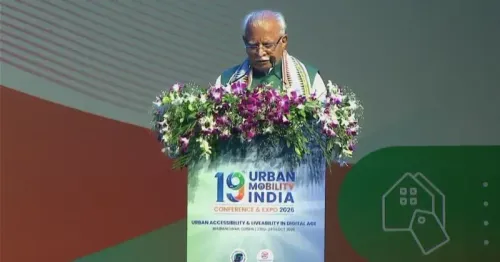
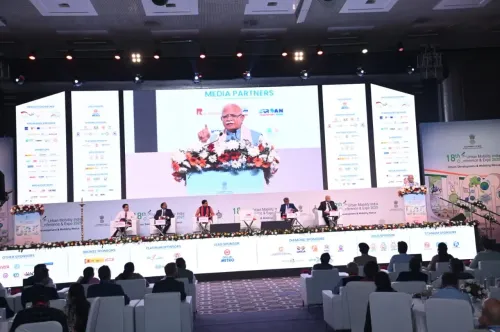
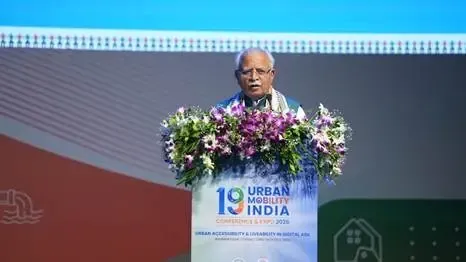
Union Minister for Housing and Urban Affairs and Power Manohar Lal on Saturday, 24 October 2026, declared that urban mobility must be embedded into city planning from the very beginning — not treated as an afterthought — asserting that transport infrastructure has evolved into a primary driver of economic growth rather than a byproduct of it. The minister was speaking at the valedictory session of the 19th Urban Mobility India (UMI) Conference and Exhibition in Bhubaneswar, Odisha.
The 3-I Framework for India's Future Cities
Laying out a national vision, Manohar Lal said India's future mobility systems must be built around three guiding principles — Integration, Inclusiveness, and Intelligence — collectively termed the 3-I framework. Under Integration, the emphasis is on seamless multimodal connectivity linking metro, bus, and rail networks, with robust first- and last-mile solutions to bridge critical gaps.
Inclusiveness, he said, demands that public transport be safe and accessible for women, senior citizens, and persons with disabilities. The Intelligence pillar calls for deploying artificial intelligence and real-time data analytics to sharpen traffic management, enhance passenger safety, and improve operational efficiency across urban transport systems.
Metro Expansion: 174 km Approved, 102 km Already Operational
Highlighting concrete progress, the minister said the Centre has approved nine new metro rail projects spanning approximately 174 km at a combined cost of more than ₹59,000 crore since December 2025. During the same period, an additional 102 km of metro network became operational, pushing India's total operational metro footprint to 1,185 km across 26 cities. This positions India as one of the fastest-expanding metro markets in the world.
PM e-Bus Sewa: 1,100 Electric Buses Across 28 Cities
Reviewing the PM e-Bus Sewa scheme, Manohar Lal said 1,100 electric buses are now in service across 28 cities, collectively carrying approximately 2.5 lakh passengers daily. The scheme represents one of the Centre's most visible pushes toward decarbonising urban public transport, though analysts note that scale-up to tens of thousands of buses — as originally envisioned — remains a work in progress.
Delhi's TOD Policy: 207 sq km of Planned Development
The minister also cited the Transit-Oriented Development (TOD) Policy approved for Delhi in April 2026 as a landmark step toward integrating land use with mobility corridors. The policy is designed to enable planned urban development and affordable housing across nearly 207 sq km along metro, Rapid Rail Transit System (RRTS), and railway corridors — a model that urban planners have long advocated for Indian megacities.
Conference Draws 1,500 Delegates
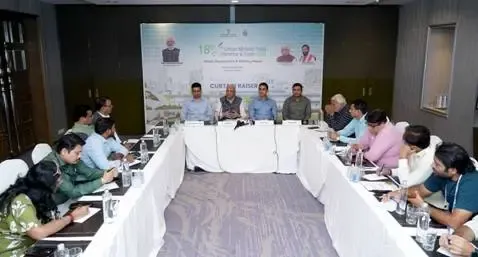
The two-day UMI Conference was organised by the Ministry of Housing and Urban Affairs through the Institute of Urban Transport (India), with support from the Odisha government. It drew around 1,500 delegates from India and abroad. This is the 19th edition of the annual conclave, which has become a key platform for shaping national urban transport policy. As India's urban population is projected to surpass 600 million by 2036, the pressure on city governments to plan mobility proactively — rather than reactively — will only intensify.
Point of View
185 km is a milestone — but coverage gaps, ridership density, and last-mile integration remain the harder metrics, ones that the 3-I framework addresses in principle but which the data does not yet confirm in practice. The PM e-Bus Sewa figure of 1,100 buses across 28 cities is a fraction of the scale needed to meaningfully shift modal share away from private vehicles. The real test of the TOD policy will be whether affordable housing actually materialises along Delhi's corridors, or whether, as past experience in other Indian cities suggests, land value capture benefits developers rather than low-income commuters. Policy vision at UMI conferences has historically outpaced on-ground delivery.
NationPress
24 Oct 2026
Frequently Asked Questions
What is the 3-I framework for urban mobility announced at the UMI Conference?
The 3-I framework — Integration, Inclusiveness, and Intelligence — is a guiding vision for India's future urban mobility systems, outlined by Union Minister Manohar Lal at the 19th UMI Conference in Bhubaneswar on 24 October 2026. Integration focuses on seamless multimodal connectivity; Inclusiveness on safe and accessible transport for all groups; and Intelligence on AI and real-time data for smarter traffic and operations.
How many metro rail projects has the Centre approved recently, and at what cost?
The Centre has approved nine new metro rail projects covering approximately 174 km at a combined cost of more than ₹59,000 crore since December 2025. An additional 102 km also became operational in the same period, taking India's total operational metro network to 1,185 km across 26 cities.
What is the PM e-Bus Sewa scheme and how many buses are running?
PM e-Bus Sewa is a Central government initiative to deploy electric buses in Indian cities as part of clean urban transport. As of October 2026, 1,100 electric buses are operating in 28 cities under the scheme, carrying around 2.5 lakh passengers daily.
What is the Transit-Oriented Development (TOD) Policy approved for Delhi?
The TOD Policy for Delhi, approved in April 2026, aims to enable planned urban development and affordable housing across nearly 207 sq km along metro, RRTS, and railway corridors. It is intended to integrate land use with transport infrastructure to reduce urban sprawl and improve housing access near transit nodes.
What was the 19th Urban Mobility India (UMI) Conference about?
The 19th Urban Mobility India Conference and Exhibition was a two-day national conclave held in Bhubaneswar, organised by the Ministry of Housing and Urban Affairs through the Institute of Urban Transport (India) with Odisha government support. It drew around 1,500 delegates from India and abroad to discuss urban transport policy, metro expansion, electric buses, and smart city mobility solutions.