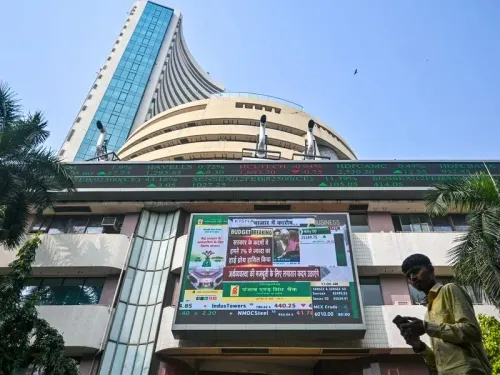
Sensex, Nifty log third straight weekly loss on rate, geopolitical fears
Synopsis
Indian markets logged their third straight weekly decline, caught between Fed rate caution from Jackson Hole, CAS-driven volatility in F&O stocks, and a global risk-off mood. The only bright spot: IT, lifted by Nvidia's blowout results. With US non-farm payrolls due 4 September, the next directional move is still being written in Washington.
Key Takeaways
Nifty50 fell 0.31 per cent for the week, closing at 24,175 on 29 August — its third consecutive weekly loss.
BSE Sensex shed 0.36 per cent for the week, ending Friday at 77,264 , up 330 points on the day.
Nifty IT index gained around 2.45 per cent , the top sectoral performer, boosted by Nvidia results and global tech optimism.
Brent crude dropped over 4 per cent to around $88 per barrel on improved Strait of Hormuz shipping expectations.
Volatility from the new Closing Auction Session (CAS) for F&O stocks added to short-term price dislocations in heavyweight counters.
US non-farm payrolls data, due 4 September , is the next major trigger for market direction.
Indian equity benchmarks posted losses for the third consecutive week as of 29 August, weighed by concerns over global interest rates, geopolitical uncertainty, and fresh volatility linked to the introduction of the Closing Auction Session (CAS) for futures and options stocks. Despite a partial recovery on Friday, the broader trend remained under pressure.
Weekly and Friday Close
The Nifty50 declined 0.31 per cent over the week, closing at 24,175 after gaining 0.35 per cent on the final trading day. The BSE Sensex ended Friday up 330 points, or 0.43 per cent, at 77,264, though it still shed 0.36 per cent across the week. The Friday rebound was driven largely by strong buying in IT stocks, supported by upbeat global technology cues.
Jackson Hole and the Rate Anxiety
Remarks by US Federal Reserve Chairman at the Jackson Hole symposium kept investors cautious about the future trajectory of interest rates, with markets increasingly pricing in a less accommodative policy environment. Rising uncertainty around US inflation and bond yields could continue to influence foreign institutional investor flows into emerging markets such as India, analysts noted.
Sectoral Performance: IT Leads, Banking Lags
Sectoral performance remained mixed during the week. The Nifty IT index was the standout performer, gaining around 2.45 per cent, buoyed by renewed global technology optimism and encouraging results from Nvidia. Pharma and select metal stocks also attracted buying interest. In contrast, weakness in select banking and consumer stocks continued to weigh on the broader benchmarks.
Crude Relief and Geopolitical Risk
Brent crude declined by over 4 per cent during the week to around $88 per barrel, as markets reacted to expectations of improved shipping conditions through the Strait of Hormuz. Lower crude prices provided some relief to energy-sensitive sectors. However, analysts cautioned that geopolitical risks remain elevated, and any renewed disruption to energy supplies could quickly reverse the recent decline.
Key Levels and What to Watch
For the Nifty50, the 24,000–23,800 zone is the immediate support area, while 24,300–24,400 marks the key resistance band. For Bank Nifty, support is placed around 56,900–56,500, with the 57,800–58,000 zone as the immediate resistance. Investors will closely track domestic GDP data and global economic releases in the coming sessions. The US non-farm payrolls report for August is scheduled for release on 4 September, and is expected to be a key determinant of market direction.
Point of View
And the Jackson Hole commentary has made that dependency more acute. The CAS rollout for F&O stocks added an avoidable layer of domestic volatility at precisely the wrong moment — regulators will need to watch whether the price dislocations it caused were a one-off or a structural feature. Meanwhile, the IT sector's outperformance, riding Nvidia's coattails, flatters the headline numbers. Strip out IT, and the picture is considerably weaker. With FII flows sensitive to US bond yields and the non-farm payrolls print still ahead, the market's near-term fate is being decided far outside Dalal Street.
NationPress
29 Aug 2026
Frequently Asked Questions
Why did Nifty and Sensex fall for a third straight week?
Indian benchmarks declined for the third consecutive week ended 29 August, pressured by caution over global interest rates following remarks at the Jackson Hole symposium, geopolitical uncertainty, and volatility linked to the new Closing Auction Session for F&O stocks. Foreign institutional flows were also affected by rising US inflation concerns and higher bond yields.
What is the Closing Auction Session (CAS) and why did it cause volatility?
The Closing Auction Session is a newly introduced mechanism for F&O stocks that determines the closing price through an auction window rather than continuous trading. The monthly derivatives expiry saw sharp price movements during this session, raising concerns about increased short-term volatility and price dislocations in heavyweight stocks.
Which sectors performed well and which lagged during the week?
The Nifty IT index was the top performer, gaining around 2.45 per cent on the back of global technology optimism and strong Nvidia results. Pharma and select metal stocks also saw buying interest. Banking and consumer stocks were among the laggards, weighing on broader benchmark performance.
What happened to crude oil prices and why does it matter for Indian markets?
Brent crude fell over 4 per cent to around $88 per barrel during the week, driven by expectations of improved shipping through the Strait of Hormuz. Lower crude prices ease costs for energy-sensitive sectors in India, but analysts warn that geopolitical risks remain elevated and any supply disruption could reverse the decline quickly.
What are the key levels to watch for Nifty and Bank Nifty?
For the Nifty50, immediate support lies in the 24,000–23,800 zone, with resistance at 24,300–24,400. Bank Nifty has support around 56,900–56,500, while the 57,800–58,000 band is the key resistance area, according to market participants.