India launches world's first nuclear-hydrogen Cu-Cl facility at Kalpakkam
Synopsis
India has quietly pulled off a global first: a working hydrogen production facility powered entirely by nuclear process heat, using an indigenously developed thermochemical cycle at Kalpakkam. If it scales, it could reshape how India — and the world — thinks about carbon-free hydrogen as an industrial fuel.
Key Takeaways
India inaugurated the world's first nuclear-powered Cu–Cl thermochemical hydrogen facility at IGCAR, Kalpakkam .
The facility uses process heat from the Fast Breeder Test Reactor (FBTR) to produce carbon-free hydrogen.
The Copper–Chlorine (Cu–Cl) thermochemical process was developed indigenously by BARC, Mumbai .
Dr Ajit Kumar Mohanty , Secretary, DAE , and IGCAR Director Sreekumar G.
Pillai highlighted the achievement's role in India's clean energy transition.
The technology builds on over 40 years of Fast Breeder Test Reactor experience at IGCAR.
The facility is currently a demonstrator; commercial-scale deployment will require further development and investment.
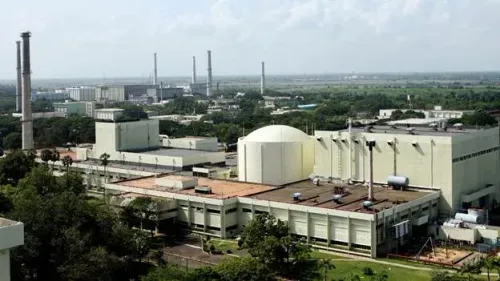
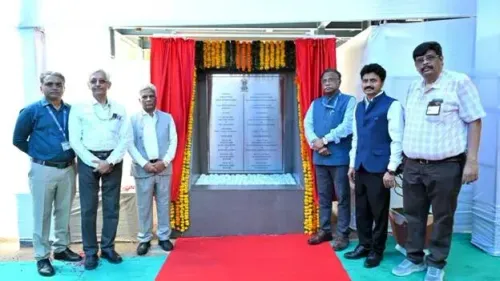
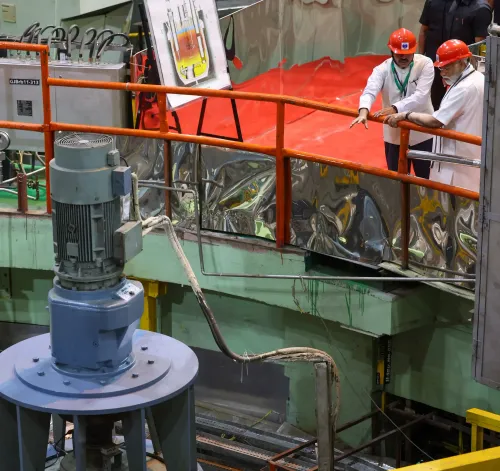
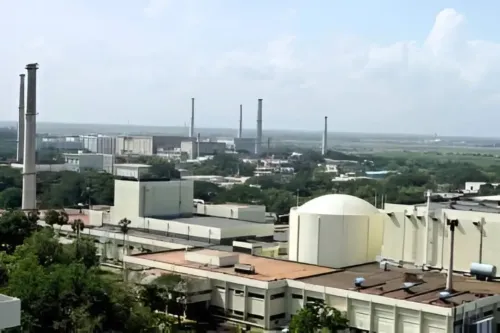
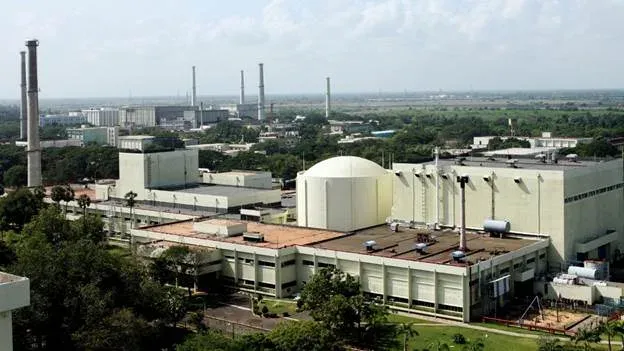
India has inaugurated the world's first Hydrogen Production Facility based on the Copper–Chlorine (Cu–Cl) Thermochemical Cycle, harnessing nuclear process heat from the Fast Breeder Test Reactor (FBTR) at the Indira Gandhi Centre for Atomic Research (IGCAR), Kalpakkam. The facility, developed under the Department of Atomic Energy (DAE), marks a landmark moment in India's clean energy and advanced nuclear technology programme.
What the Facility Does
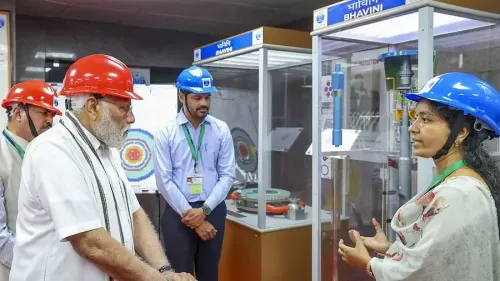
The installation serves as a technology demonstrator, validating the production of hydrogen through the Cu–Cl thermochemical process developed indigenously by the Bhabha Atomic Research Centre (BARC), Mumbai. By using nuclear process heat rather than fossil fuels or grid electricity, the cycle produces hydrogen with a near-zero carbon footprint. Officials describe the successful integration of nuclear heat with hydrogen generation as a 'pioneering technological breakthrough.'
Nuclear power's dual capacity — delivering reliable, carbon-free electricity alongside high-temperature process heat — makes it uniquely suited to large-scale hydrogen production, according to the government. This positions the technology as a potential cornerstone of India's decarbonisation strategy and long-term energy security framework.
What the Government Said
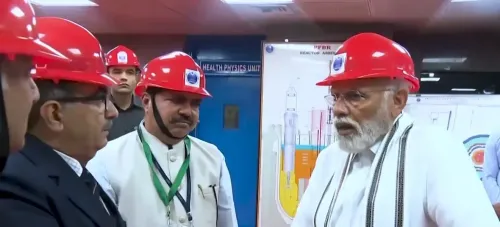
Dr Ajit Kumar Mohanty, Secretary of the Department of Atomic Energy (DAE) and Chairman of the Atomic Energy Commission (AEC), underscored the strategic significance of the development. 'I congratulate the scientists, engineers and technical teams of BARC and IGCAR whose sustained dedication, innovation and technical excellence have transformed an advanced scientific concept into an operational reality. This achievement is a testament to India's growing capabilities in advanced nuclear technologies and clean energy systems,' he said.
Sreekumar G. Pillai, Director of IGCAR, noted that the breakthrough builds on more than four decades of operational experience through the Fast Breeder Test Reactor programme. 'The successful demonstration of hydrogen production using nuclear process heat showcases the versatility of advanced nuclear systems and underscores IGCAR's commitment to developing innovative technologies that contribute to India's clean energy transition and long-term energy security,' he said.
Why This Matters for India
India has committed to ambitious clean energy targets, and green hydrogen is widely seen as critical to decarbonising hard-to-abate sectors such as steel, fertilisers, and heavy transport. Until now, most hydrogen production globally has relied on natural gas reforming — a carbon-intensive process. Nuclear-driven thermochemical cycles offer a scalable, emissions-free alternative that does not depend on intermittent renewable generation.
Notably, the Cu–Cl process was developed entirely in-house by BARC, signalling a meaningful advance in India's indigenous nuclear technology capabilities. This comes amid growing global interest in nuclear energy as a clean baseload option, with several countries revisiting reactor programmes shelved after Fukushima in 2011.
The Road Ahead
The Kalpakkam facility is currently a demonstrator, and scaling the technology to commercial hydrogen output will require further engineering and investment. The DAE's integration of the Cu–Cl cycle with the FBTR opens a pathway for larger advanced reactors — including India's planned 500 MW Prototype Fast Breeder Reactor (PFBR) — to eventually anchor industrial-scale hydrogen hubs. How quickly that transition occurs will depend on policy support, capital allocation, and the pace of India's broader nuclear expansion.
Point of View
But the gap between a technology demonstrator and commercial-scale hydrogen output is vast — and that gap rarely gets the scrutiny it deserves in official announcements. India's hydrogen ambitions are large, yet the economics of nuclear-thermochemical hydrogen versus electrolyser-based green hydrogen remain unproven at scale. The more consequential question is whether the DAE's roadmap links this demonstrator to a funded, time-bound commercialisation plan — or whether Kalpakkam joins a long list of impressive proofs-of-concept that stall at the pilot stage. With the PFBR still awaiting full commissioning, the infrastructure backbone for scaling this technology is itself a work in progress.
NationPress
27 Jun 2026
Frequently Asked Questions
What is the world's first nuclear hydrogen facility inaugurated at Kalpakkam?
It is a technology demonstrator that produces hydrogen using nuclear process heat from the Fast Breeder Test Reactor (FBTR) at IGCAR, Kalpakkam, through an indigenously developed Copper–Chlorine (Cu–Cl) thermochemical cycle. It is the first facility of its kind in the world, developed by BARC and IGCAR under the Department of Atomic Energy.
What is the Copper–Chlorine (Cu–Cl) thermochemical cycle?
The Cu–Cl cycle is a multi-step chemical process that uses high-temperature heat — in this case from a nuclear reactor — to split water and produce hydrogen without burning fossil fuels. It was developed indigenously by the Bhabha Atomic Research Centre (BARC) in Mumbai and produces hydrogen with a near-zero carbon footprint.
Why is nuclear-powered hydrogen production significant for India?
Most hydrogen produced globally today comes from natural gas reforming, which is carbon-intensive. Nuclear-driven thermochemical hydrogen offers a scalable, emissions-free alternative that supports India's decarbonisation goals and energy security without dependence on intermittent renewable sources.
Who led the development of this hydrogen facility?
The facility was developed by teams at the Bhabha Atomic Research Centre (BARC), Mumbai, and the Indira Gandhi Centre for Atomic Research (IGCAR), Kalpakkam, under the Department of Atomic Energy. Dr Ajit Kumar Mohanty, Secretary of DAE, and IGCAR Director Sreekumar G. Pillai both credited the sustained work of scientists and engineers across both institutions.
When will this technology be available at commercial scale?
The Kalpakkam facility is currently a technology demonstrator and is not yet at commercial scale. Scaling to industrial hydrogen output will require additional engineering, investment, and potentially integration with larger reactors such as India's planned 500 MW Prototype Fast Breeder Reactor (PFBR). No official commercial timeline has been announced.