OpenAI's ChatGPT superapp overhaul: Codex, AI agents, and partner services
Synopsis
OpenAI isn't just updating ChatGPT — it's rebuilding it as a superapp. With Codex front and centre, partner services from Canva and Booking.com embedded, and business customers already driving 40% of revenue, this overhaul is as much an IPO pitch as a product upgrade. The chatbot era at OpenAI may be giving way to a platform era.
Key Takeaways
OpenAI is reportedly planning its biggest-ever ChatGPT redesign, turning it into a 'superapp' with coding tools, AI agents, and partner integrations.
Codex , OpenAI's coding product, will receive increased prominence; most Codex users are paid subscribers.
Partner services including Canva and Booking.com will be integrated directly into the ChatGPT interface.
Around 2 million business customers currently contribute nearly 40% of OpenAI's revenue, a share expected to rise to 50% by end-2025.
ChatGPT has more than 900 million weekly active users and over 50 million paid consumer subscribers.
The overhaul comes amid reports of a confidential US IPO filing and intensifying competition with Anthropic .
OpenAI is reportedly preparing the most sweeping redesign of ChatGPT to date, with plans to transform the platform into a 'superapp' by embedding coding tools, AI agents, and third-party partner services into a unified ecosystem. The overhaul, expected to roll out in the coming weeks, is part of a broader commercial push ahead of a potential US stock market listing, according to a Financial Times report citing more than a dozen current and former employees.
What the Overhaul Involves
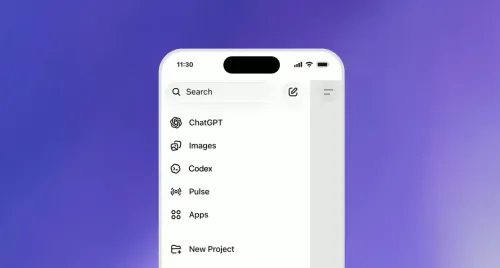
The redesign will initially surface across ChatGPT's website and mobile applications, with the interface reworked to actively direct users toward dedicated tools — including coding features, image generation, and integrated partner services from platforms such as Canva and Booking.com. Central to the update is increased prominence for Codex, OpenAI's coding product, which is set to become a flagship offering within the revamped app.
The Business Case Behind the Shift
The timing is deliberate. According to the Financial Times report, approximately 2 million business customers currently account for nearly 40 per cent of OpenAI's revenue — a share the company expects to climb to around 50 per cent by the end of the year. Most Codex users are paid subscribers, making the coding segment a high-value lever in OpenAI's monetisation strategy. This comes amid intensifying competition with rival AI firm Anthropic, as both companies vie for enterprise market share.
Scale of ChatGPT's Current Reach
ChatGPT currently serves more than 900 million weekly active users, according to figures shared earlier by OpenAI. Its paid consumer subscriber base has crossed 50 million users. The superapp pivot is designed to deepen engagement among this base while unlocking new revenue streams through partner integrations and productivity tools.
IPO Ambitions in the Background
The overhaul also arrives against the backdrop of OpenAI's reported preparations for a confidential filing for a US initial public offering (IPO), first reported in May 2025. CEO Sam Altman has said the timing of any listing would depend on broader strategic considerations. Notably, transforming ChatGPT into a multi-functional platform with demonstrable enterprise revenue would significantly strengthen the company's valuation narrative ahead of any public market debut.
What This Means for the AI Landscape
The move signals a clear strategic inflection: OpenAI is no longer positioning ChatGPT purely as a conversational AI assistant but as an all-in-one productivity and services hub — a model that echoes the 'superapp' playbook seen in Asian markets. This is the company's most explicit acknowledgement yet that standalone chatbot utility, while vast in reach, is insufficient as a long-term revenue engine. The integration of partner services also opens a potential marketplace model, where third-party platforms pay for placement and user access within the ChatGPT interface.
Point of View
The product pivot is essentially an investor pitch: we are not a chatbot, we are a platform. The risk is execution. Superapps have historically succeeded in markets where a single app fills an infrastructure gap; in Western markets dominated by entrenched productivity suites — Microsoft 365, Google Workspace — ChatGPT will need more than interface rearrangement to displace existing workflows. The Anthropic rivalry adds urgency, but urgency-driven product decisions have a poor track record in enterprise software.
NationPress
22 Oct 2026
Frequently Asked Questions
What is OpenAI's ChatGPT superapp overhaul?
OpenAI is reportedly redesigning ChatGPT into a 'superapp' that combines coding tools, AI agents, and integrated partner services such as Canva and Booking.com within a single platform. The overhaul is expected to roll out in the coming weeks across ChatGPT's website and mobile apps, according to a Financial Times report.
What role does Codex play in the new ChatGPT?
Codex, OpenAI's coding product, is set to receive significantly increased prominence in the redesigned ChatGPT interface. Most Codex users are already paid subscribers, making it a key revenue driver in the company's enterprise-focused strategy.
How many users does ChatGPT currently have?
ChatGPT serves more than 900 million weekly active users, according to figures shared by OpenAI. Its paid consumer subscriber base has crossed 50 million users.
How significant are business customers to OpenAI's revenue?
Approximately 2 million business customers currently contribute nearly 40 per cent of OpenAI's revenue. That share is expected to rise to around 50 per cent by the end of the year, according to the Financial Times report.
Is OpenAI planning an IPO?
Reports from May 2025 indicated that OpenAI was preparing a confidential filing for a US initial public offering. CEO Sam Altman has said the timing of any listing would depend on broader strategic considerations, without committing to a specific date.