PLI scheme: ₹2.58 lakh crore invested, 14.57 lakh jobs created across 14 sectors
Synopsis
India's PLI framework has quietly become one of the most consequential bets in modern Indian industrial policy — ₹2.58 lakh crore in investment, ₹23.79 lakh crore in production, and 14.57 lakh jobs across 14 sectors. Mobile imports have collapsed 77%, 191 bulk drugs are now made domestically, and IT Hardware exports grew 77% annually. With NITI Aayog now reviewing gaps, the next chapter will determine whether the scheme's early wins can be replicated in sectors still lagging.
Key Takeaways
India's PLI scheme has attracted ₹2.58 lakh crore in cumulative investment across 14 sectors and 791 approved applications as of 30 June 2026 .
Cumulative production and sales have crossed ₹23.79 lakh crore , with exports boosted by ₹15.53 lakh crore .
Over 14.57 lakh jobs created — 8.81 lakh direct and 5.75 lakh indirect — concentrated in IT Hardware, LSEM, and Solar PV Modules.
Mobile phone imports declined nearly 77% ; first-time domestic manufacturing of 191 bulk drugs achieved under the scheme.
Electronics production grew 15.8% year-on-year to ₹13.11 lakh crore in 2025-26 .
NITI Aayog's November 2026 assessment finds 70% of targeted segments broadly on track; incentive disbursals stand at 18.5% of total outlay.
India's Production-Linked Incentive (PLI) framework has cemented its place as one of the country's most consequential industrial policy tools, with 791 approved applications spanning 14 sectors, cumulative actual investment exceeding ₹2.58 lakh crore, and cumulative production and sales crossing ₹23.79 lakh crore as of 30 June 2026, according to government data. The scheme has simultaneously generated over 14.57 lakh direct and indirect jobs and driven exports worth ₹15.53 lakh crore.
Key Outcomes at a Glance
Of the 14.57 lakh jobs created, 8.81 lakh are direct and 5.75 lakh are indirect, concentrated in IT Hardware, Large-Scale Electronics Manufacturing (LSEM), and Solar PV Modules. Cumulative incentive disbursements have reached ₹36,754 crore, a figure the government says reflects the scheme's strictly performance-linked architecture — companies receive payouts only after meeting production thresholds.
Notably, a separate NITI Aayog impact assessment dated November 2026 pegs direct job creation at 8.49 lakh and incentive disbursals at ₹35,354 crore — representing 18.5% of the total allocated outlay. The assessment also finds that nearly 70% of targeted segments are broadly on track, signalling execution headroom in the remaining sectors.
Electronics and IT Hardware Lead the Pack
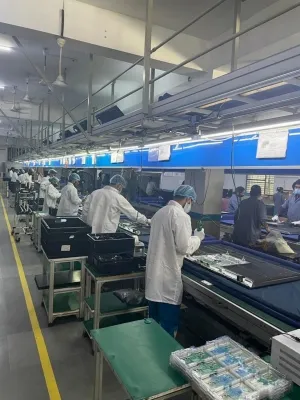
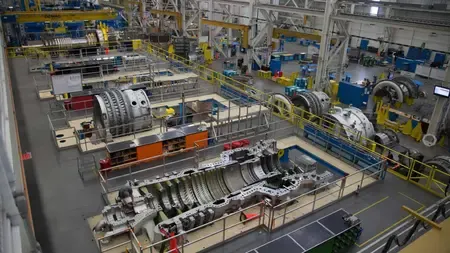
The electronics and IT Hardware cluster has been the largest beneficiary of the PLI framework. The now-completed LSEM scheme saw companies collectively invest ₹20,580.20 crore — nearly three times the initial target of ₹7,000 crore — and achieve cumulative production of ₹11,61,505 crore, with direct employment of 1,69,249 workers. Total incentive disbursements under LSEM reached ₹19,090.98 crore till June 2026.
Overall electronics production rose from ₹11.32 lakh crore in 2024-25 to ₹13.11 lakh crore in 2025-26, a year-on-year jump of 15.8%. Mobile phone imports declined nearly 77% over the scheme period — one of the clearest indicators of deepening domestic localisation.
Export Momentum Across Sectors
Between 2021 and 2025, several PLI-supported sectors recorded strong average annual export growth: IT Hardware led at 77.2%, followed by ACC Batteries at 45%, Electronics at 38.8%, Solar PV Modules at 23.9%, and Specialty Steel at 22.5%. Telecom exports reached ₹21,033 crore, and the scheme enabled first-time domestic manufacturing of 191 bulk drugs — a milestone for a country that imports the bulk of its active pharmaceutical ingredients.
India is currently the world's third-largest pharmaceutical industry by volume and 11th largest by value. The PLI scheme for pharmaceuticals carries a financial outlay of ₹15,000 crore covering the period 2020-21 to 2028-29, targeting high-value products and technological upgradation.
NITI Aayog Consultations Aim to Plug Gaps
NITI Aayog is currently conducting inter-ministerial consultations to strengthen PLI frameworks in underperforming sectors, with the stated goal of reducing India's dependence on imports. The consultations come as the scheme enters a more mature phase: early-mover sectors like electronics have largely delivered, while newer cohorts — including advanced chemistry cells and drones — are still ramping up.
This comes amid a broader global push for supply-chain resilience, with India positioning itself as an alternative manufacturing hub to China. The PLI framework, in this context, is as much a geopolitical hedge as it is a domestic jobs programme.
What Comes Next
With 30% of targeted segments reportedly lagging plan, the pressure on the Centre to refine eligibility criteria and tighten performance benchmarks is rising. Industry bodies and NITI Aayog's review process will likely produce revised guidelines in the coming months, potentially extending or restructuring incentives for sectors where import dependence persists. The scheme's long-term credibility will hinge on whether disbursement rates — currently at 18.5% of total outlay — accelerate meaningfully by the time scheme windows close.
Point of View
But the disbursement figure tells a more cautious story: only 18.5% of total allocated outlay has actually been released, which means the scheme's self-reported success is still largely a production story, not a full incentive-settlement story. The 30% of segments lagging targets — quietly buried in NITI Aayog's assessment — are precisely the ones where import dependence is highest and domestic capability thinnest. LSEM's strong performance risks flattering the aggregate, masking underdelivery in sectors like ACC Batteries and drones that India needs most for strategic autonomy. The real policy test over the next two years is whether revised guidelines can replicate the electronics success in harder, capital-heavier sectors.
NationPress
15 Nov 2026
Frequently Asked Questions
What is the PLI scheme and how has it performed so far?
The Production-Linked Incentive (PLI) scheme is India's flagship industrial policy that disburses cash incentives to companies that meet defined production targets across 14 sectors. As of 30 June 2026, it has attracted ₹2.58 lakh crore in investment, generated cumulative production of ₹23.79 lakh crore, and created 14.57 lakh direct and indirect jobs.
How many jobs has the PLI scheme created in India?
The PLI scheme has generated over 14.57 lakh jobs in total — 8.81 lakh direct and 5.75 lakh indirect — primarily in IT Hardware, Large-Scale Electronics Manufacturing, and Solar PV Modules. A separate NITI Aayog assessment from November 2026 puts the direct job count at 8.49 lakh.
Which sectors have benefited most from the PLI scheme?
Electronics and IT Hardware have been the largest beneficiaries. The completed LSEM scheme saw investment nearly three times its initial target, while IT Hardware recorded average annual export growth of 77.2% between 2021 and 2025. Pharmaceuticals, Solar PV Modules, ACC Batteries, and Specialty Steel have also shown strong momentum.
What is NITI Aayog's role in the PLI scheme review?
NITI Aayog is conducting active inter-ministerial consultations to strengthen PLI frameworks in underperforming sectors. Its November 2026 impact assessment found that roughly 70% of targeted segments are broadly on track, while around 30% are lagging, prompting calls for revised eligibility and performance criteria.
How much has the government disbursed as PLI incentives?
Cumulative incentive disbursements have reached ₹36,754 crore according to the official factsheet, while NITI Aayog's November 2026 assessment puts the figure at ₹35,354 crore — equivalent to 18.5% of the total allocated outlay. The performance-linked structure means companies receive payouts only after meeting production benchmarks.