Robotics PLI, R&D tax breaks should anchor Budget 2027-28: ASSOCHAM
Synopsis
ASSOCHAM's pre-budget pitch for 2027-28 goes well beyond routine asks — it calls for a first-of-its-kind robotics PLI, the revival of 200 per cent R&D tax deductions that were quietly withdrawn years ago, and battery-decoupled EV financing for MSMEs. Together, these proposals signal where India's industry believes the next manufacturing leap must come from.
Key Takeaways
ASSOCHAM submitted pre-budget recommendations for Union Budget 2027-28 on 17 November 2026 .
It called for a dedicated PLI scheme covering robotics, automation equipment, sensors and precision components.
The body urged reinstatement of 200 per cent weighted R&D tax deductions and related incentives removed in earlier budgets.
Sectors flagged for greater policy support include specialty steel, textiles, white goods, ACC batteries and solar PV modules .
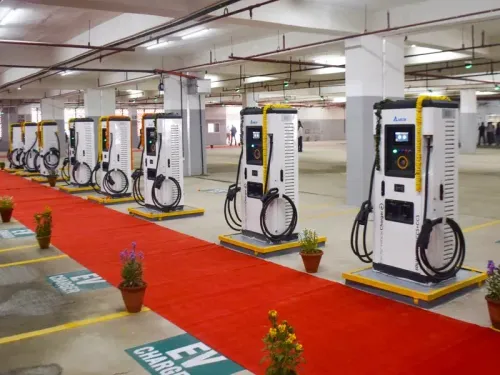
On EVs, ASSOCHAM proposed battery-decoupled vehicle registration, a 3 per cent interest subvention for MSME fleet owners and loan tenures of 7–8 years .
The body also sought dedicated funding and clinical research grants for the AYUSH sector to aid international validation.
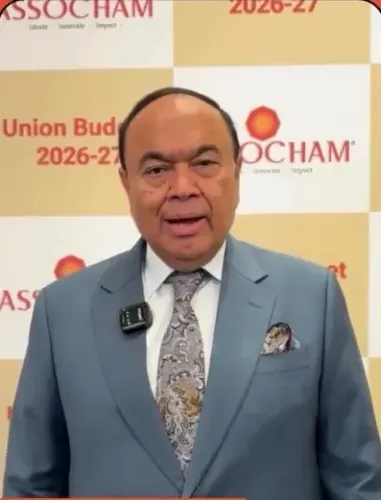
ASSOCHAM on Tuesday, 17 November 2026 urged the Centre to prioritise advanced manufacturing, MSME competitiveness and energy security in the upcoming Union Budget 2027-28, calling for a dedicated production-linked incentive (PLI) scheme for robotics and the restoration of enhanced tax incentives for research and development. The recommendations, submitted as formal pre-budget proposals, reflect growing industry concern that India's manufacturing share of GDP remains far short of its long-stated target.
The Case for a Robotics PLI
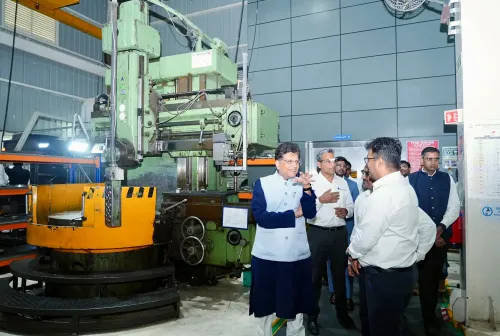
The industry body recommended 'a dedicated PLI scheme for robotics, automation equipment, sensors, precision components and related technologies, encouraging domestic production, research and development, investment, technological self-reliance and India's emergence as a globally competitive advanced manufacturing hub.'
ASSOCHAM also called on the government to strengthen existing PLI schemes to help raise manufacturing's contribution to GDP to 25 per cent — a goal India has pursued for over a decade without sustained progress. Sectors including specialty steel, textiles, white goods, ACC batteries and solar PV modules were flagged as needing greater policy support through simplified compliance, timely incentive disbursals and improved implementation.
Restoring R&D Tax Incentives
A central plank of ASSOCHAM's proposals is the reinstatement of enhanced R&D incentives, which were scaled back in earlier budgets. India historically supported private innovation through 200 per cent weighted tax deductions, 100 per cent deductions on eligible capital expenditure, tax benefits for industry-academia collaboration, customs duty exemptions on scientific equipment, accelerated depreciation and tax holidays for eligible R&D companies.
The body argued that reinstating these provisions could boost private investment in indigenous technology and improve global competitiveness at a time when rival manufacturing economies are ramping up their own R&D incentive frameworks. This is the second consecutive year ASSOCHAM has flagged the absence of robust R&D deductions as a structural gap in India's industrial policy toolkit.
MSME and EV Financing Proposals
On the MSME front, ASSOCHAM proposed allowing electric vehicles to be registered and financed without batteries — a move aimed at reducing upfront costs for small fleet operators. It further recommended a 3 per cent interest subvention for MSME fleet owners and an extension of loan tenures to seven or eight years, aligned with battery warranties, to ease the transition to cleaner mobility.
These proposals come amid broader government efforts to accelerate EV adoption, though financing structures for commercial EV fleets remain a persistent pain point for smaller operators.
AYUSH Sector Funding in Focus
ASSOCHAM also called for dedicated government-industry clinical research programmes, alongside grants and funding support, to scientifically validate traditional Ayurveda and AYUSH formulations. The body argued that greater scientific validation would enable wider international acceptance — a key step in expanding India's herbal and wellness export footprint.
What Happens Next
Pre-budget consultations with industry bodies typically feed into the Ministry of Finance's internal deliberations ahead of the February budget presentation. Whether the government acts on these specific proposals will depend on its fiscal headroom and stated priorities for the year. All eyes will be on whether the Union Budget 2027-28 marks a decisive shift toward deep industrial policy or remains incremental.
Point of View
If designed with the same production-milestone discipline that improved later PLI rounds, could genuinely accelerate import substitution in a sector where India currently has near-zero domestic capacity. The harder question is implementation: without resolving the persistent delays in incentive disbursal that have plagued existing PLI schemes, adding new ones risks piling ambition onto a creaking execution framework.
NationPress
17 Nov 2026
Frequently Asked Questions
What is ASSOCHAM's main Budget 2027-28 recommendation?
ASSOCHAM's headline proposal is a dedicated PLI scheme for robotics, automation equipment, sensors and precision components, aimed at making India a globally competitive advanced manufacturing hub. It has also called for the restoration of enhanced R&D tax incentives and stronger support for MSMEs and the AYUSH sector.
What R&D tax incentives is ASSOCHAM asking to restore?
The industry body is seeking reinstatement of provisions that were previously available under Indian tax law, including 200 per cent weighted deductions on R&D expenditure, 100 per cent deductions on eligible capital expenditure, customs duty exemptions on scientific equipment, accelerated depreciation and tax holidays for eligible R&D companies.
How does ASSOCHAM propose to support MSME EV adoption?
ASSOCHAM has proposed allowing electric vehicles to be registered and financed without batteries to lower upfront costs, combined with a 3 per cent interest subvention for MSME fleet owners and loan tenures extended to seven or eight years to match battery warranties.
Which manufacturing sectors does ASSOCHAM say need more Budget support?
Beyond robotics, ASSOCHAM highlighted specialty steel, textiles, white goods, ACC batteries and solar PV modules as sectors requiring simplified compliance, timely incentive disbursals and improved implementation to boost domestic value addition.
What is the significance of a robotics PLI for India?
India currently has limited domestic production capacity in robotics and automation — sectors where China, Japan and Germany dominate globally. A dedicated PLI could attract investment, reduce import dependence and position India as a supplier of advanced manufacturing components, complementing broader 'Make in India' goals.