BRICS must have greater say in global tax rules, says FM Sitharaman
Synopsis
Finance Minister Nirmala Sitharaman used India's BRICS chairmanship to push for a permanent institutional overhaul of how developing economies engage in global tax rule-making — proposing two working groups designed to survive the chairmanship handover to China in 2027. The move signals India's intent to convert diplomatic hosting rights into lasting multilateral leverage on tax policy.
Key Takeaways
Finance Minister Nirmala Sitharaman addressed the inaugural BRICS Tax Heads meeting in New Delhi on 23 September 2026 .
India has proposed two new working groups: one on international taxation and transfer pricing , and one on revenue statistics .
Both groups are designed to outlast India's 2026 BRICS chairmanship , with China taking over in 2027 .
Sitharaman flagged that transfer pricing disputes impose a disproportionate burden on developing-country tax administrations.
India's faceless assessment , AI-enabled taxpayer assistance , and real-time invoice authentication systems have drawn interest from BRICS partners.
The BRICS Young Tax Professionals Programme is being considered for institutionalisation as an annual event at the National Academy of Direct Taxes, Nagpur .
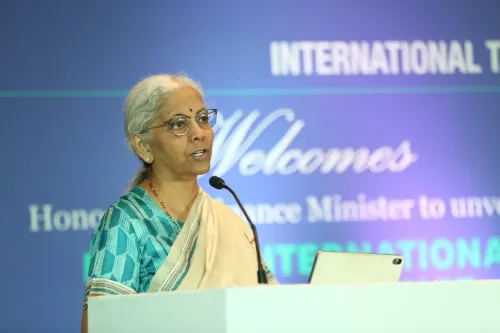
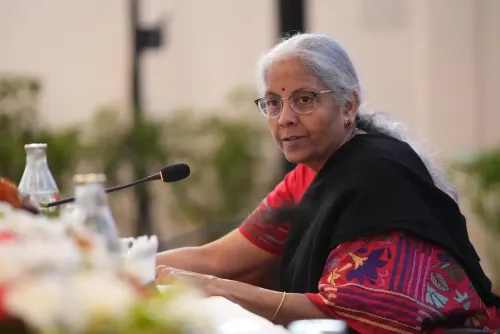
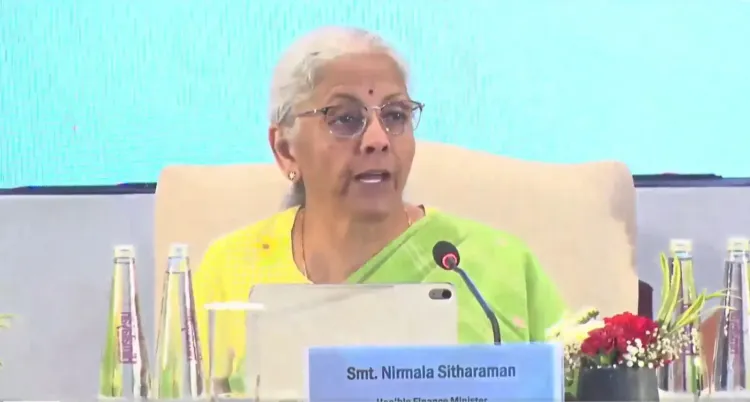
Finance Minister Nirmala Sitharaman on Wednesday, 23 September 2026, called on BRICS countries to collectively strengthen their voice in the ongoing renegotiation of international tax rules, arguing that the perspectives of large developing economies are essential to making those negotiations both fair and durable. She was addressing the inaugural session of the BRICS Tax Heads meeting in New Delhi.
Why BRICS Must Lead the Charge
Sitharaman underscored that BRICS nations are significant source jurisdictions that have built substantial domestic tax capacity from a low base, making their inclusion in global tax rule-setting non-negotiable. She warned that existing revenue frameworks, largely designed for advanced economies, distort the fiscal reality of developing countries. 'Transfer pricing disputes cost developing countries' administrations disproportionately. Revenue frameworks that don't fit our system realities distort how we are seen and how we see ourselves,' she said.
India Proposes Two New Working Groups
In a concrete institutional move, India has proposed two new working groups under the BRICS tax cooperation architecture: one focused on international taxation and transfer pricing, and the other on revenue statistics. Both groups are deliberately designed to outlast India's 2026 BRICS chairmanship, with China set to take over the chairmanship in 2027.
Revenue Secretary Arvind Shrivastava elaborated that the international taxation and transfer pricing group will serve as a permanent platform for member administrations to exchange experience on treaty interpretation, transfer pricing audits, advance pricing agreements, mutual agreement procedures, and multilateral negotiations. The revenue statistics group, meanwhile, aims to build a measurement framework that reflects the economic realities of BRICS members rather than imported benchmarks designed for different systems.
India's Digital Tax Model Draws BRICS Interest
Sitharaman highlighted the rapid transformation of tax administrations from paper-based, relationship-dependent systems to data-driven and digital platforms. India's own experience — encompassing faceless assessment, pre-filled returns, real-time invoice authentication, and AI-enabled taxpayer assistance — has drawn active interest from BRICS partner nations, she said. India has also developed the Tax Collaboration Tool, Tax Knowledge Hub, and Cross-Learning Lab as collaborative infrastructure, while a VAT Modernisation Report and an HR Development Index are currently under development.
Institutionalising People and Knowledge Exchange
The meeting also took up the proposal to institutionalise the BRICS Young Tax Professionals Programme as an annual event hosted at the National Academy of Direct Taxes in Nagpur. The inaugural in-person edition, held in April, brought together young tax officials from seven BRICS countries for a week-long curriculum on international taxation. The BRICS Tax Support Network, whose terms of reference are being finalised, is intended to provide a practical platform for supporting tax administrations and promoting ease of doing business across member economies.
What Comes Next
The working groups and support network represent India's bid to embed its institutional priorities into a permanent BRICS tax cooperation framework before the chairmanship transitions to China. Whether these mechanisms translate into tangible shifts at the OECD or UN tax negotiating tables — where the real rule-writing happens — will be the true measure of their impact. The direction set at this meeting is likely to shape the BRICS tax agenda well into the next chairmanship cycle.
Point of View
Where the real rule-writing power sits. Developing-country coalitions have raised similar demands for decades with limited results. The two proposed working groups are sound architecture — the test is whether they produce common positions strong enough to move negotiations, or merely become forums for experience-sharing that leaves the global framework unchanged.
NationPress
23 Sept 2026
Frequently Asked Questions
What did Finance Minister Sitharaman say at the BRICS Tax Heads meeting?
Sitharaman called on BRICS countries to strengthen their collective voice in the ongoing renegotiation of international tax rules, arguing that these large developing economies are source jurisdictions whose perspectives are essential to fair and lasting negotiations. She also announced two new institutional working groups proposed by India.
What are the two new working groups India has proposed under BRICS?
India has proposed a working group on international taxation and transfer pricing, and a second on revenue statistics. The transfer pricing group will facilitate exchange of experience on treaty interpretation, audits, and multilateral negotiations, while the revenue statistics group will build a measurement framework suited to BRICS economic realities.
Why is India's BRICS chairmanship significant for these tax initiatives?
India holds the BRICS chairmanship in 2026 and is using it to embed institutional tax cooperation mechanisms that are designed to outlast its term. China takes over the chairmanship in 2027, so the working groups and the BRICS Tax Support Network are intended to ensure continuity beyond India's hosting role.
How has India's domestic tax technology drawn BRICS interest?
India's systems — including faceless assessment, pre-filled returns, real-time invoice authentication, and AI-enabled taxpayer assistance — have attracted interest from BRICS partners looking to modernise their own tax administrations. India has also built the Tax Collaboration Tool, Tax Knowledge Hub, and Cross-Learning Lab for collective use.
What is the BRICS Young Tax Professionals Programme?
It is a capacity-building initiative that brings together young tax officials from BRICS member countries for training on international taxation. The first in-person programme was held in April, hosting officials from seven BRICS countries at the National Academy of Direct Taxes in Nagpur, and it is now being considered for institutionalisation as an annual event.