Starbucks Korea prepaid balances hit $276 million amid regulatory gap
Synopsis
Starbucks Korea is sitting on $276 million in unregulated customer funds — and a legal loophole means financial authorities have no oversight over it. That story alone would be notable, but it has collided with a separate firestorm: a promotional campaign launched on the anniversary of the 1980 Gwangju massacre that critics say trivialised two of South Korea's darkest historical moments.
Key Takeaways
Starbucks Korea held 420 billion won ($276 million) in prepaid card balances at end- 2025 , up 8.2% year-on-year.
The funds fall outside South Korean financial regulations because Starbucks Korea is both the card issuer and sole place of redemption.
Customers must use at least 60% of their remaining balance before they can request a refund, effectively limiting access.
A 18 May tumbler promotion using phrases 'Tank Day' and 'Tak on the desk!' was pulled within hours after critics linked it to the 1980 Gwangju uprising and the 1987 torture death of student activist Park Jong-cheol .
The Ministry of SMEs and Startups reviewed but ultimately decided not to revoke the Prime Minister's Commendation awarded to Starbucks Korea in November .
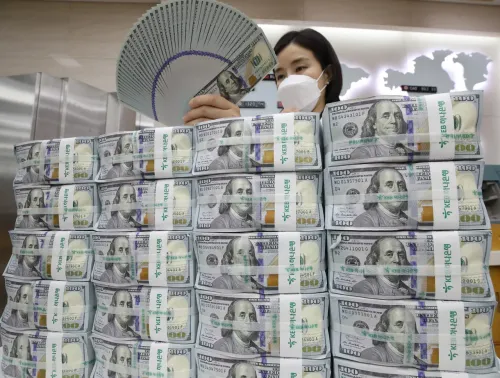
Starbucks Korea's prepaid card balances reached 420 billion won ($276 million) at the close of 2025, according to the company's audit report released on Sunday, 25 May, spotlighting a significant regulatory blind spot that leaves hundreds of millions in customer funds outside the oversight of South Korea's financial authorities.
The Regulatory Gap
The figure represents an 8.2 percent rise from 395 billion won recorded a year earlier — a trajectory that has drawn fresh scrutiny from financial regulation experts. Under South Korean law, prepaid instruments are defined as payment methods used to purchase goods or services from third parties. Because Starbucks Korea acts as both the card issuer and the sole place of redemption, its prepaid cards fall outside the legal definition and are therefore exempt from regulations governing prepaid electronic payment instruments.
This legal carve-out means that despite holding what amounts to a sizeable float of customer money, the coffee chain faces no mandatory supervisory requirements comparable to those applied to banks or licensed payment firms. Experts have noted that refund access is also constrained in practice: customers must exhaust at least 60 percent of their remaining card balance before they become eligible to request a refund.
The Marketing Controversy
The regulatory debate has converged with a separate and politically charged controversy over a Starbucks Korea promotional campaign launched on 18 May — the anniversary of the 1980 Gwangju pro-democracy uprising. The chain introduced a tumbler promotion that day featuring phrases including 'Tank Day' and 'Tak on the desk!', but withdrew it within hours after a public backlash.
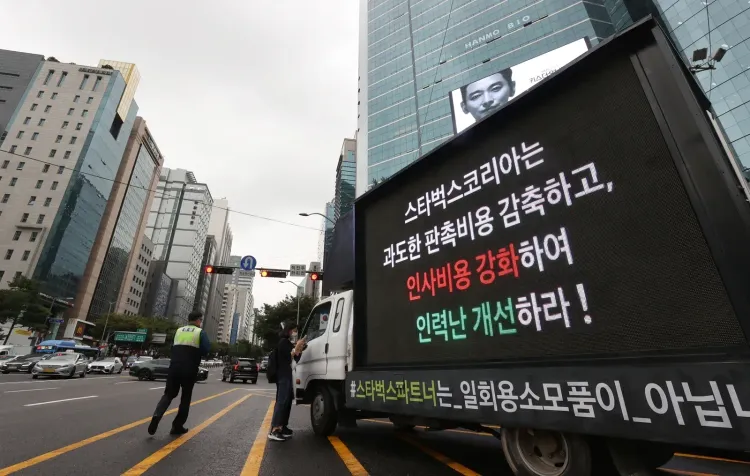
Critics argued that 'Tank Day' invoked memories of the military crackdown on the Gwangju uprising, during which then Army General Chun Doo-hwan deployed troops to suppress civilians before seizing power through a military coup. The phrase 'Tak on the desk!' was seen as a reference to a police claim made during the 1987 torture death of student activist Park Jong-cheol, in which authorities reportedly said he died after a desk was struck with a 'tak' sound. The dual association with two of South Korea's most sensitive historical episodes triggered consumer calls for an unconditional refund policy on prepaid cards.
The Government's Response
The controversy prompted the Ministry of SMEs and Startups to review whether to revoke the Prime Minister's Commendation awarded to Starbucks Korea in November of the previous year. The award had recognised the company's efforts to develop beverages using domestic agricultural products and its support for small merchants and local farms.
A ministry official said the government had examined the matter carefully. 'As the recent issue has become a social controversy, we reviewed the honour granted to Starbucks Korea,' the official said. 'As we concluded that Starbucks Korea's contributions and the current issue are not directly related, we decided to exclude the case from the list of potential revocations,' the official added. Some observers, however, maintain that the government retains the authority to revoke the commendation given the scale of the public backlash.
What Comes Next
The twin pressures — a growing unregulated float and a reputational crisis — have intensified calls for South Korean financial authorities to revisit the legal definition of prepaid instruments. Analysts note that as digital wallets and brand-specific prepaid ecosystems expand across the retail sector, the current exemption framework risks becoming increasingly difficult to justify. Whether regulators move to close the gap, and how Starbucks Korea addresses consumer demands for refund flexibility, will likely define the next chapter of this story.
Point of View
But the more consequential issue is structural: South Korea's prepaid regulation framework has a loophole wide enough for a global brand to park hundreds of millions in customer funds, interest-free, with minimal accountability. The Gwangju controversy has given this dry regulatory story political heat, but the underlying problem — that brand-specific prepaid ecosystems operate in a supervisory vacuum — will outlast the news cycle. As digital wallets proliferate across retail, Seoul's lawmakers face a choice between updating a legal definition written for a different era or allowing an unregulated float to keep growing. The government's decision not to revoke Starbucks Korea's commendation, meanwhile, signals institutional caution over confrontation — a posture that may not satisfy either side of the debate.
NationPress
19 Sept 2026
Frequently Asked Questions
How much money does Starbucks Korea hold in prepaid card balances?
As of the end of 2025, Starbucks Korea held 420 billion won, equivalent to approximately $276 million, in prepaid card balances. That figure represents an 8.2 percent increase from 395 billion won recorded a year earlier, according to the company's audit report.
Why are Starbucks Korea's prepaid cards not regulated by financial authorities?
Under South Korean law, prepaid instruments are defined as payment methods used to purchase goods or services from third parties. Because Starbucks Korea acts as both the issuer and the sole place of use for its prepaid cards, they fall outside that legal definition and are therefore exempt from financial oversight regulations.
What was the Starbucks Korea marketing controversy on 18 May?
Starbucks Korea launched a tumbler promotion on 18 May — the anniversary of the 1980 Gwangju pro-democracy uprising — featuring phrases 'Tank Day' and 'Tak on the desk!'. Critics said the phrases evoked the military crackdown on Gwangju and the 1987 torture death of student activist Park Jong-cheol. The promotion was withdrawn within hours.
Did the South Korean government revoke Starbucks Korea's Prime Minister's Commendation?
No. The Ministry of SMEs and Startups reviewed the possibility but decided against revocation. A ministry official stated that the company's contributions cited for the award — developing beverages using domestic agricultural products and supporting small merchants — were not directly related to the promotional controversy.
Can Starbucks Korea customers get a refund on their prepaid cards?
Refunds are effectively limited under current policy: customers must use at least 60 percent of their remaining card balance before they are eligible to request a refund. Consumer groups and activists have called for an unconditional refund policy, particularly in the wake of the May 18 marketing controversy.