Steel slag roads cut costs 40%, last 15 years: Dr Jitendra Singh
Synopsis
A 1.85-km road in Raigarh just earned a Guinness World Record — and it could reshape how India builds highways. Made from processed steel slag, a steel-manufacturing by-product, the technology cuts road costs by 40%, quadruples strength, and pushes maintenance cycles to 15 years. With a 40-km Odisha project already ordered, this is less a scientific curiosity and more a potential infrastructure policy shift.
Key Takeaways
Steel slag road technology reduces construction costs by 40% and delivers four times the strength of conventional roads, according to Dr Jitendra Singh .
A 1.85-km road in Raigarh, Chhattisgarh , built by CSIR-CRRI and Jindal Steel Limited , has been awarded a Guinness World Record for the world's longest steel slag aggregate road.
Roads built with this technology require maintenance only after approximately 15 years in suitable applications.
CSIR-CRRI and Jindal Steel signed a technology transfer agreement at the event; Jindal Steel also launched its processed steel slag brand Steel Grit .
A 40-km steel slag road project in Odisha has already received a work order, signalling national scale-up.
The project is framed as part of Prime Minister Narendra Modi 's 'Waste to Wealth' initiative, converting steel manufacturing by-products into infrastructure assets.
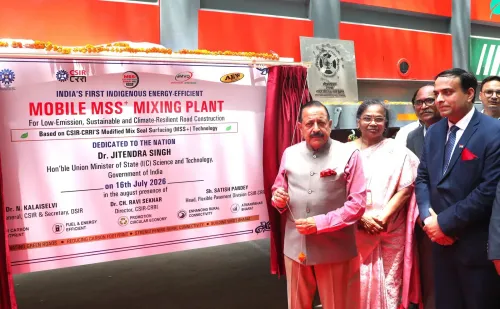
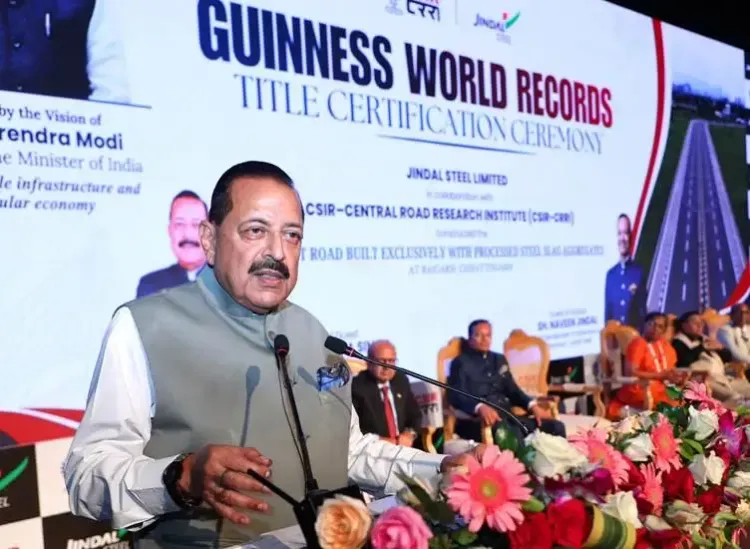
Steel slag road technology can reduce construction costs by around 40 per cent while delivering four times the strength of conventional roads, Union Minister of State (Independent Charge) for Science and Technology Dr Jitendra Singh said on Saturday, 12 September 2026, calling for its widespread adoption across ministries, states, and infrastructure agencies. The minister made the remarks at the conferment ceremony of a Guinness World Record for the world's longest road built with processed steel slag aggregates.
The Record-Setting Project
The Guinness recognition was awarded for a 1.85-km road constructed in Raigarh, Chhattisgarh, developed through a collaboration between CSIR-Central Road Research Institute (CSIR-CRRI) and Jindal Steel Limited. The project converts processed steel slag — a by-product of steel manufacturing — into construction-grade aggregates, effectively transforming industrial waste into a high-performance road-building material.
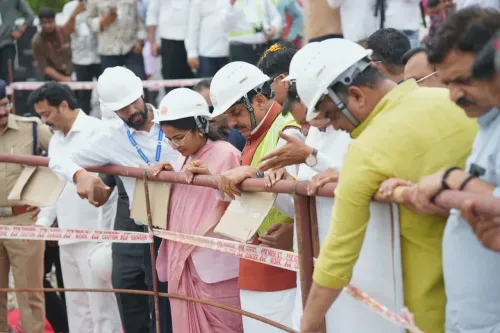
The event also included the virtual inauguration of the Raigarh road, the signing of a technology transfer agreement between CSIR-CRRI and Jindal Steel, the launch of Jindal Steel's processed steel slag aggregate brand Steel Grit, and the release of a scientific documentary on the project.
What the Technology Offers
According to Dr Singh, roads built using steel slag aggregates require maintenance only after approximately 15 years in suitable applications — a significant improvement over conventional road lifespans. He noted the technology is particularly suited to regions with difficult terrain and heavy rainfall, where standard road materials tend to degrade faster.
The minister also pointed to the growing volume of commercial traffic on roads designed for lighter loads, arguing this underscores the urgent need for stronger and more durable construction materials. He framed the initiative as aligned with Prime Minister Narendra Modi's 'Waste to Wealth' approach, demonstrating how industrial co-products can be channelled into infrastructure through scientific innovation and industry partnership.
Scale-Up Already Underway
CSIR Director General N. Kalaiselvi announced that a work order has already been received for a 40-km steel slag road project in Odisha, signalling a substantial early scale-up of the indigenous technology beyond its pilot phase in Chhattisgarh. This comes amid growing national focus on cost-effective and sustainable infrastructure construction.
Notably, the signing of a technology transfer agreement between CSIR-CRRI and Jindal Steel at the same event indicates that commercial deployment is now formally underway, not merely at the research stage.
Industry Voice
Naveen Jindal, Chairman of Jindal Steel Limited, said at the event: 'India's growth must be powered by innovation that creates economic value while protecting our environment. This achievement shows how science, technology and industry can transform industrial co-products into valuable resources for nation-building. It is a strong example of the circular economy in action.'
The Road Ahead
Dr Singh called for the technology to move 'from one project to many projects and from one State to many states', urging railways, infrastructure agencies, and private builders to evaluate its suitability. With a Guinness record secured, a technology transfer formalised, and a 40-km Odisha project in the pipeline, steel slag road construction appears poised to shift from proof-of-concept to national infrastructure policy — though broader adoption will depend on regulatory frameworks and procurement norms across state governments.
Point of View
But the real story is the technology transfer agreement and the Odisha work order — those are the signals that this has moved beyond a pilot. India builds tens of thousands of kilometres of roads annually; even partial adoption of steel slag aggregates could materially reduce costs and absorb industrial waste at scale. The missing piece is procurement policy: without state PWD guidelines and railway specifications that formally recognise steel slag aggregates, minister-level enthusiasm will not translate into volume orders. The 15-year maintenance claim also needs independent, long-term validation across diverse Indian terrain conditions before it becomes a procurement standard.
NationPress
13 Sept 2026
Frequently Asked Questions
What is steel slag road technology and how does it work?
Steel slag road technology converts processed steel slag — a by-product of steel manufacturing — into aggregates used in road construction. According to officials, it reduces construction costs by around 40% and delivers four times the strength of conventional road materials, with maintenance needed only after approximately 15 years in suitable applications.
Where was the Guinness World Record steel slag road built?
The record-winning road is a 1.85-km stretch in Raigarh, Chhattisgarh, developed through a collaboration between CSIR-Central Road Research Institute (CSIR-CRRI) and Jindal Steel Limited. It received the Guinness World Record for being the world's longest road built with processed steel slag aggregates.
Is steel slag road technology being scaled up beyond Chhattisgarh?
Yes. CSIR Director General N. Kalaiselvi announced that a work order has already been received for a 40-km steel slag road project in Odisha, indicating significant early-stage scale-up. A technology transfer agreement between CSIR-CRRI and Jindal Steel was also signed at the event, paving the way for broader commercial deployment.
Which regions would benefit most from steel slag roads?
According to Dr Jitendra Singh, the technology is particularly beneficial in regions with difficult terrain and heavy rainfall, where conventional roads face durability challenges. It is also suited to roads that now carry heavier commercial traffic than they were originally designed to handle.
How does this project relate to India's sustainability goals?
The initiative is positioned under Prime Minister Narendra Modi's 'Waste to Wealth' approach, converting steel manufacturing by-products into high-value infrastructure materials. Jindal Steel Chairman Naveen Jindal described it as 'a strong example of the circular economy in action', linking industrial waste reduction with cost-effective national infrastructure development.