E-mobility transition must drive green growth, circular economy: Bhupender Yadav
Synopsis
India's e-mobility push isn't just about swapping petrol for batteries — Union Minister Bhupender Yadav is framing it as a full industrial reset. At an Assocham conference in New Delhi, he called for a circular economy, battery recycling, critical mineral security, and a clean break from the 'take-make-dispose' model. The message: green growth and economic growth must move as one.
Key Takeaways
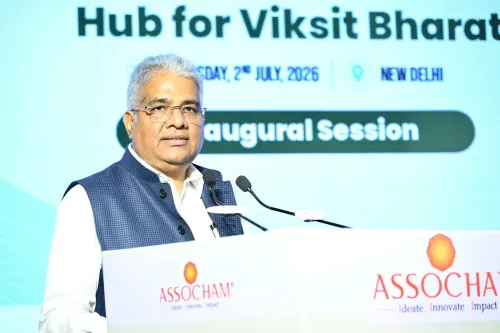
Union Minister Bhupender Yadav addressed an Assocham national conference on electric mobility in New Delhi on 2 July .
He called for India's EV transition to be anchored in green growth , a circular economy , resilient infrastructure , and transparent governance .
The minister emphasised localisation of manufacturing, battery recycling , and secure critical mineral supply chains as essential to the transition.
Government reforms including the PARIVESH portal and simplified environmental clearances were cited as enablers of faster, responsible investment.
Conference deliberations flagged policy continuity , charging infrastructure , and financing support as key gaps to address for India to become a global EV hub.
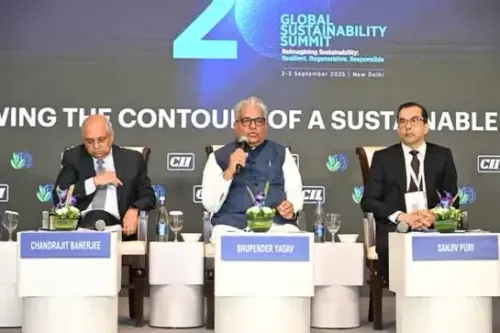
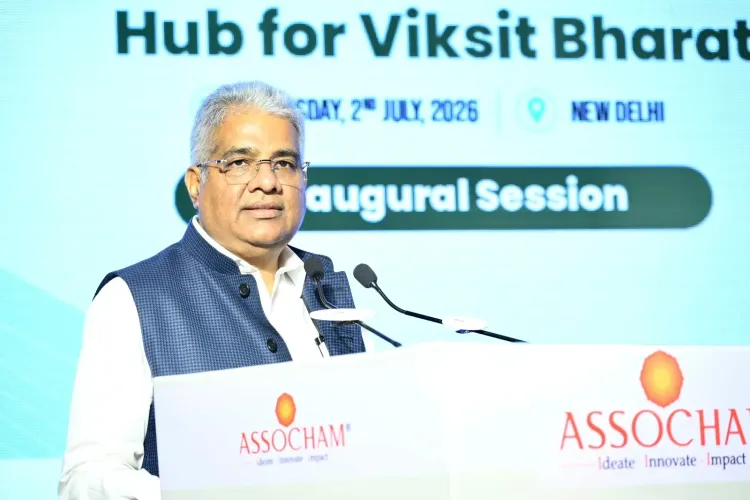
Union Minister Bhupender Yadav on Thursday, 2 July said India's shift to electric mobility goes beyond a simple technology swap — it is about constructing a sustainable industrial ecosystem that bolsters manufacturing, generates green jobs, and advances Prime Minister Narendra Modi's vision of Viksit Bharat by 2047. The minister made the remarks while addressing a national conference on electric mobility organised by industry body Assocham in New Delhi.
Key Developments at the Assocham Conference
Yadav stressed that the e-mobility transition must be anchored in four pillars: green growth, resilient infrastructure, transparent governance, and a circular economy. 'As we accelerate this transition, our focus must remain on green growth, resilient infrastructure, transparent governance and a circular economy that ensures long-term environmental sustainability,' he said.
He called for a decisive move away from the linear 'take-make-dispose' industrial model toward one built on reuse, recycling, and sustainable resource management. The minister also underlined the need for a robust charging infrastructure, localisation of advanced manufacturing, secure critical mineral supply chains, battery recycling, and resource efficiency as non-negotiable pillars of the transition.
Government Reforms to Enable Faster Investment
Yadav highlighted a series of regulatory reforms the government has undertaken to accelerate investment without compromising environmental standards. These include simplification of environmental clearances, digitisation of approval systems through the PARIVESH portal, rationalisation of compliance requirements, and measures to promote ease of doing business. He said these reforms are enabling faster investment flows while ensuring responsible development.
India as a Global Clean Mobility Hub
The minister called on industry, policymakers, and institutions to collaborate in building an innovation-led ecosystem that positions India as a global hub for clean mobility. 'Ecology and economy must progress together, and through collaborative action, India can emerge as a global leader in sustainable manufacturing, green mobility and climate-conscious development,' Yadav said.
The Assocham conference brought together senior policymakers, automotive manufacturers, technology providers, and industry stakeholders to chart a roadmap for accelerating India's EV transition. Deliberations highlighted the need for policy continuity, stronger charging networks, localisation of manufacturing, resilient battery supply chains, financing support, and technological innovation.
What the Industry Is Watching
Participants at the conference flagged that while policy intent is clear, execution gaps — particularly in charging infrastructure and battery supply chain localisation — remain significant hurdles. The call for a circular economy framework also signals a broader policy push to ensure that the environmental cost of EV batteries does not undermine the green credentials of the transition itself. Notably, this conference comes as India's EV sector is witnessing rapid growth in two-wheeler and three-wheeler segments, even as four-wheeler EV penetration remains comparatively low.
Point of View
Cobalt, and manganese mining carries significant environmental and geopolitical risk, and without a domestic recycling ecosystem, India risks trading one form of import dependence for another. The PARIVESH portal and clearance reforms are real steps, but the harder test is whether battery recycling mandates and critical mineral policy move from conference talking points to enforceable timelines. India's EV penetration in passenger cars remains in low single digits — the infrastructure and supply chain gaps flagged at this very conference explain why ambition and adoption have not yet converged.
NationPress
2 Jul 2026
Frequently Asked Questions
What did Bhupender Yadav say about India's electric mobility transition?
Union Minister Bhupender Yadav said India's shift to electric mobility must go beyond replacing technology and instead build a sustainable industrial ecosystem focused on green growth, a circular economy, battery recycling, and critical mineral security. He made these remarks at an Assocham national conference on EV transition in New Delhi on 2 July.
What is the circular economy model Yadav referred to?
Yadav called for moving away from the linear 'take-make-dispose' industrial model toward one based on reuse, recycling, and sustainable resource management. In the EV context, this primarily relates to battery lifecycle management and responsible sourcing of critical minerals.
What government reforms did Yadav highlight to support EV investment?
The minister cited simplification of environmental clearances, digitisation of approvals through the PARIVESH portal, rationalisation of compliance requirements, and ease-of-doing-business measures as reforms enabling faster investment while maintaining environmental safeguards.
What gaps did the Assocham conference identify in India's EV roadmap?
Participants flagged the need for stronger charging infrastructure, localisation of manufacturing, resilient battery supply chains, financing support, and policy continuity as key areas requiring action for India to establish itself as a global electric mobility hub.
How does this connect to the Viksit Bharat 2047 vision?
Yadav explicitly linked the e-mobility transition to Prime Minister Modi's Viksit Bharat 2047 goal, positioning clean mobility and green manufacturing as central pillars of India's long-term economic and industrial development strategy.