Urban Affairs Ministry split into two departments to boost governance
Synopsis
India's Urban Affairs Ministry has quietly but significantly restructured itself — splitting into two dedicated departments for capital development and urban development. It is an administrative overhaul designed to sharpen focus as India races toward housing and governing a population of nearly 600 million city-dwellers by 2030.
Key Takeaways
The Ministry of Housing and Urban Affairs will now function through two separate departments, announced on 31 July .
The two new bodies are the Department of Capital Development (DCD) and the Department of Urban Development (DUD) .
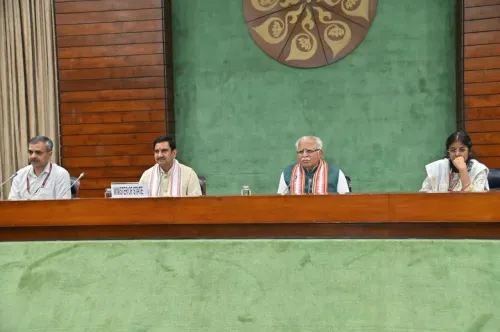
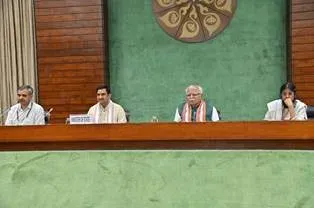
Union Minister Manohar Lal chaired the Parliamentary Consultative Committee meeting where the restructuring was disclosed.
Thara , Secretary of DCD, presented the ministry's urban planning roadmap and sustainable development strategy.
MP Tokhan Sahu linked the restructuring to PM Modi's Viksit Bharat by 2047 vision.
The overhaul aims to improve administrative efficiency, water security, and citizen-centric urban governance.
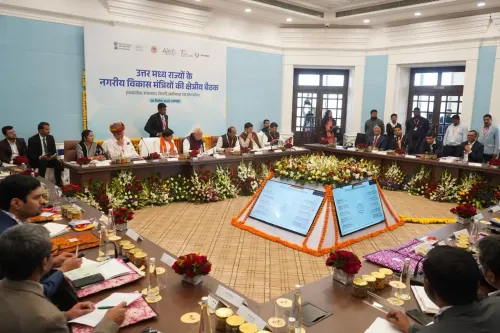
The Ministry of Housing and Urban Affairs will now operate through two distinct departments, Union Minister Manohar Lal announced on Friday, 31 July, during a Parliamentary Consultative Committee meeting on Urban Planning in New Delhi. The restructuring, confirmed through an official statement, is aimed at strengthening institutional capacity and improving administrative efficiency across urban India.
The New Two-Department Structure
The ministry has been reorganised into the Department of Capital Development (DCD) — also known as Rajdhani Vikas Vibhag — and the Department of Urban Development (DUD), or Shahari Vikas Vibhag. According to Minister Lal, the bifurcation is designed to enable greater focus on the diverse and evolving needs of urban India, rather than managing all functions under a single administrative umbrella.
What the Government Said
Minister Lal emphasised that effective urban planning, robust governance, water security, and continuous capacity building are essential to meeting the aspirations of India's rapidly urbanising population. He noted that the government is adopting a holistic approach by integrating planning, infrastructure, governance, and service delivery into a unified urban development framework.
D. Thara, Secretary of the Department of Capital Development, presented a detailed roadmap for sustainable urban development, outlining the ministry's planning initiatives going forward.
Parliamentary Committee Inputs
Members of the Parliamentary Consultative Committee shared views and suggestions on various aspects of urban planning and governance during the meeting. Minister Lal welcomed the inputs and assured that appropriate follow-up action would be taken to further strengthen the ministry's urban sector initiatives.
Member of Parliament Tokhan Sahu reaffirmed Prime Minister Narendra Modi's vision of Viksit Bharat by 2047, stating that the ministry is working closely to promote planned, sustainable, and future-ready urban development across the country.
Why This Restructuring Matters
India's urban population is projected to reach nearly 600 million by 2030, placing enormous pressure on city infrastructure, governance systems, and service delivery mechanisms. The creation of dedicated departments signals an intent to move beyond a one-size-fits-all administrative model. Notably, this comes amid ongoing implementation of flagship urban schemes and growing demands for climate-resilient city planning. The ministry's stated objective of creating liveable, resilient, and citizen-centric cities will now be pursued through more focused institutional channels.
Point of View
Not a policy guarantee. India's urban governance has long suffered from fragmented mandates and overlapping jurisdictions — whether a structural bifurcation alone can cut through that is the real question. The timing, ahead of a likely surge in smart city and AMRUT expenditure cycles, suggests the government wants cleaner accountability lines. But without clear demarcation of budgets, staff, and outcome metrics between DCD and DUD, the risk is duplication rather than efficiency. The Viksit Bharat 2047 framing gives political weight to the move; execution will determine whether it is substance or scaffolding.
NationPress
15 Sept 2026
Frequently Asked Questions
What is the new two-department structure of the Urban Affairs Ministry?
The Ministry of Housing and Urban Affairs has been divided into the Department of Capital Development (DCD), or Rajdhani Vikas Vibhag, and the Department of Urban Development (DUD), or Shahari Vikas Vibhag. The split is intended to improve administrative focus and institutional capacity across urban India.
Why has the Urban Affairs Ministry been restructured?
According to Minister Manohar Lal, the restructuring is aimed at strengthening institutional capacity, improving administrative efficiency, and enabling greater focus on the diverse needs of India's rapidly urbanising population. The government is integrating planning, infrastructure, governance, and service delivery under this new framework.
Who announced the Urban Affairs Ministry restructuring?
Union Minister of Housing and Urban Affairs and Power, Manohar Lal, announced the restructuring on 31 July while chairing a Parliamentary Consultative Committee meeting on Urban Planning in New Delhi.
How does this restructuring connect to the Viksit Bharat 2047 vision?
Member of Parliament Tokhan Sahu, speaking at the committee meeting, stated that the ministry is working closely to promote planned, sustainable, and future-ready urban development in line with Prime Minister Narendra Modi's Viksit Bharat by 2047 vision.
Who is the Secretary of the new Department of Capital Development?
D. Thara is the Secretary of the Department of Capital Development (DCD). She presented a detailed overview of the ministry's urban planning initiatives and the roadmap for sustainable urban development at the Parliamentary Consultative Committee meeting.