Himesh Reshammiya on song longevity: 'Every song has its own destiny'
Synopsis
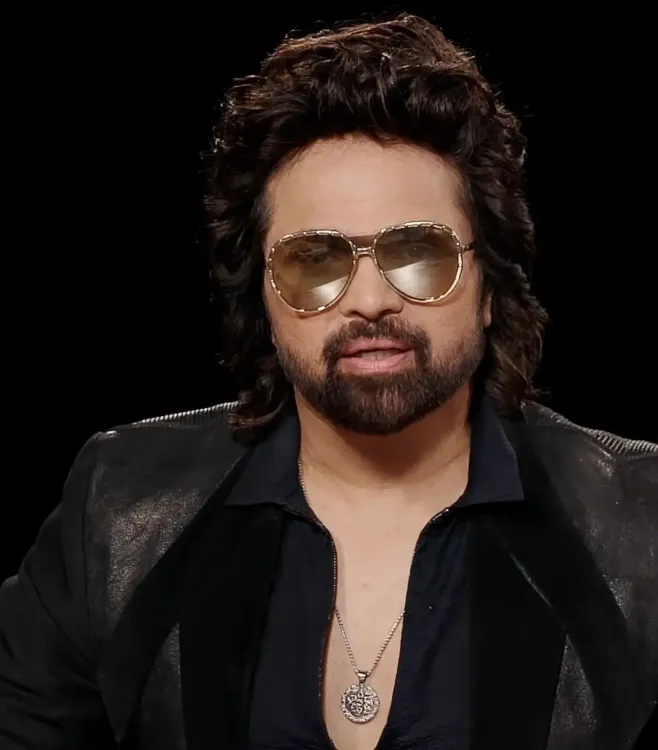
Himesh Reshammiya has revealed that 'Hookah Bar', released in 2012, was actually composed around 2004-05 — sitting in his personal stock for nearly a decade. His 'create pressure-free, wait for the right moment' philosophy is a sharp rebuke to Bollywood's deadline-driven music culture, and it raises a genuine question about how many of his catalogue hits are still waiting for their moment.
Key Takeaways
Himesh Reshammiya spoke about his creative philosophy on Komal Nahta's podcast 'Game Changers: The Music Series' .
He argued that deadline-driven composition — often just 15 to 30 days — prevents truly great songs from being made.
Reshammiya tests finished compositions with audiences of 100–200 people before storing strong tracks in a personal 'stock'.
He revealed that 'Hookah Bar' (released 2012 ) was composed as far back as 2004 or 2005 .
He credited the right timing — alongside a strong melody and hook line — as the key to a song's eventual success.
Music composer Himesh Reshammiya has opened up about his philosophy of creating timeless songs in Hindi film music, revealing that some of his most celebrated tracks were composed years — even decades — before they found their way onto screen. Speaking on film trade expert Komal Nahta's podcast 'Game Changers: The Music Series', Reshammiya offered a rare look into his creative process and the role of timing in a song's success.
The Problem with Deadlines
Reshammiya was candid about the pressures of deadline-driven composition in Bollywood. He argued that the best music rarely emerges under a ticking clock. 'I always feel that if you go in search of a song today, we say that such music is not made. It is not made because if you give me a deadline that I want a song in a month — it is possible that a great song can be made. It can be made in a minute too. But it is possible that it is not made,' he said.
He explained that when production timelines are tight — typically 15 days to a month — composers and directors are forced to settle for whatever is available rather than what is truly exceptional. The result, he suggested, is music that rarely endures.
The 'Stock' Method: Creating Before Demand
Reshammiya described a distinctive working method in which he builds a reserve of compositions crafted entirely free of external pressure. He tests these tracks with audiences of 100 to 200 people before storing the strongest ones for future use. 'I make people do it. 100-200 people. They say it is a good song. Yes, I tell everyone. After that, if it is good, it comes in stock,' he explained.
This approach, he said, allows a song to wait for the precise cultural and cinematic moment when it will resonate most powerfully — however long that takes.
The 'Hookah Bar' Example: Eight Years in the Making
As a concrete illustration, Reshammiya pointed to 'Hookah Bar', one of his signature tracks. Though the song was released in 2012, he revealed it was actually composed back in 2004 or 2005 — sitting in his catalogue for nearly a decade before finding the right film and the right moment. 'All my songs were made in the 90s. The tune of 'Hookah Bar' came out in 2012. But that song was made in 2004 or 2005,' he noted.
The revelation challenges the common assumption that film music is primarily reactive — written to serve a narrative that already exists — and positions Reshammiya's process as something far more proactive.
Timing, the Hook Line, and the Grace of God
For Reshammiya, the architecture of a great song rests on two pillars: a strong foundational melody and an unforgettable hook line. But even both of those, he argued, are insufficient without the third element — timing. 'The basic graph is very important. Its hook line is very important. But it is very important to come with the right timing. And that is somewhere where my calculation has worked by the grace of God,' he said.
The composer's reflections offer a broader commentary on the economics of Bollywood music production, where the pressure to deliver fast increasingly squeezes the creative space that landmark songs require. As streaming platforms intensify the demand for fresh content, Reshammiya's 'stock and wait' philosophy stands as a deliberate counterpoint to the industry's pace.
Point of View
The 'create freely, release when ready' model he describes is becoming structurally impossible for most. His longevity may be less about genius alone and more about having built the financial independence to resist the deadline culture that consumes his peers.
NationPress
27 Oct 2026
Frequently Asked Questions
What did Himesh Reshammiya say about songwriting on Komal Nahta's podcast?
Reshammiya said that great songs cannot always be created on demand — they need to be composed without the pressure of deadlines and released at the right cultural moment. He described a method of building a personal 'stock' of songs tested with large groups before storing them for future use.
When was 'Hookah Bar' actually composed?
According to Reshammiya, 'Hookah Bar' was composed around 2004 or 2005, even though it was officially released in 2012 — meaning the song waited nearly eight years before finding its film and its audience.
How does Himesh Reshammiya test his songs before releasing them?
He plays finished compositions to groups of 100 to 200 people to gauge reaction. If the response is strong, the track goes into his personal stock and waits for the right project and timing.
Why does Reshammiya believe deadline-driven music fails?
He argues that when directors need a song within 15 to 30 days, the composer is forced to use whatever is available rather than what is truly exceptional. The resulting music, he said, rarely stands the test of time.
What is the 'Game Changers: The Music Series' podcast?
It is a podcast hosted by film trade expert Komal Nahta that features conversations with key figures in the Hindi film music industry. Reshammiya appeared on the show to discuss his approach to composing and the idea of a song's longevity.