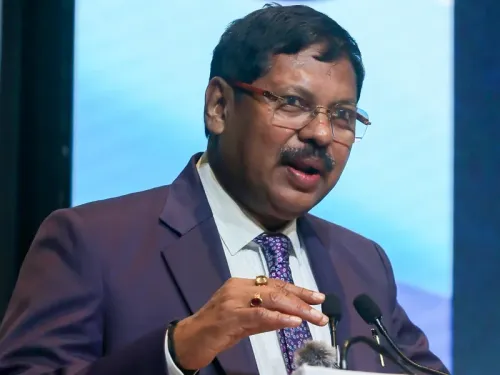
Milind Chandwani on reservation: 'Fix education first, then debate removal'
Synopsis
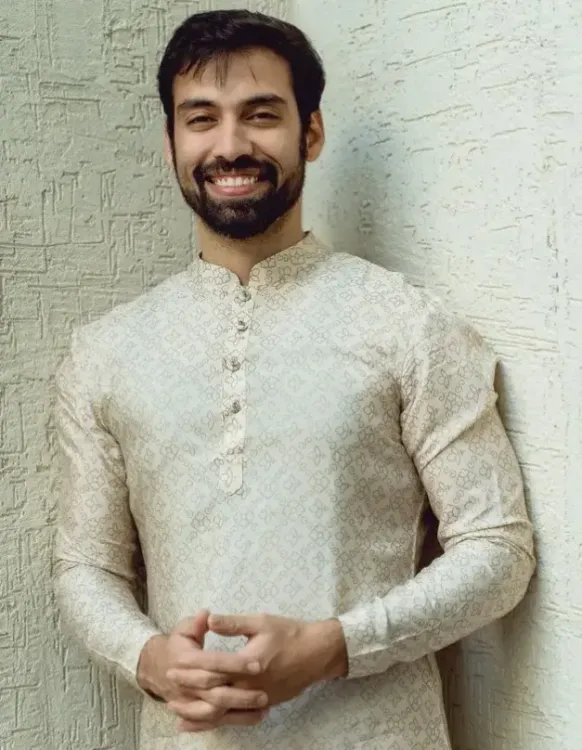
Milind Chandwani — educator, Teach for India fellow, and husband of actress Avika Gor — has reframed India's reservation debate with a personal two-sided account: a 98.5 CAT percentile that did not get him IIM calls, and five years teaching children who needed but could not navigate reservation. His verdict: fix education first, then talk removal.
Key Takeaways
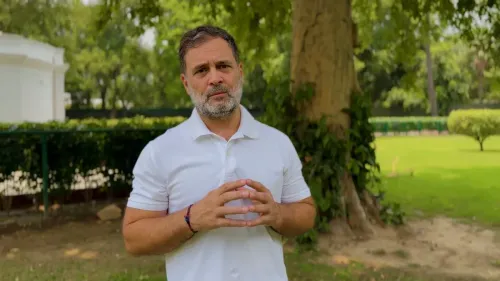
Milind Chandwani , educator and husband of actress Avika Gor , shared a personal video on Instagram on 28 July addressing the reservation debate.
He recalled scoring 98.5 percentile in the CAT in 2013 without receiving IIM calls, while a similarly placed friend secured them at 58 percentile via reservation.
His five years with Teach for India showed him students who genuinely needed reservation but lacked awareness to access it.
He declined to take a firm pro- or anti-reservation stance, framing his video as 'a pro-education reel'.
His core position: equal educational opportunities must be ensured before reservation can be considered for removal.
Educator and social activist Milind Chandwani, husband of actress Avika Gor, has entered the ongoing reservation debate with a nuanced personal account — arguing that the core question is not whether reservation should exist, but whether India has built an education system that makes it unnecessary. He shared his views via an Instagram video on 28 July, drawing on his dual experience as a competitive exam aspirant and a teacher in under-resourced government schools.
The Personal Experience Behind the Argument
Chandwani recalled a pivotal moment from 2013, when he scored a 98.5 percentile in the CAT examination and failed to receive IIM calls, while a friend from a similar middle-class background secured calls at 58 percentile through reserved category seats. 'To be honest, this friend didn't need it. He used to come from a middle-class family, I used to come from a middle-class family. But I had it, so why not use it? To be honest, I used to feel really bad after seeing all this,' Chandwani said in the video.
He was careful, however, not to let that experience define his entire position — acknowledging that one case of misuse does not invalidate the policy.
What Teaching in Government Schools Revealed
Chandwani's perspective shifted after he joined Teach for India as a fellow and spent five years working with children from low-income communities in government schools. He found students who genuinely needed reservation as a lifeline — but lacked the awareness to access or utilise it effectively. 'I saw such children who needed this reservation and it was very beneficial for them. But they didn't understand how to use this reservation, what is the benefit of it, what is the work of it,' he said.
This gap between entitlement and awareness, he argued, is as much a failure of the system as the more widely discussed issue of creamy layer misuse.
His Core Argument: Equal Opportunity Before Removal
Chandwani stopped short of declaring himself either for or against the existing caste-based reservation framework. Instead, he set a condition: 'If we have to remove it, then we have to give equal opportunities to every child who doesn't have equal opportunities — whose background comes from lower-income communities. We have to give better education, we have to give equal exposure so that when they finally come to the job market or in the competition exams, they can fight for equality.'
He framed the video explicitly as 'a pro-education reel' — neither anti- nor pro-reservation — and called for respectful public discourse. 'Maybe the question isn't should reservation exist? Maybe the question is who actually needs help, and how do we build an education system where one day, nobody needs reservation at all?' he wrote in the caption.
Why This Debate Keeps Resurfacing
The reservation debate has periodically intensified in India, particularly around competitive examination cycles and Supreme Court rulings on sub-classification within reserved categories. Chandwani's intervention is notable because it comes from someone with direct classroom experience in under-resourced settings — lending it ground-level credibility that purely ideological arguments often lack. His framing aligns with a growing strand of opinion that distinguishes between the principle of affirmative action and the current implementation of caste-based quotas.
As India's education and employment landscape continues to evolve, Chandwani's call for systemic reform before any policy rollback is likely to resonate with educators, policymakers, and a younger generation navigating high-stakes competitive exams.
Point of View
He exposes the central flaw in India's reservation discourse: the debate is almost always about the policy's existence, rarely about its targeting. His classroom evidence — students entitled to reservation who do not know how to use it — points to an implementation gap that neither abolitionists nor defenders adequately address. The creamy layer problem he illustrates from his CAT experience is well-documented but politically inconvenient; the awareness gap he found in government schools is equally real but far less discussed. Any honest policy conversation must hold both failures simultaneously.
NationPress
27 Oct 2026
Frequently Asked Questions
Who is Milind Chandwani and why is he in the news?
Milind Chandwani is an educator, social activist, and husband of actress Avika Gor. He is in the news for sharing a personal Instagram video on 28 July in which he discussed the reservation debate from his dual experience as a CAT aspirant and a Teach for India fellow.
What did Milind Chandwani say about his CAT experience and reservation?
Chandwani said that in 2013 he scored 98.5 percentile in the CAT but did not receive IIM calls, while a friend from a similar middle-class background got calls at 58 percentile through reservation. He admitted feeling bad about it but acknowledged his friend used a legitimate entitlement.
What did Chandwani learn from teaching in government schools?
During his five years as a Teach for India fellow, Chandwani found children from low-income communities who genuinely benefited from reservation but were unaware of how to access or use it — pointing to a significant awareness and implementation gap in the system.
Is Milind Chandwani for or against reservation?
Chandwani explicitly stated he does not know whether he is in favour of or opposed to the caste-based reservation system. He framed his video as a pro-education reel and argued that equal educational opportunities must be established before any removal of reservation is considered.
What is Chandwani's central condition for removing reservation?
He argued that reservation can only be responsibly removed once every child — regardless of background — has access to equal education, exposure, and opportunities. Until that systemic equity is achieved, removing reservation would disadvantage those who still rely on it.