RGV defends violent cinema after Andhra chainsaw attack sparks film debate
Synopsis
A chainsaw attack on a schoolgirl in Andhra Pradesh's Raptadu has done more than shock the nation — it has reignited a fierce argument about whether films like Animal are shaping violent minds. Ram Gopal Varma's X post comparing film-blaming to blaming the Ramayana for kidnappings has added fuel, bringing the long-simmering debate over Sandeep Reddy Vanga's brand of cinema to a boiling point.
Key Takeaways
Ram Gopal Varma posted on X on 1 November 2026 , arguing that blaming films for violence is misdirected, comparing it to 'blaming Ramayana for rise in kidnappings.' A 21-year-old man, Hemanth , allegedly attacked a 15-year-old girl with a chainsaw inside a Class 10 classroom in Raptadu, Anantapur district, Andhra Pradesh ; a second student, Lakshmi , was also injured.
The primary victim is being treated at Manipal Hospital, Bengaluru and was reported stable; the accused has been taken into custody at Dharmavaram .
The attack reignited criticism of director Sandeep Reddy Vanga's film Animal (starring Ranbir Kapoor ), particularly a scene depicting a man entering a school classroom with a gun.
Varma has been a vocal public supporter of Vanga; Vanga has cited Varma as a major influence on his filmmaking style.
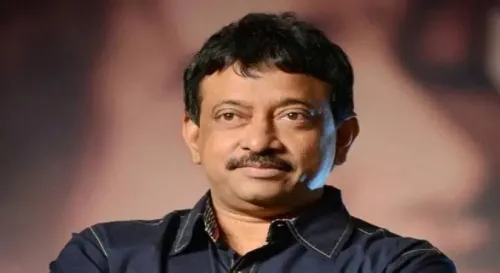
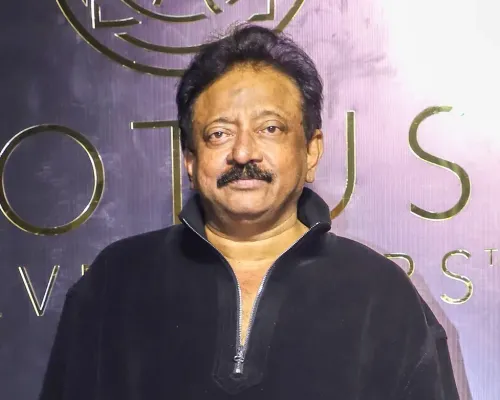
Filmmaker Ram Gopal Varma (RGV) has entered the debate over whether violent films influence real-world crime, days after a chainsaw attack at a school in Raptadu, Anantapur district, Andhra Pradesh reignited concerns about the portrayal of violence in Indian cinema. On Sunday, 1 November 2026, Varma posted on X (formerly Twitter) arguing that holding films responsible for violence is a misplaced response.
What RGV Said
In his post, Varma wrote: 'Blaming films for rise in violence is like blaming Ramayana for rise in kidnappings.' The filmmaker, a long-time vocal supporter of director Sandeep Reddy Vanga, has consistently defended bold and violent cinematic content. Vanga himself has cited Varma as a creative influence.
Varma's remarks come as public discourse around film-induced behavioural harm has intensified following the Raptadu incident, with several social media users drawing a direct line between on-screen depictions of classroom violence and the real-world attack.
The Raptadu Chainsaw Attack
The incident that triggered the debate occurred when a 21-year-old man identified as Hemanth allegedly entered a Class 10 classroom in Raptadu and attacked a 15-year-old girl with a chainsaw. Preliminary police investigations suggest the accused, reportedly a relative of the victim, had been stalking her and carried out the attack after she rejected his advances.
Another student, identified as Lakshmi, sustained injuries while attempting to shield her classmate. The primary victim is undergoing treatment at Manipal Hospital in Bengaluru and was reported stable. The accused has since been traced and taken into custody at Dharmavaram.
Sandeep Reddy Vanga and the 'Animal' Controversy
The attack promptly revived criticism of director Sandeep Reddy Vanga and a widely discussed scene from his 2023 film Animal, in which actor Ranbir Kapoor walks into a school classroom carrying a loaded gun. The scene had already drawn scrutiny at the time of the film's release; the Raptadu attack brought it back into sharp focus.
Multiple social media users held the sequence up as an example of cinema normalising extreme violence in institutional settings. One user wrote: 'Vanga's Animal has a scene where Ranbir Kapoor walks into a classroom with an AK47. This is what such movies lead to. When will directors like Sandeep Reddy Vanga and actors like Ranbir Kapoor be held responsible for poisoning young minds?'
Another user referenced content critic Dhruv Rathee, writing: 'When Dhruv Rathee called out Aditya Dhar and Sandeep Reddy Vanga for glorifying violence and propaganda through films like Dhurandhar, the right-wing went after him with abuse. And now we're witnessing the kind of consequences that come from normalising hatred and glorifying violence.'
A third user described the trend as 'actively rotting our basic human empathy', arguing that glorifying extreme violence as masculine behaviour posed a societal risk.
The Broader Debate on Cinema and Real-World Violence
The question of whether violent films cause or merely reflect societal aggression is a longstanding one, with research on the subject offering mixed conclusions. Critics argue that films depicting hyper-masculine violence — particularly when framed approvingly — can shape the attitudes of impressionable audiences. Defenders of artistic freedom, including Varma, maintain that the creative medium cannot be held culpable for crimes committed by individuals.
This is not the first time Animal has been at the centre of such a debate; the film drew sharp criticism from gender rights groups upon release for its treatment of women and its aestheticisation of brutality. Notably, India's Central Board of Film Certification (CBFC) had cleared the film with an 'A' certificate but without ordering cuts to the contested scenes.
What Happens Next
The police investigation into the Raptadu attack is ongoing, with the accused in custody at Dharmavaram. No formal government or regulatory action against filmmakers has been announced in connection with the incident. The debate over cinema's responsibilities, however, is unlikely to subside — particularly as Animal's sequel and other high-intensity action films remain in production pipelines.
Point of View
But that repeated, approving depictions of hyper-masculine violence directed at women can normalise that behaviour as acceptable or even aspirational. Animal was a certified blockbuster, which means its frames reached tens of millions of young viewers — that scale of cultural exposure deserves more than a dismissive one-liner. The more uncomfortable question that mainstream coverage is avoiding is regulatory: the CBFC cleared Animal's most contested scenes without cuts, and no post-release review mechanism exists in India to revisit that decision when real-world incidents invite the comparison. Holding individual artists legally responsible for crimes is a road best not taken, but the utter absence of any institutional reflection on what the certification framework permits — and why — is the accountability gap nobody is naming.
NationPress
1 Nov 2026
Frequently Asked Questions
What did Ram Gopal Varma say about violent films?
On 1 November 2026, Ram Gopal Varma posted on X that 'Blaming films for rise in violence is like blaming Ramayana for rise in kidnappings,' arguing that criticism directed at films with violent content is misdirected. He made the remark amid public backlash targeting director Sandeep Reddy Vanga following a chainsaw attack at a school in Andhra Pradesh.
What happened in the Raptadu chainsaw attack?
A 21-year-old man identified as Hemanth allegedly entered a Class 10 classroom in Raptadu, Anantapur district, Andhra Pradesh, and attacked a 15-year-old girl with a chainsaw. A second student, Lakshmi, was injured while trying to protect her classmate; the primary victim is being treated at Manipal Hospital in Bengaluru and was reported stable. The accused has been taken into custody at Dharmavaram.
Why is the film Animal being criticised in connection with the attack?
Sandeep Reddy Vanga's 2023 film Animal features a scene in which actor Ranbir Kapoor's character walks into a school classroom carrying a loaded gun. Following the Raptadu attack, several social media users pointed to this scene as an example of cinema normalising violence in school settings and called for the filmmakers to be held accountable.
Has any action been taken against the filmmakers?
No formal government or regulatory action against any filmmaker has been announced in connection with the Raptadu attack. The debate remains primarily on social media and in public discourse, with no official review of the CBFC certification of Animal reported as of 1 November 2026.
What is Ram Gopal Varma's connection to Sandeep Reddy Vanga?
Ram Gopal Varma has been a vocal public supporter of Sandeep Reddy Vanga and has frequently praised his filmmaking style. Vanga has himself cited Varma as a major creative influence, making their relationship one of the more prominent mentor-protégé bonds in contemporary Indian cinema.