Ebola in DRC: Children make up one-third of deaths, UNICEF warns
Synopsis
Children are dying from Ebola in the DRC at a rate far exceeding their share of confirmed cases — one-third of deaths against one-fifth of cases. With over 5,000 confirmed cases, a 47.4% fatality rate, and a spread faster than any previous Ebola outbreak at the same stage, the WHO and UNICEF are warning that the world is still playing catch-up with an epidemic that could become the deadliest ever recorded.
Key Takeaways
Children aged 17 and below account for 33% of reported Ebola deaths in the DRC but only 21% of confirmed cases, per UNICEF .
The DRC has recorded 5,021 confirmed cases across 55 health zones in six provinces , with a case fatality rate of 47.4% .
The WHO has declared the outbreak a Public Health Emergency of International Concern (PHEIC) .
This is the second-largest Ebola outbreak ever recorded , caused by the Bundibugyo ebolavirus , surpassing the DRC's 2018–2020 outbreak.
Africa CDC warns the epidemic is killing roughly one person every 30 minutes and risks becoming the deadliest globally.
The province of Ituri accounts for 84.8% of cumulative cases, but infections are accelerating in neighbouring provinces.
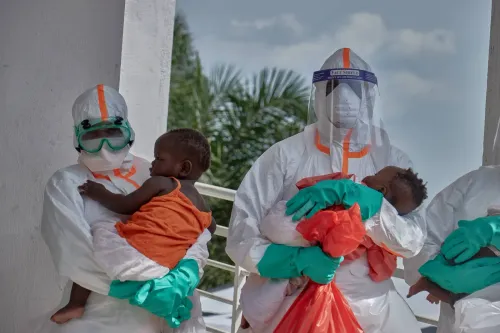
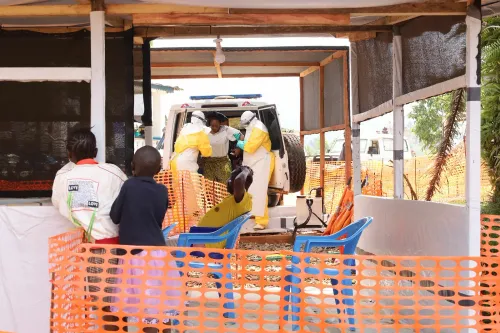
Children aged 17 and below account for approximately 33 per cent of reported deaths in the ongoing Ebola outbreak in the Democratic Republic of the Congo (DRC), despite comprising only around 21 per cent of confirmed cases, the United Nations Children's Fund (UNICEF) said on Wednesday, 19 August, in its latest situation report. The disparity points to what UNICEF described as a 'concerning upward trend' in the mortality burden among children, with the agency calling for sustained attention to appropriate paediatric care.
Scale of the Outbreak
As of Sunday, the DRC had recorded 5,021 confirmed cases across 55 health zones in six provinces, with a case fatality rate of 47.4 per cent, according to the latest report from the WHO Regional Office for Africa. The World Health Organisation (WHO) has classified the outbreak as a Public Health Emergency of International Concern (PHEIC).
The outbreak, caused by the Bundibugyo ebolavirus, has now surpassed the 2018–2020 Ebola outbreak in eastern DRC — previously the country's deadliest — making it the second-largest Ebola outbreak ever recorded globally. The Africa Centers for Disease Control and Prevention (Africa CDC) warned on Monday that the current epidemic is killing roughly one person every 30 minutes and risks becoming the deadliest Ebola outbreak in history if its trajectory is not urgently reversed.
Why Children Are Dying at Higher Rates
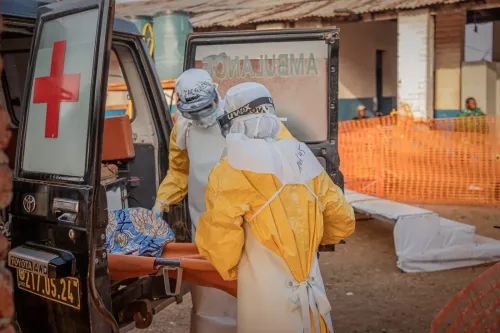
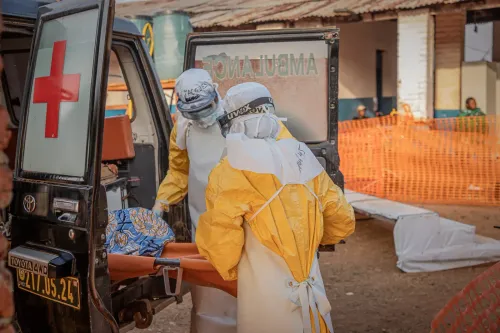
UNICEF flagged several structural failures driving the disproportionate child mortality. Treatment services are under severe pressure due to delayed referrals, overcrowding, limited critical care and paediatric capacity, resource constraints, and gaps in data reporting. Community surveillance and contact tracing, the agency said, still need to be significantly accelerated.
The agency called for stronger early detection, timely referral systems, and dedicated paediatric care as transmission continues in active zones. This comes amid a broader warning from the WHO that current containment measures are not sufficient to interrupt transmission.
Speed of Spread: A Historic Benchmark
During the first 95 days of reporting, the seven-day moving average rose to more than 90 confirmed cases a day — substantially higher than at the same stage of both the 2014–2016 West Africa epidemic and the DRC's 2018–2020 outbreak, according to a WHO situation report. WHO Director-General Tedros Adhanom Ghebreyesus described the pace as alarming at an emergency committee meeting.
'We must be frank: the epidemic is far from being under control,' Tedros said. 'It had a big head start, and we are still playing catch-up.'
Geographic Spread and Epicentre
The eastern province of Ituri remains the epicentre, accounting for 84.8 per cent of cumulative cases. However, infections are accelerating in neighbouring provinces, raising concerns about cross-border transmission risks. The WHO noted that high mortality, deaths occurring outside treatment facilities, a growing surveillance workload, and uneven response capacity all indicate that existing measures are falling short.
Authorities are reportedly pursuing experimental vaccines and treatments as the outbreak continues to expand into new areas. The trajectory of the epidemic over the coming weeks will be closely watched by global health bodies.
Point of View
Yet paediatric care capacity remains visibly underprepared. This is not a new pattern — child vulnerability in haemorrhagic fever outbreaks has been documented since the 2014 West Africa epidemic — but the international response has not structurally corrected for it. The 47.4% case fatality rate is also a signal that treatment, not just containment, is failing. With the outbreak now spreading faster than any previous Ebola event at the same stage, the window for a controlled response is narrowing rapidly, and the gap between surveillance capacity and transmission speed is the most urgent variable to close.
NationPress
5 Oct 2026
Frequently Asked Questions
Why are children dying at higher rates in the DRC Ebola outbreak?
Children aged 17 and below account for 33% of Ebola deaths in the DRC despite representing only 21% of confirmed cases. UNICEF attributes this to delayed referrals, limited paediatric care capacity, overcrowding in treatment facilities, and gaps in data reporting that slow early detection and response.
How large is the current Ebola outbreak in the DRC?
As of the latest available data, the DRC has recorded 5,021 confirmed Ebola cases across 55 health zones in six provinces, with a case fatality rate of 47.4%. It is now the second-largest Ebola outbreak ever recorded globally.
Has the WHO declared the DRC Ebola outbreak a global emergency?
Yes. The WHO has classified the DRC Ebola outbreak as a Public Health Emergency of International Concern (PHEIC). WHO Director-General Tedros Adhanom Ghebreyesus has warned that the epidemic is 'far from being under control.'
Which region of the DRC is most affected by the Ebola outbreak?
The eastern province of Ituri is the epicentre, accounting for 84.8% of cumulative cases. However, infections are accelerating in neighbouring provinces, raising concerns about wider geographic spread.
How does this Ebola outbreak compare to previous ones?
This outbreak, caused by the Bundibugyo ebolavirus, has surpassed the 2018–2020 DRC outbreak — previously the country's deadliest — and is spreading faster than all prior Ebola outbreaks at the same stage. Africa CDC has warned it could become the deadliest Ebola epidemic ever recorded if its trajectory is not reversed.