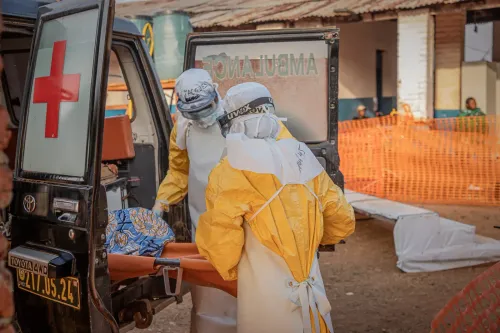
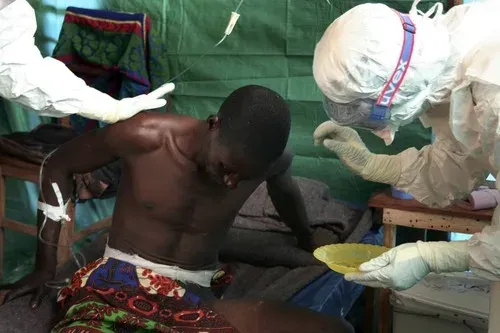
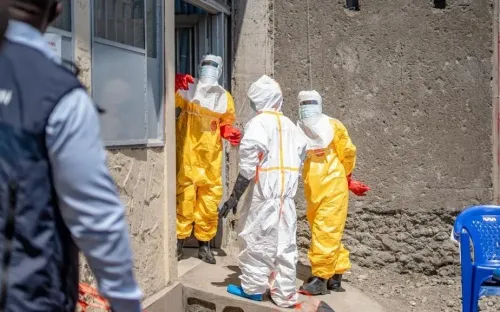
Ebola outbreak in DRC intensifies: 521 deaths, 1,624 cases as of July 5
Synopsis
The DRC's Ebola outbreak has crossed 521 confirmed deaths with isolation beds at 94% capacity and over 92% of deaths occurring before patients reach care — a damning indictment of a response still chasing the virus. The launch of the first-ever Bundibugyo therapeutics trial offers a rare glimmer, but the window to contain this outbreak is narrowing fast.
Key Takeaways
The DRC had recorded 1,624 confirmed Ebola cases and 521 confirmed deaths as of 5 July , with a case fatality ratio of 32.1 per cent .
Across the DRC , Uganda , and France , total confirmed cases stood at 1,645 with 523 deaths .
92.3 per cent of investigated deaths occurred in the community or before hospital admission, signalling critical gaps in surveillance and referral.
Isolation occupancy in the DRC reached 94.2 per cent across more than 22 treatment centres , leaving almost no surge capacity.
The PARTNERS clinical trial — the first for Ebola Bundibugyo virus — was launched on 2 July , testing MBP134 and remdesivir .
Uganda reported no new cases in two weeks; the imported case in France recovered and was discharged on 4 July .
The Ebola outbreak in the Democratic Republic of the Congo (DRC) has worsened significantly, with confirmed deaths crossing 521 and total confirmed cases reaching 1,624 as of 5 July, according to a situation report released by the World Health Organization (WHO) Regional Office for Africa. The crude case fatality ratio has climbed to 32.1 per cent, underscoring the severity of an outbreak that health authorities describe as continuing to intensify.
Scale of the Outbreak
Across all three affected countries — the DRC, Uganda, and France — a combined 1,645 confirmed cases and 523 confirmed deaths had been recorded as of 5 July, with an overall confirmed case fatality ratio of 31.8 per cent. More than 12,400 contacts still required active follow-up, according to the WHO report.
The outbreak is being driven by sustained transmission in the hotspot health zones of Ituri and North Kivu provinces in eastern DRC, compounded by growing community deaths and the spread of infection into previously unaffected health zones. The WHO has assessed the public health risk in the DRC as 'very high', warning that transmission continues to outpace current response capacity.
Surveillance and Response Gaps
One of the starkest indicators of a strained response is the pattern of deaths occurring before patients reach care. Of 430 confirmed deaths investigated as of 5 July, 397 — or 92.3 per cent — occurred either in the community or before admission to a treatment facility. The WHO flagged this as a clear sign that surveillance and referral systems are still lagging behind transmission.
Contact tracing has shown improvement but remains insufficient to interrupt transmission. As of 5 July, 12,412 contacts were under follow-up in the DRC, of whom 9,624 — or 77.5 per cent — had been visited within the previous 24 hours. Critically, only 32.4 per cent of confirmed cases were detected through contact follow-up, indicating that a large proportion of infections are occurring outside known contact lists.
Treatment Capacity Under Strain
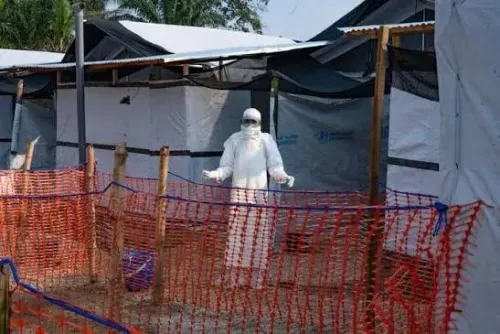
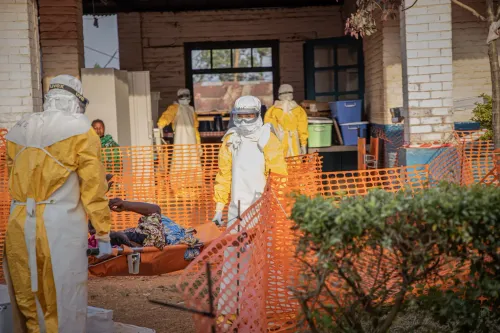
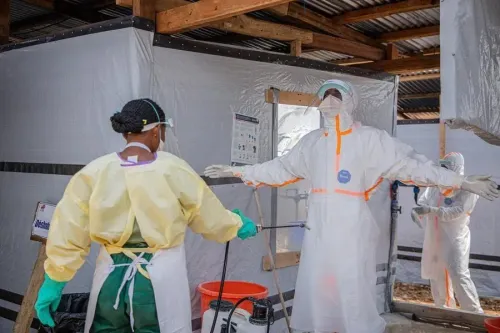
The DRC's treatment infrastructure is operating near its limits. Across more than 22 Ebola treatment centres and care facilities, approximately 700 treatment and isolation beds are available. As of 5 July, 646 patients were in isolation nationwide, pushing official isolation occupancy to approximately 94.2 per cent — a level that leaves virtually no buffer for a further surge in cases.
First Clinical Trial for Ebola Bundibugyo Launched
In a significant development, the WHO-sponsored PARTNERS clinical trial was officially launched in the DRC on 2 July, marking the first clinical trial specifically evaluating therapeutics for Ebola Bundibugyo virus disease — a strain for which no approved vaccine or specific treatment currently exists. The trial is assessing the monoclonal antibody MBP134 and the antiviral drug remdesivir, both individually and in combination.
Situation in Uganda and France
Uganda reported no new cases in the two weeks preceding 5 July. The country had recorded 20 confirmed cases in total, including two deaths, with 16 patients having recovered and two remaining hospitalised. All contacts placed under follow-up in Uganda completed the required 21-day monitoring period without any new linked cases being detected. The WHO, however, cautioned that Uganda still faces a high risk of importation due to ongoing population movement from eastern DRC.
In France, the imported laboratory-confirmed case reported to the WHO on 24 June recovered and was discharged from hospital on 4 July following two consecutive negative laboratory tests. Five passengers who had travelled on the same flight as the patient were placed under quarantine and remained asymptomatic. The France case, according to the WHO, highlights the need for sustained surveillance, traveller awareness, and cross-border preparedness globally.
With treatment beds near capacity, contact tracing still incomplete, and a clinical trial only just begun, the DRC outbreak remains at a critical juncture — and the international community's response in the coming weeks will be closely watched.
Point of View
But a therapeutic tested today will not save patients dying at home this week. The DRC outbreak is exposing the same structural weaknesses — weak surveillance, under-resourced referral chains, and community distrust — that have defined every major Ebola response since 2014. Uganda's clean record and France's contained import show containment is possible with investment; the question is whether the DRC will get that investment before the window closes.
NationPress
6 Oct 2026
Frequently Asked Questions
How many Ebola cases and deaths have been confirmed in the DRC as of July 2025?
As of 5 July, the DRC had confirmed 1,624 Ebola cases and 521 deaths, with a crude case fatality ratio of 32.1 per cent. The outbreak is concentrated in the Ituri and North Kivu provinces of eastern DRC and continues to spread into previously unaffected health zones.
Why is the Ebola outbreak in the DRC considered so dangerous right now?
The WHO has assessed the public health risk in the DRC as 'very high' because transmission is outpacing response capacity. Over 92 per cent of investigated deaths occurred before patients reached a treatment facility, isolation beds are at 94.2 per cent occupancy, and only 32.4 per cent of confirmed cases were detected through contact tracing.
What is the PARTNERS clinical trial launched in the DRC?
The PARTNERS trial, launched on 2 July in the DRC, is the first clinical trial evaluating treatments specifically for Ebola Bundibugyo virus disease, for which no approved vaccine or specific treatment currently exists. It is assessing the monoclonal antibody MBP134 and the antiviral remdesivir, both individually and in combination.
Has Ebola spread outside the DRC?
Yes. Uganda has recorded 20 confirmed cases and two deaths, though no new cases were reported in the two weeks prior to 5 July. France reported one imported confirmed case on 24 June; that patient recovered and was discharged on 4 July. The WHO has warned that Uganda remains at high risk of further importation due to population movement from eastern DRC.
What are the biggest gaps in the DRC Ebola response?
The WHO report identifies three critical gaps: community deaths occurring before patients reach care (92.3 per cent of investigated deaths), contact tracing coverage that detected only 32.4 per cent of confirmed cases, and treatment centres operating at 94.2 per cent isolation occupancy with little surge capacity remaining.