Gujarat allocates ₹14.90 crore for de-addiction centres in all 34 district hospitals
Synopsis
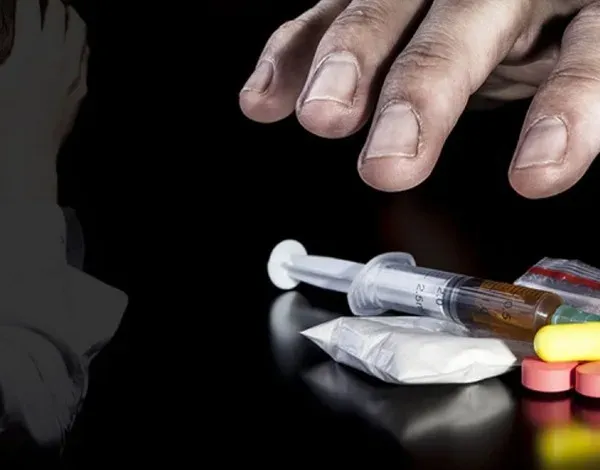
Gujarat is putting ₹14.90 crore behind a promise to bring addiction treatment to every district in the state — 34 hospitals, 15 beds each, with detox, counselling, and rehab all under one roof. It is the most geographically sweeping rollout of de-addiction infrastructure the state has announced, and it comes with social audits and GeM procurement built in.
Key Takeaways
The Gujarat government approved ₹14.90 crore on 22 July to establish de-addiction centres in all 34 district hospitals .
Each centre will have 15 beds and offer detoxification, counselling, mental healthcare, family counselling, and rehabilitation.
Both inpatient (IPD) and outpatient (OPD) services will be available, staffed by multidisciplinary teams.
The initiative falls under the 'Drug-Free Gujarat' programme, guided by Chief Minister Bhupendra Patel .
Equipment will be procured via the Government e-Marketplace (GeM) portal; the project will face social audits and third-party verification .
Funding is approved for the 2026-27 financial year .
The Gujarat government on Wednesday, 22 July approved ₹14.90 crore to set up 15-bed de-addiction centres in all 34 district hospitals across the state, broadening access to addiction treatment and rehabilitation under its 'Drug-Free Gujarat' initiative. The administrative approval covers the 2026-27 financial year and was granted under the direction of Chief Minister Bhupendra Patel.
What the Centres Will Offer
Each district hospital will house a dedicated 15-bed de-addiction unit delivering a full spectrum of services — scientific detoxification, de-addiction therapy, counselling, mental healthcare, family counselling, and rehabilitation. Both inpatient (IPD) and outpatient (OPD) services will be available.
Multidisciplinary teams comprising doctors, nurses, counsellors, psychologists, and other trained professionals will deliver integrated care at every facility, according to the official statement.
Why This Matters for Patients
The initiative is designed to eliminate the need for patients to travel to larger cities for specialised addiction care. By anchoring treatment within district hospitals, the government aims to reduce both the financial and emotional burden on affected families while making early intervention more accessible.
Notably, Gujarat has in recent years pursued a twin-track approach — enforcement against the illegal drug trade alongside expanded rehabilitation — and this outlay represents a significant scaling-up of the rehabilitation arm of that strategy.
Transparency and Oversight Mechanisms
To ensure accountability, all equipment for the centres will be procured exclusively through the Government e-Marketplace (GeM) portal. The project will additionally be subject to regular monitoring, social audits, and third-party verification, the state government confirmed.
Government's Stated Objective
'The government has focused in recent years not only on taking action against the illegal drug trade but also on strengthening rehabilitation measures for people affected by substance addiction,' officials said. They added that timely treatment and counselling would give people struggling with addiction 'an opportunity to recover while contributing to the state's broader objective of creating a drug-free society.'
With centres now mandated across all 34 districts, the rollout will be watched as a test of whether state-level addiction infrastructure can keep pace with the scale of substance abuse challenges in Gujarat.
Point of View
Covering both infrastructure and equipment. The real measure will be whether multidisciplinary staffing — psychologists, counsellors, trained nurses — can actually be recruited and retained at the district level, where healthcare worker shortages are chronic. The GeM procurement mandate and social audit clause are sensible guardrails, but past state-run de-addiction schemes have struggled less with procurement and more with sustained clinical quality. If Gujarat can solve the human-resource problem, this could become a replicable model; if it cannot, the beds will exist but the care will not.
NationPress
22 Jul 2026
Frequently Asked Questions
What has the Gujarat government approved for de-addiction centres?
The Gujarat government approved ₹14.90 crore on 22 July to establish 15-bed de-addiction centres in all 34 district hospitals across the state. The centres will offer detoxification, counselling, mental healthcare, family counselling, and rehabilitation under the Drug-Free Gujarat initiative.
How many de-addiction centres will be set up and where?
A total of 34 de-addiction centres — one in each district hospital — will be established across Gujarat. Each centre will have 15 beds and provide both inpatient and outpatient services.
What services will these de-addiction centres provide?
The centres will offer scientific detoxification treatment, de-addiction therapy, individual and family counselling, mental healthcare, and rehabilitation. Multidisciplinary teams of doctors, nurses, psychologists, and counsellors will deliver integrated care.
How will the Gujarat government ensure transparency in this project?
All equipment will be procured through the Government e-Marketplace (GeM) portal to ensure fair and transparent purchasing. The project will also be subject to regular monitoring, social audits, and third-party verification.
Which financial year covers this approval, and who approved it?
The expenditure has been administratively approved for the 2026-27 financial year under the guidance of Chief Minister Bhupendra Patel. It forms part of Gujarat's broader Drug-Free Gujarat initiative.