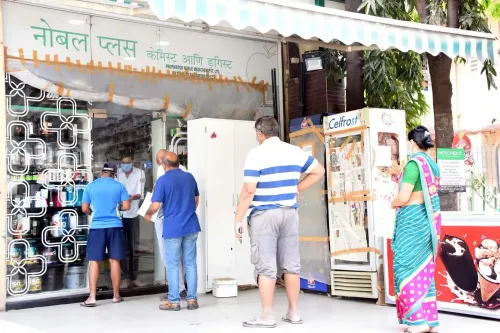
Pregabalin moved to Schedule H1: Centre tightens drug rules to curb misuse

Synopsis
India's Health Ministry has reclassified Pregabalin — a painkiller widely misused for its euphoric effects — from Schedule H to the stricter Schedule H1, mandating prescription-only sales, separate retail registers, and mandatory warning labels. The move follows seizures of illegally stocked supplies and abuse reports from multiple states, marking a direct regulatory response to a growing youth drug-misuse concern.
Key Takeaways
The Union Health Ministry notified Pregabalin's reclassification to Schedule H1 on 22 May 2025 , published in the Gazette of India Extraordinary .
The drug was previously under Schedule H ; the upgrade imposes stricter prescription, labelling, and record-keeping requirements.
Pregabalin can now be sold only against a valid prescription from a Registered Medical Practitioner .
Retailers must maintain a separate register of prescriptions and sales; manufacturers must display the Schedule H1 Drug Warning on packaging.
Non-compliance attracts penal action under the Drugs and Cosmetics Act, 1940 .
The action follows reports of misuse — particularly among youth — and recent seizures of illegally stocked Pregabalin across several states.
The Union Health Ministry on Friday, 22 May notified the inclusion of Pregabalin under Schedule H1 of the Drugs and Cosmetics Rules, 1945, upgrading it from the less restrictive Schedule H classification. The move follows reports from multiple states about the drug's misuse and abuse, particularly among youth, and was published in the Gazette of India Extraordinary.
Why the Centre Acted
Pregabalin is a prescription drug used to treat chronic pain, neuropathies, fibromyalgia, and certain neurological conditions. However, according to the ministry, it has reportedly been misused for its sedative, euphoric, and dissociative effects. Recent seizures of illegally stocked and unauthorisedly sold Pregabalin have been reported from several parts of the country, prompting regulatory intervention.
What Schedule H1 Means
Schedule H1 carries a stricter 'Drug-CAUTION' label, which states that the preparation is dangerous to take except on medical advice and cannot be sold by retail without a prescription from a Registered Medical Practitioner (RMP). Under the revised classification, retailers must maintain a separate register recording prescription and sales details, and manufacturers are required to prominently display the prescribed Schedule H1 warning on all product packaging.
Obligations Across the Supply Chain
The notification places compliance obligations on all stakeholders — manufacturers, distributors, wholesalers, retailers, and pharmacists. Pregabalin can now be dispensed only against a valid prescription issued by an RMP. Violations and non-compliance will attract penal action under the Drugs and Cosmetics Act, 1940 and its rules.
Government's Stated Objective
'The measure is aimed at strengthening accountability across the supply chain, preventing unauthorised access, enhancing prescription monitoring, curbing illegal trafficking, and safeguarding public health from drug misuse and abuse,' the ministry said in its official statement.
Broader Context
This is not the first time India has tightened controls on a widely prescribed analgesic or neurological drug in response to abuse patterns. Tramadol and certain benzodiazepines have faced similar regulatory tightening in recent years. Notably, Pregabalin's reclassification signals a broader shift in the Centre's approach to prescription drug abuse — moving from awareness campaigns to enforceable supply-chain accountability. The notification is expected to be enforced immediately, with state drug controllers responsible for on-ground implementation.
Point of View
Yet regulatory action arrived only after seizures became widespread. The real test lies in enforcement: Schedule H violations are notoriously difficult to prosecute at the retail level given the scale of India's informal pharmacy network. Without empowering state drug controllers with adequate inspection capacity and digitised prescription tracking, the notification risks being a paper deterrent. India's broader challenge is that each drug-abuse crisis tends to produce a reclassification response rather than a systemic early-warning mechanism that flags misuse before it reaches seizure-level scale.
NationPress
20 Sept 2026
Frequently Asked Questions
What is Pregabalin and why has it been reclassified?
Pregabalin is a prescription drug used to treat chronic pain, neuropathies, fibromyalgia, and certain neurological conditions. The Centre reclassified it from Schedule H to the stricter Schedule H1 after receiving reports from multiple states about its misuse — particularly among youth — for sedative, euphoric, and dissociative effects.
What does Schedule H1 classification mean for buyers and pharmacists?
Under Schedule H1, Pregabalin can only be dispensed against a valid prescription from a Registered Medical Practitioner. Pharmacists and retailers must maintain a separate register recording prescription details and sales, and the drug cannot be sold over the counter without documentation.
What are the penalties for non-compliance with the new Pregabalin rules?
Violations and non-compliance with the Schedule H1 notification attract penal action under the Drugs and Cosmetics Act, 1940, and the rules framed thereunder. All stakeholders — manufacturers, distributors, wholesalers, retailers, and pharmacists — are required to comply immediately.
What labelling changes are manufacturers required to make?
Manufacturers must now prominently display the prescribed 'Schedule H1 Drug Warning' label on all Pregabalin product packaging. The label states that the preparation is dangerous to take except on medical advice and cannot be sold by retail without a prescription.
How does Schedule H1 differ from Schedule H?
Schedule H1 is a stricter classification under the Drugs and Cosmetics Rules, 1945. While Schedule H also requires a prescription, Schedule H1 adds mandatory record-keeping by retailers, a specific caution label on packaging, and tighter supply-chain accountability — making enforcement more traceable at every distribution point.