Iran threatens 'painful' strikes on US bases if Washington makes any mistake
Synopsis
Iran's top military command has threatened 'continuous, effective and painful strikes' on every US base and interest in the Middle East if Washington acts on what Tehran claims is an intelligence-confirmed plan to resume operations against it — while Parliament Speaker Qalibaf simultaneously shut the door on Hormuz negotiations unless the US meets Iran's conditions. The warnings follow a reported US-Israel-Arab military meeting in Germany, raising the temperature sharply across a region already on edge.
Key Takeaways
Khatam al-Anbiya Central Headquarters warned on 20 September 2026 of 'painful' and 'continuous' strikes against all US bases and interests in the region if Washington makes any mistake.
Iran claims it has intelligence that the US decided at a recent European meeting to resume actions against Tehran, backed by regional partners.
Regional states that align with what Iran calls US 'aggression' were warned they 'can no longer expect restraint' from Iranian forces.
The warning followed a reported military conference in Germany attended by commanders from the US, Israel, Saudi Arabia, UAE, Bahrain, Kuwait, Qatar, Jordan and Egypt .
Parliament Speaker Mohammad Baqer Qalibaf ruled out any resumption of talks or reopening of the Strait of Hormuz unless Washington recognises Iran's 'legitimate' rights and fulfils its obligations.
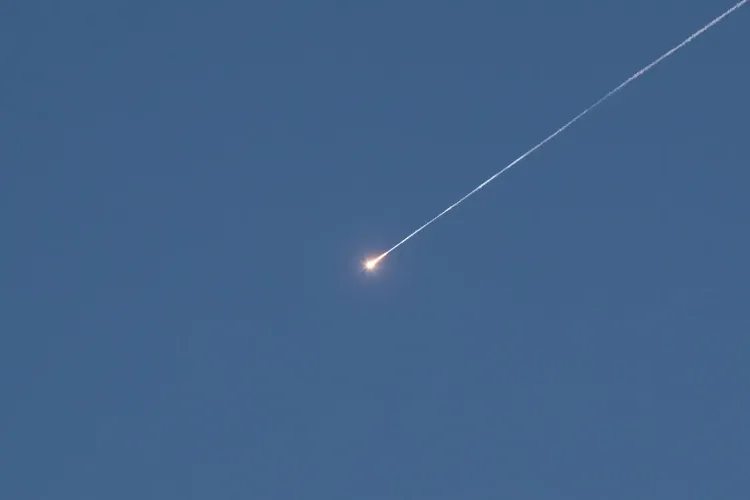
Iran's principal military command, Khatam al-Anbiya Central Headquarters, on Sunday, 20 September 2026, issued a sweeping warning that any misstep by the United States or allied countries in the Middle East would invite 'continuous, effective and painful strikes without any limitation or reservation' against all American bases and interests in the region. The statement, carried by Iranian state media, marks one of Tehran's sharpest public ultimatums in the current cycle of regional tensions.
The Warning in Full
The headquarters stated it possesses intelligence suggesting that Washington resolved at a recent meeting held in Europe to resume operations against Tehran, backed by certain regional states. The command declared that if the US proceeds with any such action, it would face strikes with 'no limitation or reservation.'
The warning was extended to regional governments as well. The statement said countries that continue what Iran characterised as a 'double-standard policy' and align with what it called US 'aggression' 'can no longer expect restraint or forbearance from Iran's powerful armed forces.'
The Germany Meeting That Triggered the Alert
The Iranian statement followed reports of a high-level military gathering in Germany, where top commanders from the United States, Israel, and several Arab states — including Saudi Arabia, the United Arab Emirates, Bahrain, Kuwait, Qatar, Jordan, and Egypt — reportedly convened to discuss the war with Iran and broader regional tensions.
According to US outlet Axios, citing two Israeli officials, US Central Command chief Brad Cooper, who convened the meeting, reportedly reassured attendees that 'the US military would not withdraw from the region despite Iranian attacks on US bases,' and briefed the group on plans to expand ship traffic through the Strait of Hormuz.
Iran's Parliament Speaker Sets Conditions
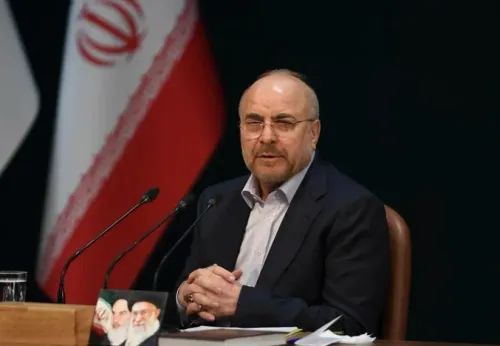
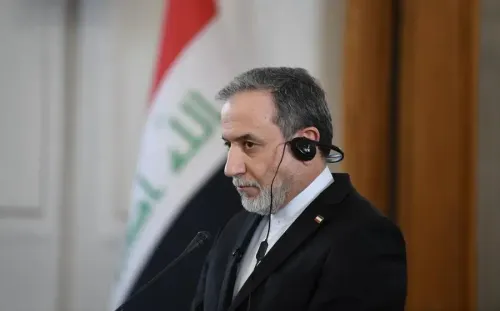
Also on Sunday, Parliament Speaker Mohammad Baqer Qalibaf declared there was 'no chance' of returning to previous negotiations on ending the regional war or reopening the Strait of Hormuz unless Washington meets Tehran's conditions, recognises the Iranian nation's 'legitimate' rights, and honours its stated obligations.
Qalibaf confirmed that Tehran's conditions had already been communicated to Washington through intermediaries, though the mediators were not identified.
What This Means for Regional Stability
The dual warnings — from both the military command and the legislature — signal a hardening of Iran's negotiating posture at a moment when US and allied military coordination in the region is visibly intensifying. The Strait of Hormuz, a critical chokepoint through which a significant share of global oil transits, sits at the centre of any potential escalation scenario.
Analysts note that Tehran's explicit linkage of Hormuz access to diplomatic preconditions raises the stakes considerably, giving Iran a potential economic lever it has brandished but not yet exercised in full. How Washington and its regional partners respond in the coming days will likely determine whether this remains a war of words or tips toward direct confrontation.
Point of View
Not a spontaneous outburst. By tying Hormuz access explicitly to diplomatic preconditions, Iran has handed itself an economic pressure point that the US and Gulf states cannot easily ignore. What is striking is the geographic breadth of the threat: every US base and every regional ally is named as a potential target, which effectively puts Saudi Arabia and the UAE on notice that a security umbrella from Washington may come with Iranian consequences attached. The Germany meeting, if accurately reported, suggests US-led coordination is accelerating — and Tehran's calculus appears to be that raising the cost of that coordination publicly is its best deterrent short of direct action.
NationPress
21 Sept 2026
Frequently Asked Questions
What did Iran's military command warn on 20 September 2026?
Iran's Khatam al-Anbiya Central Headquarters warned that any mistake by the United States or its regional allies would result in 'continuous, effective and painful strikes' against all US bases and interests in the Middle East, with 'no limitation or reservation.' The warning was issued via Iranian state media on Sunday.
Why did Iran issue this warning?
The headquarters stated it has intelligence indicating that Washington decided at a recent meeting in Europe to resume operations against Tehran, with the backing of certain regional states. The warning followed reports of a US-convened military meeting in Germany involving commanders from Israel and several Arab countries.
Who attended the Germany military meeting that Iran cited?
According to reports citing Israeli officials, US Central Command chief Brad Cooper convened the meeting, which was attended by military commanders from the United States, Israel, Saudi Arabia, the UAE, Bahrain, Kuwait, Qatar, Jordan, and Egypt. The gathering reportedly focused on the war with Iran and regional tensions.
What did Iran's Parliament Speaker say about the Strait of Hormuz?
Parliament Speaker Mohammad Baqer Qalibaf said there is 'no chance' of resuming negotiations on ending the regional war or reopening the Strait of Hormuz unless Washington recognises Iran's 'legitimate' rights and fulfils its obligations. He confirmed Tehran's conditions have been conveyed to Washington through mediators.
Which regional countries were warned by Iran?
Iran's military command warned that regional states continuing what it called a 'double-standard policy' and aligning with US 'aggression' 'can no longer expect restraint or forbearance' from Iranian forces. Saudi Arabia, UAE, Bahrain, Kuwait, Qatar, Jordan, and Egypt were among the countries reportedly represented at the Germany meeting Iran cited.