'Stalin for Health': Is it the Most Comprehensive Community Healthcare Initiative in India?
Click to start listening
Synopsis
The Tamil Nadu government's 'Stalin for Health' initiative has transformed community healthcare, providing extensive medical services and immediate follow-ups. With over 800 camps conducted, benefitting over 1.2 million people, it stands as a model for accessible healthcare in India.
Key Takeaways
- Extensive reach: Over 1,256 camps across Tamil Nadu.
- Significant impact: Benefiting more than 1.2 million individuals.
- Comprehensive services: Covering 17 medical specialties.
- Immediate follow-ups: Ensuring quality care close to home.
- Link to welfare programs: Connecting beneficiaries to various government schemes.
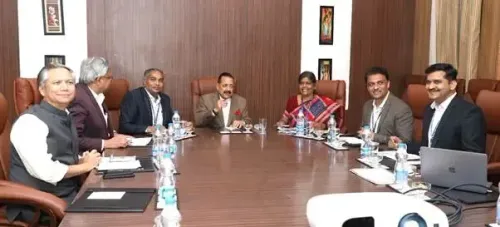
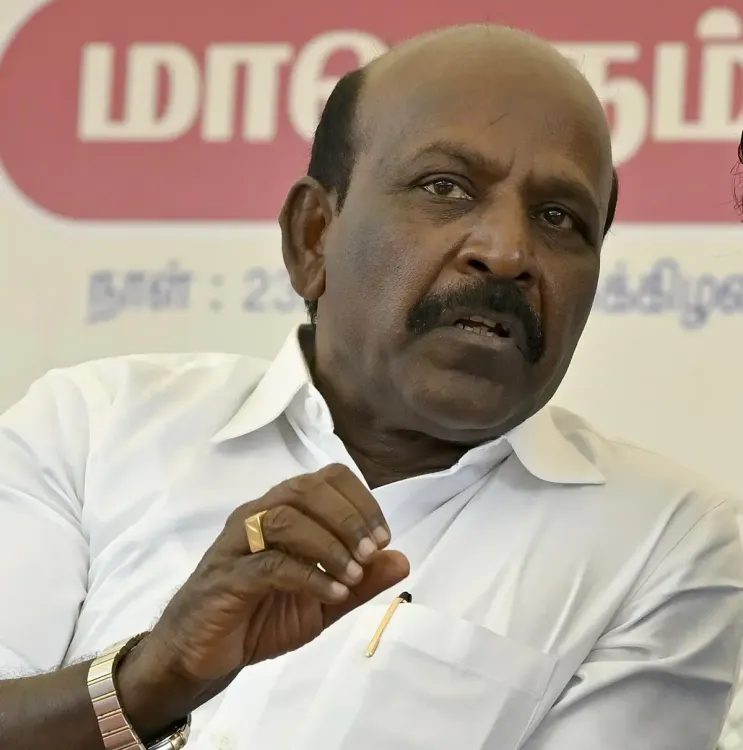
Chennai, Dec 27 (NationPress) The Tamil Nadu Health and Family Welfare Minister, Ma Subramanian, visited the 'Stalin for Health' medical camp held at the Government Higher Secondary School in Kannagi Nagar, part of the Greater Chennai Corporation’s Sholinganallur zone.
This initiative is a key component of the State government’s flagship public healthcare plan, designed to deliver extensive medical services directly to the community.
After assessing the facilities, the minister stated that the program, inaugurated by Chief Minister M.K. Stalin on August 2, has become one of the largest community healthcare initiatives in the nation.
So far, 1,256 medical camps are being organized throughout Tamil Nadu, with three camps in every block, four in each of the five municipalities with populations over 10 lakh, and three camps each in 19 municipalities with populations under 10 lakh.
These camps go beyond standard medical check-ups; they offer comprehensive health evaluations and immediate follow-up services, guaranteeing that quality care is accessible close to home, the minister noted.
As of Saturday, the program has completed its 26th week, having hosted camps in 44 locations across 31 districts in just one day. More than 800 camps have been conducted statewide, benefiting a total of 1,234,908 individuals.
On that Saturday alone, approximately 9,951 individuals utilized medical services at various camps. This initiative also significantly contributes to connecting beneficiaries with government welfare programs.
Participants receive health insurance cards on-site, allowing them to access cashless treatment. To date, 37,445 people have gained insurance benefits through these camps.
A notable aspect of this initiative is the issuance of disability identity cards directly at the camps, eliminating the need for individuals with disabilities to travel to district collectorates for certification.
Thus far, 46,657 individuals with disabilities have benefited from this service. The minister highlighted that the program has already been completed in seven districts, including Mayiladuthurai, Nilgiris, Perambalur, Kancheepuram, Tirupattur, Nagapattinam, and one additional district, with plans to expand to the remaining areas soon.
The camps provide services across 17 medical specialties, including general medicine, pediatrics, cardiology, orthopedics, neurology, dermatology, obstetrics and gynecology, ophthalmology, ENT, physiotherapy, dentistry, mental health, pulmonology, diabetology, radiology, general surgery, Siddha, and Indian systems of medicine.
The overwhelming response indicates that the program has developed into a model of people-centric governance, the minister concluded.
Point of View
The 'Stalin for Health' initiative exemplifies a progressive approach to public health. It not only addresses immediate healthcare needs but also strengthens community ties and promotes government welfare programs. This proactive stance in healthcare accessibility is commendable and sets a benchmark for other states to follow.
NationPress
27/12/2025
Frequently Asked Questions
What is the 'Stalin for Health' initiative?
The 'Stalin for Health' initiative is a comprehensive community healthcare program launched by Tamil Nadu's Chief Minister, aimed at providing extensive medical services directly to the grassroots.
How many medical camps are being held?
A total of 1,256 medical camps are being organized across Tamil Nadu, ensuring widespread access to healthcare.
What types of services do the camps provide?
The camps offer a range of services across 17 medical specialties, including general medicine, pediatrics, cardiology, and more.
How many people have benefited from these camps?
So far, over 1.2 million individuals have benefited from the initiative, highlighting its significant impact.
What is the importance of health insurance cards issued at the camps?
Health insurance cards allow beneficiaries to access cashless treatment, ensuring they receive necessary medical care without financial barriers.