UNICEF: 3.7 million Afghan children face malnutrition risk in 2026
Synopsis
UNICEF's new Afghanistan report is a pre-season warning shot: 3.7 million children under five are already at heightened malnutrition risk, conditions have worsened in 26 of 34 provinces, and the worst months — July to September — are only just beginning. Children under two account for the vast majority of severe cases, making the next few months a critical intervention window.
Key Takeaways
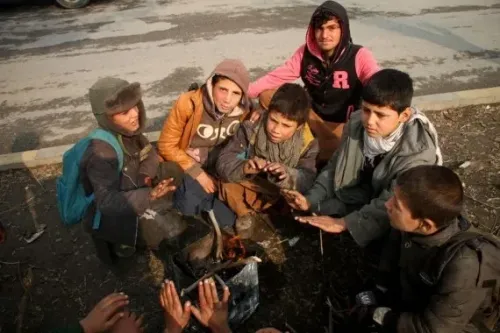
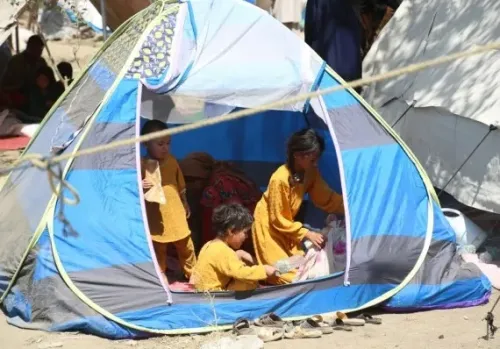
3.7 million children under five in Afghanistan face heightened undernutrition risk in 2026 , according to UNICEF .
Acute malnutrition has worsened in 26 of 34 provinces compared to 2025 , before the peak season even begins.
83% of severe malnutrition cases affect children below two years of age — the most critical developmental window.
Children in severely food-insecure households are up to six times more likely to experience severe wasting during peak months.
OCHA separately reported that 16 million people in Afghanistan will need clean water and sanitation access in 2026 .
Drivers include disease outbreaks, low immunisation, inadequate WASH services, and growing funding and supply gaps.
UNICEF has warned that 3.7 million children under the age of five in Afghanistan face a heightened risk of undernutrition in 2026, driven by deepening food insecurity, disease outbreaks, and widening funding gaps. The alarm comes in a new report titled 'Too Little, Too Late: The Diet Crisis Facing Young Children in Afghanistan', released ahead of the country's peak malnutrition season.
Scale of the Crisis
According to the report, acute malnutrition has deteriorated in 26 of Afghanistan's 34 provinces compared to 2025 — and conditions are worsening even before the annual peak malnutrition season, which runs primarily from July to September. The speed of deterioration has alarmed humanitarian officials, who note that the worst is likely still ahead.
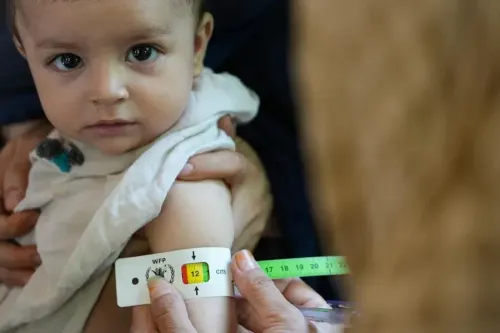
UNICEF data shows that 83 per cent of severe malnutrition cases and 77 per cent of moderate acute malnutrition cases occur among children below two years of age — the most critical window for physical and cognitive development. Children in severely food-insecure households are reportedly up to six times more likely to experience severe wasting during the peak period.
What UNICEF Said
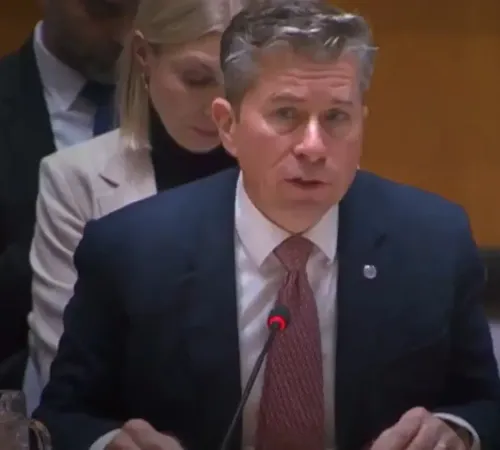
Tajudeen Oyewale, UNICEF's Representative in Afghanistan, said: 'This new evidence gives us an opportunity to act before children reach the point of severe malnutrition. When families begin reducing meals or cutting back on nutritious foods it is not only a sign of hardship. It is a warning that a child may soon become dangerously wasted. Treatment saves lives, but we must also invest in prevention, starting with the diets of the youngest children and pregnant women.'
Compounding Factors
Beyond poor diets and food insecurity, UNICEF identified several overlapping drivers of the crisis: disease outbreaks, low immunisation coverage, inadequate water, sanitation and hygiene (WASH) services, and growing supply and funding gaps. The agency called for coordinated action across nutrition, health, WASH, education, and social protection sectors.
This comes amid a broader water emergency in Afghanistan. The United Nations Office for the Coordination of Humanitarian Affairs (OCHA) reported in June 2026 that 16 million people in Afghanistan will need access to clean water and sanitation services this year. OCHA noted that water scarcity is exposing children to greater health risks and forcing communities to adopt increasingly desperate coping mechanisms.
A Long-Running Emergency
Afghanistan has faced recurring droughts, inadequate water-management infrastructure, and entrenched poverty for decades. Humanitarian agencies have consistently flagged that climate-related shocks are placing additional pressure on already fragile communities. The 2026 malnutrition outlook represents a continuation — and in many provinces, an acceleration — of a crisis that has persisted through successive political upheavals and international funding withdrawals.
With the peak malnutrition season now underway, agencies warn that without immediate and scaled intervention, the number of children requiring emergency treatment will rise sharply in the coming months.
Point of View
Meaning the humanitarian cost compounds long after the emergency phase passes. International donors who reduced Afghanistan commitments after 2021 should reckon with the fact that funding withdrawals and malnutrition curves are not unrelated lines on a chart.
NationPress
13 Jul 2026
Frequently Asked Questions
How many children are at risk of malnutrition in Afghanistan in 2026?
UNICEF estimates that 3.7 million children under the age of five in Afghanistan face a heightened risk of undernutrition in 2026. This figure is driven by food insecurity, disease outbreaks, and deteriorating humanitarian conditions across the country.
Which age group is most affected by malnutrition in Afghanistan?
Children below two years of age bear the greatest burden, accounting for 83 per cent of severe malnutrition cases and 77 per cent of moderate acute malnutrition cases, according to UNICEF. This is the most critical stage for physical and cognitive development.
Why is malnutrition worsening in Afghanistan?
UNICEF cites a combination of poor young child diets, rising food insecurity, disease outbreaks, low immunisation coverage, inadequate water and sanitation services, and growing funding and supply gaps. Climate-related shocks and entrenched poverty further compound the situation.
When is Afghanistan's peak malnutrition season?
Afghanistan's peak malnutrition season runs primarily from July to September. UNICEF's report warned that conditions were already deteriorating across 26 of 34 provinces before this period had fully commenced.
What is the water and sanitation situation in Afghanistan?
OCHA reported in June 2026 that 16 million people in Afghanistan will require access to clean water and sanitation services this year. Water scarcity is exposing children to greater health risks and forcing communities to adopt coping mechanisms amid worsening conditions.