201 honour killings in Pakistan's Swat since 2018, NGO data reveals
Synopsis
An NGO called The Awakening has documented 201 honour killings in Pakistan's Swat since 2018 — 84 more than police officially recorded. Advocates say family pressure, witness intimidation, and out-of-court settlements are systematically burying cases before they reach a verdict, making the official count a fraction of the reality.
Key Takeaways
201 people — 180 women and 21 men — were killed in honour killings in Swat between 2018 and the present, according to NGO The Awakening .
Police records acknowledge only 117 cases in the same period, a gap of 84 cases that activists attribute to cover-ups and disguised suicides.
Advocate Samreen Hakeem says perpetrators are usually the victim's own family, who then withhold evidence or reach settlements, collapsing prosecutions.
Witnesses to honour killings routinely testify in favour of accused relatives in court, according to Hakeem.
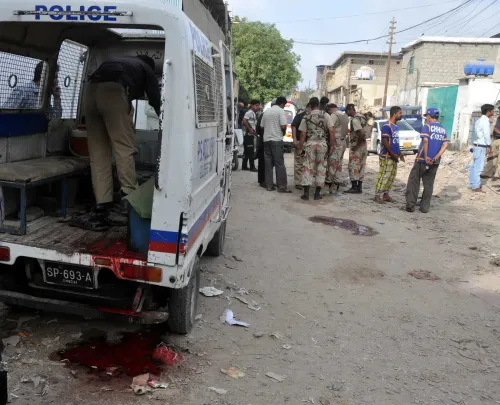
In Karachi , a young couple — Nadia (20) and Najeebullah (25) — were shot dead on 25 May by gunmen who tracked them from a courthouse where their marriage had just been legally recognised.
At least 201 people — including 180 women and 21 men — have been killed in honour killings in Pakistan's Swat district since 2018, according to data compiled by The Awakening, a local NGO that has tracked honour killings, domestic disputes, sexual violence, and suicides in the region. The figures, cited in a report published in Pakistani daily The Friday Times, point to a crisis that official records significantly undercount.
The Data Gap
Official figures from the District Police Office (DPO) Swat recorded only 117 cases during the same period — 85 women and 32 men — with 174 arrests and 88 cases registered. The discrepancy of 84 cases between the NGO tally and police records is, according to journalist Shahzad Naveed writing in The Friday Times, far beyond a statistical rounding error.
Naveed noted that survivors, activists, and officials describe a system where 'family pressure, weak evidence, and social stigma collapse prosecutions before they begin', and where deaths deliberately disguised as suicides never enter the official count at all.
Why Prosecutions Collapse
Advocate and Focal Person for Ending Violence Against Women and Girls (EVAWG), Samreen Hakeem, explained that in most cases only Section 302 of Pakistan's Penal Code — the provision for murder — is applied when relatives of victims withhold full evidence from police. She highlighted that perpetrators are frequently the victim's own family members, which severely undermines the prospect of a conviction.
'In most incidents, it is the victim's own family members who are involved. When legal action is initiated, other family members reach a settlement with the accused or do not present evidence in court,' Hakeem said, as quoted by The Friday Times.
She further observed that witnesses who are present at the time of a killing routinely testify in favour of the accused in court. 'In Pashtun society, killings are carried out in the name of honour, and then the case is dropped because it is considered a source of shame. Their stance is that the sooner the case ends, the better,' Hakeem said.
A Karachi Case Illustrates the Pattern
In a case that drew national attention, a young couple in Karachi's Malir area were shot dead by unidentified gunmen on 25 May in what police described as a suspected honour killing. The victims — Nadia, aged 20, and Najeebullah, aged 25 — had married by choice, a decision that reportedly triggered the violence.
Nadia's father, Aslam, had filed a kidnapping case at the local police station on 19 May after the couple wed without family consent. Najeebullah's father was arrested in connection with that case. On 25 May, the couple appeared before a court in Malir and submitted their marriage certificate; the case was disposed of and Najeebullah's father was released.
Shortly after leaving the courthouse, the couple were travelling to the NADRA office in Saudabad when armed men, who had reportedly been tracking them since they left the court, opened fire on their vehicle. Two other occupants, including the driver, managed to escape during the attack, according to police.
Systemic Barriers to Justice
The Swat data underscores a broader accountability deficit in Pakistan's handling of gender-based violence. The combination of community pressure on witnesses, settlement mechanisms that allow accused family members to escape prosecution, and a social framework that treats honour-based killings as private family matters continues to shield perpetrators from legal consequences. Activists argue that without mandatory independent investigations and witness protection, the gap between real incidence and official records will only widen.
Human rights organisations have repeatedly called on Pakistan's federal and provincial governments to introduce stricter enforcement of existing laws against honour killings, but implementation, particularly in Khyber Pakhtunkhwa province, of which Swat is a part, remains inconsistent.
Point of View
When families settle cases before evidence reaches a judge, and when deaths are logged as suicides, the law becomes complicit in the very violence it is meant to punish. Pakistan has amended its honour killing statutes in recent years, but Swat's numbers reveal that statutory reform without enforcement infrastructure and witness protection is largely symbolic. The real count of victims in Swat is almost certainly higher than even The Awakening's 201 — because the cases that never get reported at all are, by definition, invisible.
NationPress
15 Sept 2026
Frequently Asked Questions
How many honour killings have occurred in Pakistan's Swat since 2018?
NGO The Awakening has documented at least 201 honour killings in Swat since 2018, including 180 women and 21 men. This figure is significantly higher than the 117 cases recorded by the District Police Office Swat during the same period.
Why is there such a large gap between NGO and police figures?
Advocates and officials say family pressure on witnesses, out-of-court settlements, and deaths deliberately disguised as suicides all prevent cases from entering official records. Advocate Samreen Hakeem notes that witnesses routinely testify in favour of the accused, and that families of victims often reach settlements with perpetrators rather than pursuing prosecution.
Who is The Awakening, and how does it collect this data?
The Awakening is a local NGO based in Swat that monitors incidents of honour killings, domestic disputes, sexual violence, and suicides in the district. It independently tracks cases that may not be formally reported or registered with police.
What happened to the couple killed in Karachi in May?
Nadia (20) and Najeebullah (25), who had married by choice, were shot dead by unidentified gunmen on 25 May in the Malir area of Karachi. Armed men tracked the couple from a court where their marriage had just been legally upheld, and opened fire on their vehicle as they headed to the NADRA office.
What legal provision is typically used in honour killing prosecutions in Pakistan?
According to advocate Samreen Hakeem, only Section 302 of Pakistan's Penal Code — the standard murder provision — is applied in honour killing cases, and only when the victim's relatives cooperate with police. When family members withhold evidence or settle with the accused, prosecutions collapse before a verdict is reached.