25 US states sue Trump over Section 301 tariffs on 60 trade partners
Synopsis
Twenty-five US states have taken the Trump administration to federal trade court, arguing that Section 301 tariffs on goods from 60 countries are an unconstitutional workaround after the Supreme Court already struck down earlier versions. With 99.4% of US imports in the crosshairs and state attorneys general calling the levies an illegal tax on families, this is shaping up as the most consequential trade-law battle of Trump's second term.
Key Takeaways
A coalition of 25 US states filed suit in the US Court of International Trade on 4 August against Trump's new tariff regime.
The tariffs — 10% or 12.5% — cover goods from 60 trading partners representing 99.4% of all US imports.
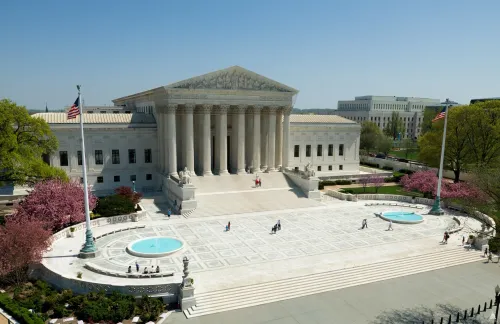
States argue the administration used Section 301 of the Trade Act of 1974 as a pretext to revive tariffs the Supreme Court struck down in February .
The coalition is seeking a court order to block the tariffs, declare them unlawful, and refund duties already paid.
The White House defended Section 301 as a 'legally durable tool,' rejecting the states' arguments.
This is at least the second major legal challenge to the new duties; a small-business group filed a similar suit earlier.
A coalition of 25 US states filed a lawsuit against the Trump administration on Monday, 4 August in the US Court of International Trade, arguing that President Donald Trump exceeded his legal authority by imposing sweeping new tariffs on goods from 60 trading partners. The complaint challenges levies of 10% or 12.5% on the vast majority of imports from economies that collectively account for 99.4% of all US imports, according to the court filing.
What the Lawsuit Demands
The coalition is seeking a court order to block the tariffs, declare them unlawful, and mandate refunds for duties already paid. The legal challenge centres on the administration's use of Section 301 of the Trade Act of 1974 and forced-labour concerns as the statutory basis for the new duties.
The states argue that federal officials invoked these provisions as a pretext to rapidly recreate nearly identical global tariffs that the Supreme Court previously struck down in February. This follows the rejection of two earlier tariff regimes imposed under different legal frameworks.
What State Leaders Said
New York Governor Kathy Hochul said in a statement: 'President Trump's illegal tariffs are nothing more than a tax on hardworking families, driving up the cost of groceries, household essentials, building materials, and countless everyday goods that New Yorkers rely on.'
New York Attorney General Letitia James added: 'After losing at the Supreme Court, the administration is once again trying to illegally raise taxes on families and businesses with a new round of tariffs.'
Oregon Attorney General Dan Rayfield, writing on X, noted: 'Today, we're filing our third lawsuit against Trump's illegal tariffs. Once again, the president is raising costs on everyday goods for Oregon families and small businesses, and once again, we're leading a multistate coalition stepping up to stop him.'
The White House Response
The White House rejected the coalition's arguments, asserting that Section 301 tariffs have proven to be a 'legally durable tool' since Trump's first term and remain valid under the current administration. Officials did not address the states' specific pretext argument.
Who Is in the Coalition and What Comes Next
Joining New York in the suit are Arizona, California, Colorado, Connecticut, Delaware, Hawaii, Illinois, Kentucky, Massachusetts, Maryland, Maine, Michigan, Minnesota, Nevada, New Jersey, New Mexico, North Carolina, Oregon, Pennsylvania, Rhode Island, Virginia, Vermont, Washington, and Wisconsin.
Monday's filing marks at least the second major legal challenge to the new duties. A group of small businesses previously sued the administration on similar grounds — that Trump cannot leverage new statutory authority to circumvent the Supreme Court's earlier invalidation of his overarching tariff agenda. The US Court of International Trade now faces pressure to rule on whether Section 301 can serve as a constitutional workaround.
Point of View
The White House reached for a Cold War-era trade statute and dressed it in forced-labour language — a framing that courts may find difficult to sustain given the near-identical scope of the new levies. What is notable here is the breadth of the coalition: 25 states spanning red and blue alike signals that the economic pain of blanket tariffs is cutting across political lines, not just progressive ones. If the US Court of International Trade grants an injunction, it would freeze a tariff architecture covering virtually all US imports — a systemic disruption to trade policy that no White House, regardless of party, has faced before.
NationPress
18 Sept 2026
Frequently Asked Questions
Why are 25 US states suing the Trump administration over tariffs?
The states argue that President Trump exceeded his legal authority by using Section 301 of the Trade Act of 1974 to impose new tariffs of 10% or 12.5% on goods from 60 trading partners. They contend this is a pretext to recreate nearly identical global duties that the Supreme Court struck down in February, and they are asking the US Court of International Trade to block the levies and order refunds.
What is Section 301 of the Trade Act of 1974?
Section 301 is a US trade law provision that grants the executive branch authority to impose tariffs or other trade measures in response to foreign practices deemed unfair or harmful to US commerce. The Trump administration has invoked it, alongside forced-labour concerns, as the legal basis for its latest round of sweeping import duties.
Which states are part of the lawsuit against Trump's tariffs?
The coalition includes New York, Arizona, California, Colorado, Connecticut, Delaware, Hawaii, Illinois, Kentucky, Massachusetts, Maryland, Maine, Michigan, Minnesota, Nevada, New Jersey, New Mexico, North Carolina, Oregon, Pennsylvania, Rhode Island, Virginia, Vermont, Washington, and Wisconsin — a total of 25 states.
What did the Supreme Court previously rule on Trump's tariffs?
The Supreme Court struck down an earlier version of Trump's broad tariff regime in February, rejecting the statutory frameworks the administration had used at that time. The current lawsuit argues the Section 301 approach is an attempt to circumvent that ruling by reviving virtually identical duties under a different legal label.
What happens next in the tariff legal battle?
The case will be heard by the US Court of International Trade, which must decide whether Section 301 can constitutionally support tariffs of this scope. This is at least the second major legal challenge to the new duties; a small-business group filed a similar suit earlier. A ruling against the administration could freeze duties covering 99.4% of US imports.