40% of Pakistan's children have unsafe lead levels, survey finds
Synopsis
A UNICEF-backed survey of 2,175 Pakistani children under three found nearly 40% with blood lead levels above safe limits — and in industrial towns like Hattar and Haripur, that figure hits 88%. With potential losses of USD 25–35 billion annually in GDP, this is not just a health emergency but an economic time bomb Pakistan has yet to fully map.
Key Takeaways
Nearly 40 per cent of children aged 12–36 months across seven high-risk Pakistani cities have blood lead levels above globally safe limits, per the Pakistan Childhood Lead Exposure Survey .
Hattar and Haripur are the worst-affected areas, with 88 per cent of sampled children testing positive for high lead levels.
Only 1 per cent of children in Islamabad were affected, revealing sharp geographic disparities linked to industrial activity.
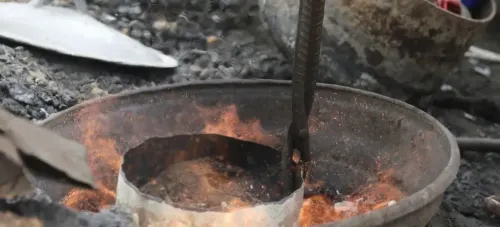
Key exposure sources include informal battery recycling, lead-based paints, adulterated spices, and traditional cosmetics like surma .
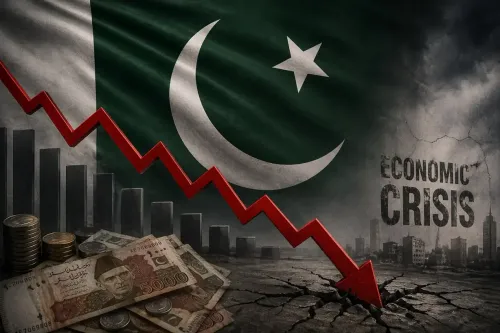
UNICEF estimates the cognitive toll could cost Pakistan 6–8 per cent of GDP , or USD 25–35 billion annually .
Experts are calling for a comprehensive national survey; the current study covered only 2,175 children across seven cities.
Nearly 40 per cent of children in Pakistan have blood lead levels exceeding globally accepted safe limits, according to findings presented at a journalistic training session in Karachi on 21 July. The data, drawn from the Pakistan Childhood Lead Exposure Survey, signals one of the most acute childhood lead poisoning crises anywhere in the world.
Key Findings from the Survey
Dr Humaera Irshad, a health specialist with UNICEF Pakistan, presented results showing that blood samples from 2,175 children aged between 12 and 36 months were analysed across seven high-risk cities. Of those sampled, nearly 40 per cent recorded lead concentrations above internationally recognised safe thresholds. In selected high-risk localities within Karachi, the figure stood at approximately 39 per cent.
The session was jointly organised by the Lead Exposure Elimination Project (LEEP) Pakistan, UNICEF Pakistan, and Kamzmin Consultants. Dr Irshad cautioned that the survey was limited in scope and called for a comprehensive national study to determine the full extent of lead contamination among Pakistani children.
Where Exposure Is Worst
Among the cities surveyed — Haripur, Islamabad, Karachi, Lahore, Peshawar, Quetta, and Rawalpindi — the industrial towns of Hattar and Haripur recorded the most alarming figures, with 88 per cent of children tested showing high lead levels. By contrast, only 1 per cent of children in Islamabad were found to be affected, illustrating stark geographic disparities tied to industrial activity.
Sources of Lead Exposure
Experts identified multiple pathways through which lead enters children's bodies: contaminated food and water, household dust, traditional cosmetics such as surma, adulterated spices, lead-based paints, and the informal recycling of lead-acid batteries. The study noted that sources were identified based on global evidence patterns rather than direct attribution.
Zafar Fatmi, a professor at Aga Khan University, described lead exposure as a silent threat
owing to the absence of early visible symptoms. He warned that even small amounts can impair brain development, the nervous system, learning ability and physical growth.
Health and Economic Consequences
UNICEF has documented that lead exposure in children can cause anaemia, suppress immune function, lower IQ, reduce attention span, and impair memory — raising the long-term risk of learning difficulties and behavioural disorders. These effects are particularly severe in children under the age of three, whose developing brains are most vulnerable.
The economic stakes are equally stark. With potentially up to eight in 10 children in Pakistan affected — reportedly among the highest rates globally — the long-term loss in cognitive productivity is estimated to cost between 6 and 8 per cent of Pakistan's GDP, or roughly USD 25–35 billion annually, according to available estimates.
What Comes Next
The earlier May 2025 study by Pakistan's Ministry of National Health Services, Regulations and Coordination in partnership with UNICEF had flagged the same alarming trend. Experts are now pressing for a full-scale national survey and targeted regulatory action on battery recycling and contaminated consumer products. Without decisive policy intervention, the burden on Pakistan's public health system — and its future workforce — is set to deepen.
Point of View
Which means this is a governance failure as much as a public health one. Pakistan has known about its lead contamination problem for years, yet the survey announced in May and discussed again in July is still described as 'limited in scope.' The delay in commissioning a full national study is itself a policy choice — and one with a measurable price tag of up to USD 35 billion a year in lost productivity.
NationPress
20 Oct 2026
Frequently Asked Questions
What did the Pakistan Childhood Lead Exposure Survey find?
The survey found that nearly 40 per cent of children aged 12 to 36 months across seven high-risk Pakistani cities had blood lead levels exceeding globally accepted safe limits. Blood samples from 2,175 children were analysed for the study, which was conducted in partnership with UNICEF Pakistan.
Which cities and areas are most affected by childhood lead poisoning in Pakistan?
The seven cities surveyed were Haripur, Islamabad, Karachi, Lahore, Peshawar, Quetta, and Rawalpindi. Industrial towns Hattar and Haripur recorded the highest rates, with 88 per cent of children tested showing elevated lead levels, while Islamabad had the lowest rate at just 1 per cent.
How does lead enter children's bodies in Pakistan?
Experts identified several pathways, including contaminated food and water, household dust, traditional cosmetics like surma, adulterated spices, lead-based paints, and the informal recycling of lead-acid batteries. Industrial emissions near residential areas are also a significant source.
What are the health effects of lead exposure in young children?
According to UNICEF, lead exposure in children can cause anaemia, weaken the immune system, lower IQ, reduce attention span, and impair memory, increasing the risk of learning difficulties and behavioural problems. Professor Zafar Fatmi of Aga Khan University warned it can impair brain development, the nervous system, and physical growth even in small amounts.
What is the economic cost of lead poisoning to Pakistan?
Available estimates suggest the cognitive and productivity losses linked to widespread lead exposure could cost Pakistan between 6 and 8 per cent of its GDP, amounting to approximately USD 25–35 billion annually. With up to eight in 10 children potentially affected nationally, experts say Pakistan may have one of the highest childhood lead exposure rates in the world.