Five civilians killed in US strikes on cargo boats in Strait of Hormuz: Iran media
Synopsis
Iran's semi-official Tasnim News Agency says five civilians died when US forces struck two cargo boats near the Strait of Hormuz — directly contradicting Washington's claim of targeting Iranian speedboats. With a fragile ceasefire already in place and Trump publicly downplaying the exchange, both sides are offering sharply different versions of a potentially escalatory incident in one of the world's most critical waterways.
Key Takeaways
Five civilians were reportedly killed when US forces struck two small civilian cargo boats near the Strait of Hormuz on 5 May , according to Iran's Tasnim News Agency .
US Central Command chief Brad Cooper said the US sank six Iranian small boats and intercepted multiple cruise missiles and drones.
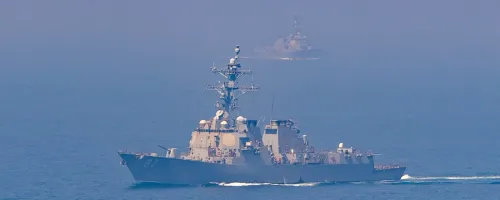
USS Truxtun and USS Mason transited the Strait of Hormuz under sustained Iranian barrage; no US vessel was struck.
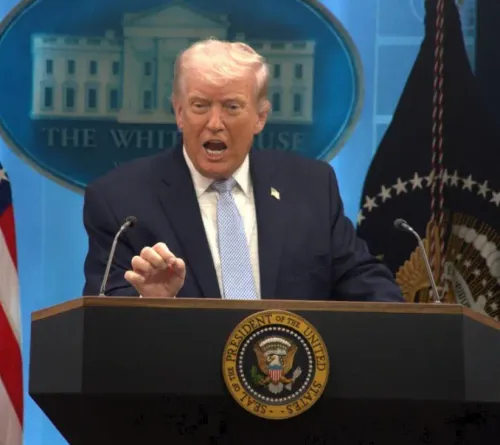
President Donald Trump downplayed the attacks, calling them "not heavy firing," and stopped short of declaring a ceasefire violation.
A US-Iran ceasefire has been in effect since 8 April ; talks in Islamabad ended without a deal.
Iran rejected US claims, saying no commercial vessels or oil tankers had transited the strait.
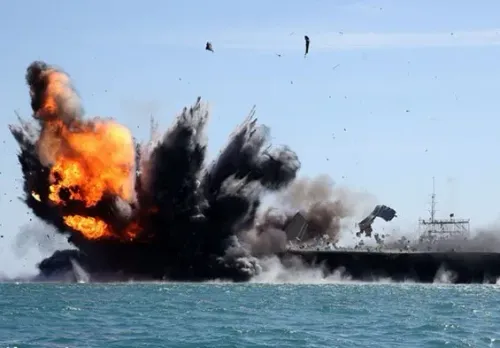
Five civilians were killed when US forces attacked two small civilian cargo boats travelling along the Strait of Hormuz on Tuesday, 5 May, according to Iran's semi-official Tasnim News Agency. The report contradicts the US military's account, which claimed it had targeted six Iranian speedboats — none of which, local sources told Tasnim, were combat vessels.
What Iranian Media Reported
According to Tasnim, citing local sources consulted to verify the nature of the incident, US forces attacked two small civilian cargo boats that were travelling from Khasab along the Omani coast toward Iran. The strike killed five civilian passengers onboard, the agency reported. The account was relayed by Xinhua, China's state news agency.
Iran subsequently rejected the broader US claims, with Tasnim reporting that "no commercial vessels or oil tankers" had transited the Strait of Hormuz — a direct rebuttal of Washington's stated justification for the operation.
What the US Military Said
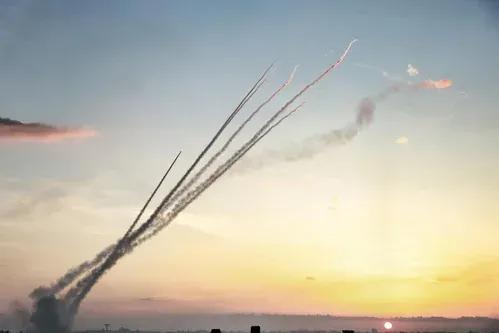
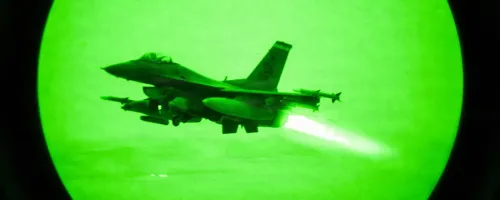
Brad Cooper, chief of US Central Command, said on Monday that the US military had sunk six Iranian small boats in the Strait of Hormuz. Cooper told a news conference that the Iranian boats were struck by US Apache and MH-60 Seahawk helicopters. He added that Iranian forces had launched "multiple cruise missiles, drones, and small boats at ships we are protecting."
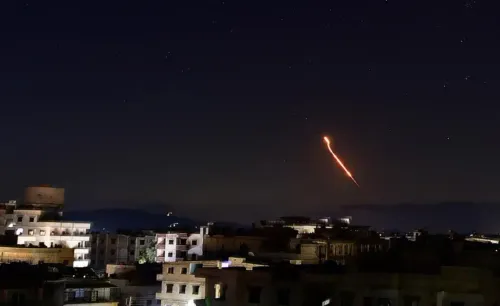
US forces reportedly intercepted several Iranian missiles and drones in addition to sinking the boats, Cooper said. Two US Navy destroyers — the USS Truxtun and the USS Mason — passed through the Strait of Hormuz and entered the Gulf after navigating what Pentagon officials, speaking under condition of anonymity, described as a sustained barrage of small boats, missiles, and drones from Iran. No US warship was struck, and none of the projectiles launched by Iran reached the US vessels, the officials were quoted as saying by CBS News.
Trump's Remarks and the Ceasefire Question
US President Donald Trump told Fox News on Monday that the Iranians are "more malleable" than they were before. He threatened that if Iran targets US ships in the Strait of Hormuz, they would be "blown off the face of the Earth."
However, in a separate phone interview with ABC News on the same day, Trump stopped short of saying Iran's Monday attacks had violated the US-Iran ceasefire. "[It was] not heavy firing," Trump said, appearing to downplay the severity of the exchanges.
Background: How the Crisis Escalated
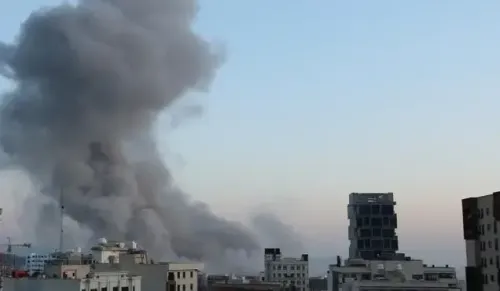
The current confrontation has its roots in events dating to 28 February, when the United States and Israel launched joint strikes on Tehran and other Iranian cities, reportedly killing then-Supreme Leader Ali Khamenei, senior military commanders, and civilians, according to the source report. Iran responded with waves of missile and drone attacks on Israel and US targets across the region, and restricted passage through the Strait of Hormuz for vessels linked to Israel and the United States.
A ceasefire took effect on 8 April, followed by talks between Iranian and US delegations in Islamabad that ended without a deal. The latest exchange of fire raises fresh questions about the durability of that ceasefire, with both sides offering sharply conflicting accounts of what took place in the strait.
What Happens Next
The competing narratives — civilian cargo boats versus Iranian speedboats — remain unverified by independent sources, and the incident is likely to complicate any renewed diplomatic engagement. With the Strait of Hormuz central to global oil transit, further military incidents in the waterway could have significant consequences for energy markets and regional stability.
Point of View
Both claims must be treated with equal scepticism. What is clear is that the ceasefire framework is under serious stress: Trump's decision to simultaneously threaten Iran with annihilation and downplay its attacks as 'not heavy firing' signals an administration that has not decided whether it wants de-escalation or deterrence. In the Strait of Hormuz — through which roughly 20% of global oil flows — that ambiguity is a risk in itself.
NationPress
26 Sept 2026
Frequently Asked Questions
What happened in the Strait of Hormuz on 5 May 2025?
According to Iran's semi-official Tasnim News Agency, US forces attacked two small civilian cargo boats travelling from Khasab along the Omani coast toward Iran, killing five civilian passengers. The US military, however, said it had targeted six Iranian speedboats in the Strait of Hormuz.
What did US Central Command say about the incident?
US Central Command chief Brad Cooper said the US military sank six Iranian small boats and intercepted multiple cruise missiles and drones. He said Iranian forces had launched sustained attacks on ships the US was protecting in the Strait of Hormuz.
Did the incident violate the US-Iran ceasefire?
US President Donald Trump stopped short of declaring a ceasefire violation, calling the Iranian actions 'not heavy firing' in an interview with ABC News. A ceasefire between the US and Iran took effect on 8 April, followed by inconclusive talks in Islamabad.
What were the USS Truxtun and USS Mason doing in the Strait of Hormuz?
The two US Navy destroyers were transiting the Strait of Hormuz as part of operations to restore commercial shipping through the waterway. They faced a coordinated barrage of small boats, missiles, and drones from Iran but were not struck, according to Pentagon officials cited by CBS News.
How did the current US-Iran confrontation begin?
According to the source report, on 28 February the United States and Israel launched joint strikes on Tehran and other Iranian cities. Iran responded with missile and drone attacks on Israeli and US targets and restricted Strait of Hormuz passage for vessels linked to Israel and the US, before a ceasefire took effect on 8 April.