6.7-magnitude earthquake strikes central Peru, tremors felt in Lima
Synopsis
A 6.7-magnitude earthquake jolted central Peru in the early hours of Saturday, sending Lima residents out of their homes — though no tsunami warning was raised. The same week, Japan's Kumamoto Prefecture was rattled by a 5.7-magnitude quake, prompting bullet train suspensions and evacuation orders, as authorities warned aftershocks could continue for days.
Key Takeaways
A 6.7-magnitude earthquake struck central Peru at 0009 GMT on 21 November 2026 , according to the USGS .
The epicentre was at a depth of 108 km ; no tsunami warning was issued by the US Tsunami Warning System .
Residents of Lima evacuated their homes following the tremor, local media reported.
A separate magnitude-5.7 quake struck Kumamoto Prefecture, Japan on Thursday, suspending 8 Shinkansen services and affecting 5,600 passengers .
Japan's JMA urged residents to stay alert for up to a week, warning another similar quake could follow.
Kumamoto was also struck by a magnitude-7.1 quake on 28 July , which killed more than 30 people .
A 6.7-magnitude earthquake struck central Peru at 0009 GMT on Saturday, 21 November 2026, according to the US Geological Survey (USGS). The quake's epicentre was located at 10.85 degrees south latitude and 75.98 degrees west longitude, at a depth of 108 km. No tsunami warning, advisory, watch, or threat was issued, the US Tsunami Warning System confirmed.
Tremors Reach Lima
Residents of Lima, Peru's capital, left their homes following the tremor, according to local media reports. The depth of 108 km — placing this in the intermediate-depth category — typically reduces surface shaking intensity compared to shallower events, which may explain the absence of immediate casualty reports. Peru sits on the Pacific 'Ring of Fire' and is one of the most seismically active countries in South America, regularly recording significant earthquakes due to the subduction of the Nazca Plate beneath the South American Plate.
No Tsunami Threat Issued
The US Tsunami Warning System stated that no tsunami warning, advisory, watch, or threat had been issued following the quake. This is consistent with the earthquake's relatively deep focus, as tsunamis are most commonly triggered by shallow submarine earthquakes that cause significant seafloor displacement. Authorities were continuing to assess the situation in affected areas.
Japan Also on Alert After Kumamoto Quake
Separately, Japan's Meteorological Agency (JMA) on Thursday urged residents of Kumamoto Prefecture in southwestern Japan to remain vigilant for up to a week after a magnitude-5.7 earthquake struck the region at approximately 2:22 am local time. The quake's epicentre was in the Amakusa-Ashikita region at a depth of around 10 km, and it registered a lower 5 on Japan's seismic intensity scale — which ranges from 0 to 7 — in parts of the prefecture. No tsunami warning was issued for Japan either.
The tremor prompted the municipal governments of Minamata and Kuma to issue evacuation orders. Around 5,600 passengers were affected after eight Kyushu Shinkansen bullet train services between Hakata and Kagoshima-Chuo stations were suspended, according to JR Kyushu. The quake was also felt across Kyushu, Japan's southwestern main island, as well as in parts of Shikoku and Honshu.
Kumamoto's Seismic History
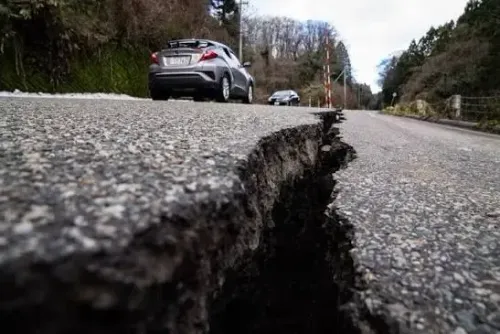
Kumamoto Prefecture was struck by a magnitude-7.1 earthquake on 28 July, which registered the maximum intensity of 7 on Japan's seismic scale in some areas, killing more than 30 people and causing extensive damage, including the collapse of a smokestack at a paper mill. Thursday's quake was the first in the prefecture to register an intensity of five or higher since 1 August. In a separate incident in August, at least 37 people were injured after a 5.9-magnitude earthquake struck Ibaraki Prefecture, northeast of Tokyo, also causing burst water pipes and transportation disruptions.
What Authorities Are Monitoring
In both Peru and Japan, authorities are tracking the possibility of aftershocks. The JMA has explicitly warned that another earthquake of similar intensity to Thursday's Kumamoto tremor could occur within the week. Peru's civil defence agencies are assessing conditions in the central region closest to the epicentre, with Lima residents advised to follow official guidance as assessments continue.
Point of View
One in Japan — are a reminder that the Pacific Ring of Fire remains relentlessly active. What stands out in both cases is the speed with which authorities confirmed the absence of a tsunami threat, reflecting improved early-warning coordination. For Peru, the deeper concern is response capacity in central regions far from Lima; the capital's visibility tends to dominate coverage even when rural zones closest to the epicentre face greater risk. In Japan, Kumamoto's repeated battering since July raises a pointed question: are evacuation and infrastructure-resilience plans keeping pace with the frequency of high-intensity events, or is fatigue setting in among both residents and planners?
NationPress
21 Nov 2026
Frequently Asked Questions
What was the magnitude and location of the Peru earthquake on 21 November 2026?
A 6.7-magnitude earthquake struck central Peru at 0009 GMT on 21 November 2026, according to the US Geological Survey. The epicentre was at a depth of 108 km, at coordinates 10.85 degrees south latitude and 75.98 degrees west longitude.
Was a tsunami warning issued after the Peru earthquake?
No. The US Tsunami Warning System confirmed that no tsunami warning, advisory, watch, or threat was issued following the earthquake. The quake's intermediate depth of 108 km is a key factor that reduced tsunami risk.
How did the Peru earthquake affect Lima?
Residents of Lima, Peru's capital, left their homes after feeling the tremors, according to local media reports. No casualty figures had been reported immediately following the quake.
What happened in Kumamoto, Japan, and why is it significant?
A magnitude-5.7 earthquake struck the Amakusa-Ashikita region of Kumamoto Prefecture on Thursday, prompting evacuation orders in Minamata and Kuma and suspending eight Shinkansen services affecting around 5,600 passengers. It follows a deadly magnitude-7.1 quake that hit the same prefecture on 28 July, killing more than 30 people, making the region one of Japan's most seismically stressed zones in recent months.
How long should Kumamoto residents remain on alert, according to Japanese authorities?
Japan's Meteorological Agency (JMA) advised residents to stay vigilant for approximately one week following Thursday's quake, warning that another earthquake of similar intensity could occur in that period.