AI could spark US start-up boom, says Treasury Secretary Scott Bessent
Synopsis
US Treasury Secretary Scott Bessent used the G20 finance ministers' meeting in Asheville to make two striking claims: that AI is already driving a small-business start-up surge by slashing the headcount needed to launch a company, and that AI firms have done a 'horrendous job' explaining this to ordinary Americans. The dual message — optimism on economic impact, accountability on communication — marks a notable shift in how a senior US official is framing the AI debate.
Key Takeaways
Treasury Secretary Scott Bessent said AI is enabling 1-3 person companies to launch where 15-20 employees were previously needed.
Bessent declared the US is already seeing a start-up boom driven by AI tools, framing it as a Main Street phenomenon.
He criticised AI developers and data centre operators for doing a 'horrendous job' of explaining the technology's benefits to Americans.
Companies at the G20 Asheville meeting — including pharma, farm equipment, and industrial firms — reported AI was increasing employment in their operations.
Bessent predicted heavy AI capital expenditure would turn into productivity gains and disinflationary pressure within the next six months .
The G20 chair's statement called AI a general-purpose technology and urged responsible adoption, cyber resilience, and innovation-friendly regulation.
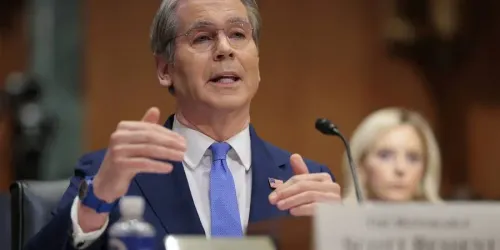
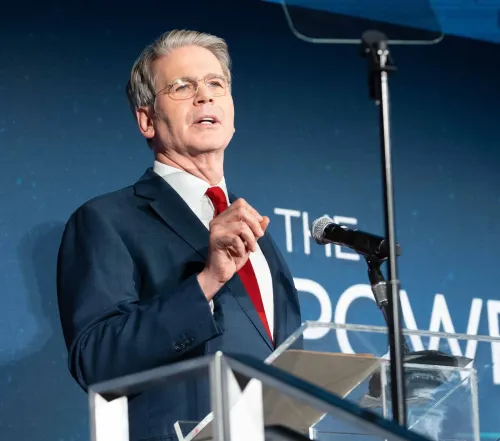
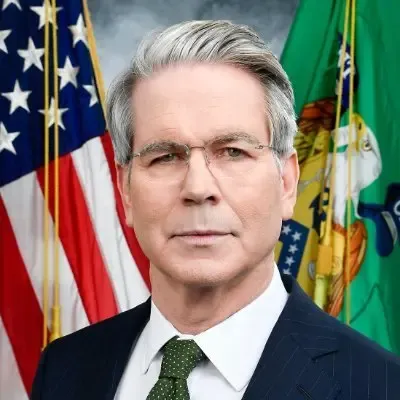
Treasury Secretary Scott Bessent said on 2 September that artificial intelligence is enabling small businesses to operate with significantly fewer employees and could trigger a sweeping start-up boom across the United States, while sharply criticising AI companies for failing to communicate the technology's benefits to ordinary Americans.
The Start-Up Signal
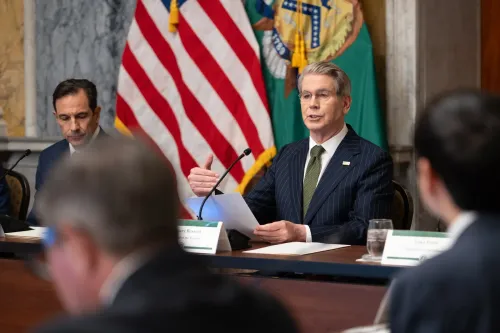
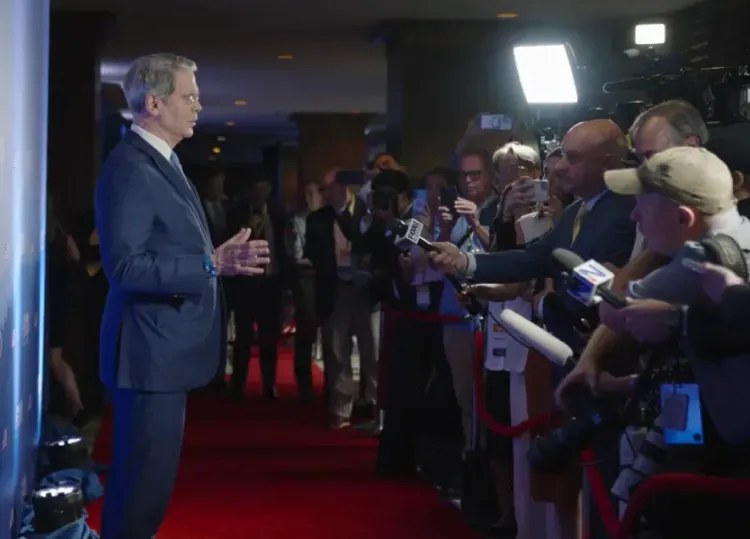
Speaking to reporters after the G20 finance ministers' meeting in Asheville, Bessent said the government was already observing early signs of the trend. 'We are seeing AI result in a massive increase in small business start-ups, because you're seeing the one, the two, the three-person company that would have taken critical mass, 15 or 20 people,' he said. He framed these new ventures not as a Silicon Valley phenomenon but as a Main Street development — a direct broadening of the small-business economy.
A Sharp Rebuke for AI Companies
Bessent reserved pointed criticism for AI developers and data centre operators, arguing they had done a 'horrendous job' of explaining themselves to the public. 'The fact is that this can be transformative,' he said, adding: 'I think we need a big reset on this.' He said companies would need to persuade Americans that the financial and productivity gains from AI would not accrue only to a narrow elite. 'They are going to have to convince the American people that all the benefits will not accrue to a small group,' he warned. This comes amid growing public unease over rapid data centre construction and the pace of AI-driven change more broadly.
G20 Discussions and Real-World Integration
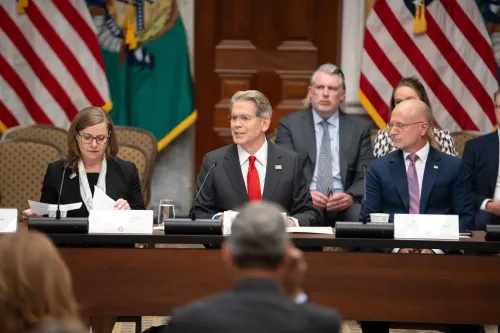
The G20 session in Asheville deliberately included businesses already deploying AI — pharmaceutical companies, farm equipment manufacturers, and industrial firms — rather than AI developers or academics. Bessent said those companies reported that AI was increasing employment within their operations, though he did not provide specific figures or name the participating businesses. 'What we wanted to bring in were real companies... and they told us about how they were integrating it into their supply chains,' he said.
Productivity Gains and Inflation
Bessent also predicted that the heavy capital expenditure currently flowing into AI infrastructure would eventually translate into measurable productivity gains and help reduce inflationary pressure. 'At a point, as we heard from our private sector partners yesterday, this CapEx will turn into productivity, and that will be extremely disinflationary,' he said. He estimated that visible benefits could emerge within the next six months.
G20 Chair's Statement
The G20 chair's statement described AI as a general-purpose technology with the potential for profound effects on the global economy, noting that countries embracing its responsible development would likely set the pace of global growth in coming years. The statement also flagged potential financial and sector-specific risks, calling for stronger cyber resilience and regulatory frameworks that balance financial stability with innovation.
Point of View
Benefit-sharing mandates, or regulatory guardrails — or remains rhetorical positioning is the real question. The absence of any specific data on the claimed start-up surge also warrants scrutiny: optimism without metrics is a pattern that has preceded policy missteps before.
NationPress
2 Sept 2026
Frequently Asked Questions
What did Treasury Secretary Scott Bessent say about AI and start-ups?
Bessent said AI tools are enabling very small companies — as few as one to three people — to operate at the scale that previously required 15 to 20 employees, and that the US is already seeing a resulting start-up boom. He made the remarks after the G20 finance ministers' meeting in Asheville on 2 September.
Why did Bessent criticise AI companies?
Bessent said AI developers and data centre operators had done a 'horrendous job' of explaining the technology's benefits to ordinary Americans. He argued companies must convince the public that the financial and productivity gains from AI will be widely distributed, not concentrated among a small group.
What was discussed at the G20 finance ministers' meeting in Asheville on AI?
The Asheville G20 session included pharmaceutical, farm equipment, and industrial companies already integrating AI into their supply chains. Bessent said these firms reported AI was increasing employment, and the G20 chair's statement called for responsible AI adoption, stronger cyber resilience, and regulation that protects financial stability while enabling innovation.
When does Bessent expect AI's economic benefits to become visible?
Bessent predicted that heavy capital spending on AI infrastructure would convert into productivity gains and disinflationary pressure, estimating that tangible benefits could begin to appear within the next six months.
What is the G20's position on artificial intelligence?
The G20 chair's statement from the Asheville meeting described AI as a general-purpose technology capable of profoundly affecting the global economy. It said countries that responsibly develop and adopt AI will likely lead global growth, while also flagging financial and sector-specific risks requiring stronger cyber resilience and regulatory frameworks.