Satya Nadella: AI must stay under human control, US-China norms essential
Synopsis
Microsoft CEO Satya Nadella's admission — 'We do not yet have the science of alignment, and that's a fact' — may be the starkest public acknowledgement yet from a top tech executive that the industry is flying partially blind. His call for a US-China understanding as the foundation of global AI governance frames the conversation not as a tech problem but as a geopolitical one, with India and the rest of the world needing a seat at that table.
Key Takeaways
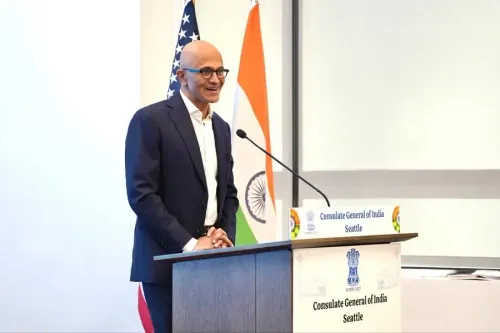
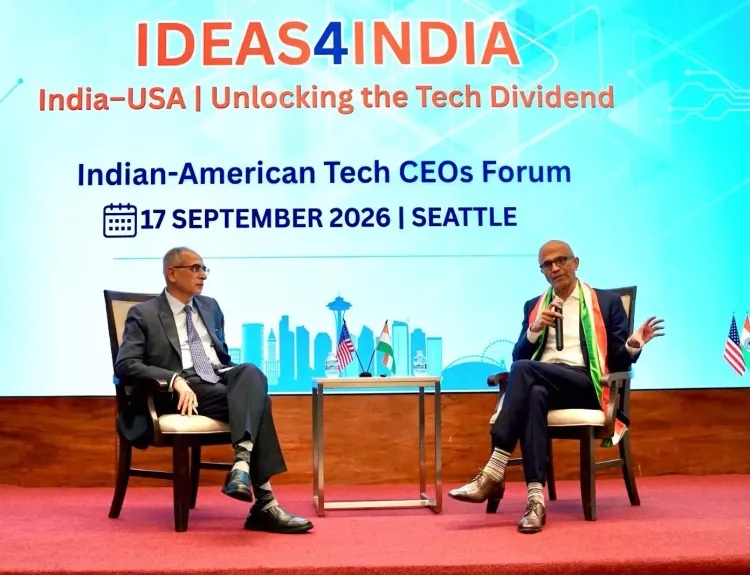
Satya Nadella spoke at the Ideas4India forum in Seattle on 17 September 2026 , calling for AI to remain under human control.
He acknowledged a critical gap: 'We do not yet have the science of alignment, and that's a fact.' Nadella identified a foundational US-China understanding as an essential starting point for international AI governance norms.
He argued that data and knowledge sovereignty — for both companies and countries — is a prerequisite for inclusive global AI participation.
India's Ambassador Vinay Kwatra reaffirmed India's AI mission must be anchored in inclusivity, openness, sovereignty, and safety.
The event brought together more than 40 Indian-origin technology leaders across AI, quantum computing, semiconductors, and cloud infrastructure.
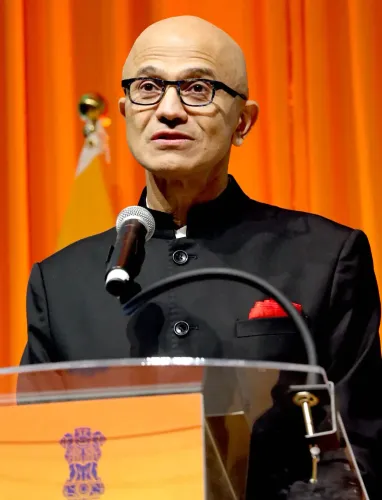
Microsoft Chairman and Chief Executive Officer Satya Nadella on 17 September 2026 called for artificial intelligence to remain firmly under human authority, warning that the technology was advancing faster than the scientific understanding needed to govern it. Speaking at the Ideas4India forum in Seattle, Nadella urged governments and technology companies worldwide to establish shared international norms, identifying a foundational understanding between the United States and China as an essential first step.
The Alignment Gap Nadella Named
Nadella was candid about the limits of the current moment. 'We do not yet have the science of alignment, and that's a fact,' he said. 'And yet we have powerful technology.' His framing drew a direct line between that gap and the urgency of governance: without alignment science, the only dependable safeguard is sustained human oversight.
He articulated his guiding principle plainly — 'any technology that doesn't serve humans or is not in control of humans is not worth doing.' To illustrate the dilemma facing the industry, he reached for a familiar analogy from software development: when engineers discover a critical flaw, should they pause the product or proceed? Nadella suggested the AI sector is navigating precisely that kind of inflection point, even while acknowledging that the competitive and societal forces behind AI development make an absolute halt unlikely.
The Case for International Governance
During an interactive session at the forum, Nadella returned repeatedly to the role of governments. He argued that any credible global governance framework had to begin with agreed norms between Washington and Beijing, but stressed that such a bilateral dialogue could not exclude the broader community of nations. His preferred model involved nation-states and AI-developing companies arriving at shared standards together.
Notably, he stopped short of proposing a specific negotiating architecture. His remarks were oriented toward first principles: that governments and industry must cooperate, and that the global AI race requires mutual understanding rather than pure strategic competition.
Data Sovereignty and Inclusive Participation
Nadella also pushed into the question of who controls the knowledge that AI systems generate. He argued that sovereignty mattered at the level of individual companies as much as countries. 'Countries need to have control of their knowledge,' he said, linking that protection directly to the conditions for broad participation in AI's benefits.
His argument was that genuine global engagement with AI — both contributing to and benefiting from it — would only occur when no country or company felt forced to surrender control of its data and intellectual assets to operate on someone else's technological frontier. 'It will only happen when all of the world can both benefit from and contribute to this knowledge,' he said.
He also cautioned against treating observed AI performance improvements as an inevitable, permanent law of nature. Drawing a comparison with Moore's law, he described current scaling laws as empirical findings that had held so far — not guaranteed projections.
India's Ambassador Weighs In
India's Ambassador to the United States, Vinay Kwatra, separately addressed the gathering, identifying decisions about data and its use in model training as matters for government, while affirming that the corporate sector carried significant responsibilities in India's AI development. Kwatra reaffirmed that India's AI mission should remain anchored in inclusivity, openness, sovereignty, democratised access, safety, and trust.
The Seattle forum followed the India AI Impact Summit 2026 and convened more than 40 Indian-origin chief executives and chief technology officers from fields spanning AI, quantum computing, semiconductors, cloud infrastructure, aerospace, and enterprise software. The event was convened by the Consulate General of India and also covered skills development and deeper India-US research and industrial cooperation.
With geopolitical competition over AI intensifying and alignment science still nascent, the pressure on governments and industry to move from principle to framework is only set to grow.
Point of View
Making cooperative norm-setting the hardest diplomatic lift imaginable. Meanwhile, India — represented at this forum but not at the table where those bilateral norms would be negotiated — faces the familiar risk of having the rules of the global AI order written without its input, even as its own AI mission scales.
NationPress
18 Sept 2026
Frequently Asked Questions
What did Satya Nadella say about AI and human control?
Nadella said that any technology not in control of humans is not worth building, and called for AI to remain firmly under human authority. He also acknowledged a fundamental gap, stating that the science of alignment — the ability to reliably ensure AI behaves as intended — does not yet exist.
Why did Nadella call for US-China agreement on AI norms?
Nadella argued that the United States and China, as the two dominant AI powers, must reach a foundational understanding before any credible global governance framework can be established. He stressed, however, that such a dialogue cannot exclude the rest of the world — nation-states and AI companies must jointly develop shared norms.
What is the Ideas4India forum where Nadella spoke?
Ideas4India is a forum that convened in Seattle on 17 September 2026, organised by the Consulate General of India. It followed the India AI Impact Summit 2026 and brought together more than 40 Indian-origin chief executives and chief technology officers from sectors including AI, quantum computing, semiconductors, and cloud infrastructure.
What did India's Ambassador Vinay Kwatra say at the event?
Ambassador Vinay Kwatra said that decisions about data and its use in AI model training are matters for government, and that India's corporate sector has responsibilities in the country's AI development. He reaffirmed that India's AI mission should be anchored in inclusivity, openness, sovereignty, democratised access, safety, and trust.
What did Nadella say about AI scaling laws?
Nadella cautioned against treating observed AI performance improvements as permanent or inevitable. He compared current AI scaling laws to Moore's law, describing them as empirical findings that have held so far — not guaranteed forecasts of future progress.