World Bank's Ajay Banga makes nuclear energy financing a top priority: US Treasury
Synopsis
After decades of avoiding nuclear power, the World Bank under Indian-American President Ajay Banga has made nuclear energy financing a formal priority — confirmed directly by US Treasury Secretary Scott Bessent before Congress. Paired with a plan to end lending to China by 2031, the shift marks a sweeping strategic reset of how the world's largest development lender deploys capital.
Key Takeaways
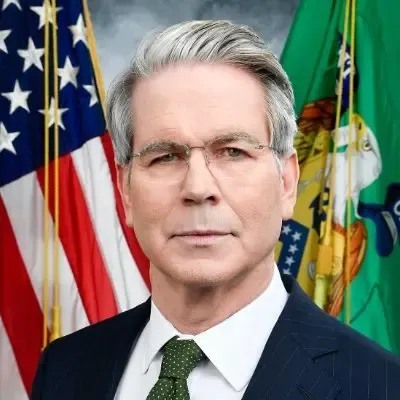
US Treasury Secretary Scott Bessent confirmed before the House Financial Services Committee that World Bank President Ajay Banga has adopted nuclear energy financing as an institutional priority.
The World Bank returned to nuclear financing in June 2025 after avoiding the sector for decades — its first such move in that timeframe.
The bank signed an agreement with the International Atomic Energy Agency (IAEA) to access technical expertise and explore small modular reactors (SMRs) .
A new Nuclear Energy Assistance Trust Fund has been established at the bank, with calls for additional US Treasury contributions.
The World Bank has decided to phase out lending to China by 2031 , redirecting resources toward lower-income developing nations.
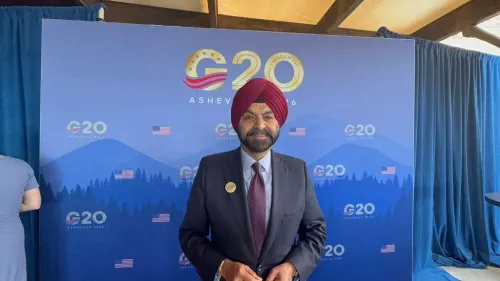
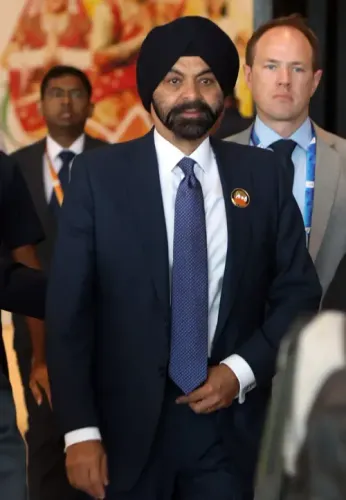
Ajay Banga , born in Pune , has led the World Bank since June 2023 and previously headed Mastercard .
World Bank President Ajay Banga has elevated nuclear energy financing to a stated institutional priority, marking the multilateral lender's most significant return to the sector in decades, US Treasury Secretary Scott Bessent confirmed before the House Financial Services Committee on 16 September 2026. The policy shift places nuclear power at the centre of the World Bank's strategy to expand reliable electricity access in the developing world.
What Bessent Told Lawmakers
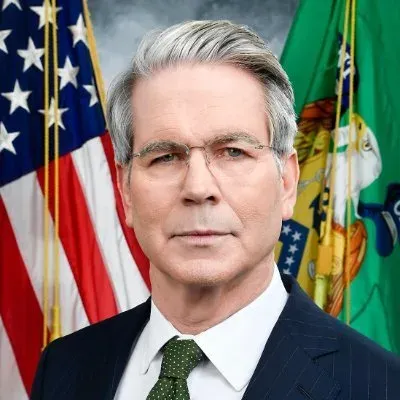
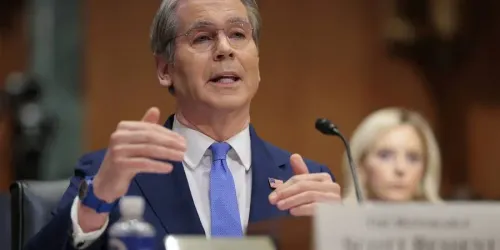
Testifying before the committee, Bessent was unambiguous about Washington's push. 'Mr. Banga, who heads the World Bank, we have made it clear to him that this is a priority,' he said. 'And indeed, he has adopted this as a priority.' He added that the move represented 'the first time in decades that the World Bank has moved forward on nuclear energy.'
Bessent argued that nuclear power offered a credible pathway for the world's poorest nations to raise living standards and secure sustainable electricity. 'I think it is an important part for the poorest countries in engaging in their — in increasing their welfare levels and increasing their prosperity and developing truly sustainable energy,' he said.
Key Developments at the World Bank
The World Bank had already begun laying the groundwork, returning to nuclear energy financing in June 2025 after years of avoiding the sector. Committee Chairman French Hill noted that the institution had taken its first concrete step by signing an agreement with the International Atomic Energy Agency (IAEA) — the UN nuclear watchdog — allowing the bank to draw on technical expertise, support existing reactors, and explore the potential of small modular reactors (SMRs).
Hill also flagged the establishment of a new Nuclear Energy Assistance Trust Fund at the bank and expressed hope that the US Treasury would contribute additional funds going forward. Republican Representative John Rose noted the change could furnish developing countries with reliable, affordable, and secure energy — echoing earlier congressional legislation that had pushed the World Bank to reconsider its long-standing restrictions on nuclear financing.
Phasing Out China Lending by 2031
The nuclear pivot is unfolding alongside a broader reassessment of World Bank priorities. Hill welcomed the institution's decision to phase out lending to China by 2031, arguing that the world's second-largest economy — itself a major international creditor — no longer required development financing backed by American taxpayers.
'American taxpayers should not be backstopping Beijing and their ambitions at the World Bank,' Hill said. 'That's why the World Bank's decision to phase out its lending to China by 2031 is an important step in the right direction.' The freed-up capital is expected to be redirected toward lower-income nations that genuinely require development support.
IMF and China's Economic Imbalances
The committee also raised concerns about China's role at the International Monetary Fund (IMF). Bessent said the IMF was holding advanced discussions with Beijing on economic imbalances and the potential risks they posed to global financial stability — signalling that scrutiny of China's footprint in multilateral institutions extends beyond the World Bank.
Who Is Ajay Banga
Born in Pune, India, Ajay Banga became World Bank President in June 2023. The Indian-American executive previously served as chief executive of Mastercard and has shaped his World Bank tenure around employment generation, infrastructure development, private investment mobilisation, and expanding reliable energy access in developing economies. His backing of nuclear financing represents a notable departure from the cautious posture his predecessors maintained toward the sector for over two decades.
With congressional support growing and the IAEA partnership in place, the World Bank's next steps on nuclear financing — including the scale of SMR pilot programmes — are expected to come into sharper focus in the months ahead.
Point of View
But the hard test will be whether SMR pilots move beyond feasibility studies into actual grid capacity within this decade. Notably, the enthusiasm in the committee room reflects a rare bipartisan consensus: nuclear is no longer toxic politics. Whether that consensus survives the cost and timeline overruns that have historically plagued nuclear projects in developing markets is the question mainstream coverage is not yet asking.
NationPress
16 Sept 2026
Frequently Asked Questions
Why has the World Bank made nuclear energy a priority now?
The World Bank, under President Ajay Banga, has returned to nuclear energy financing to help the world's poorest countries secure reliable and sustainable electricity. US Treasury Secretary Scott Bessent confirmed the shift before the House Financial Services Committee, calling nuclear power an essential tool for raising welfare levels in developing economies — the first such move by the bank in decades.
What is the World Bank's agreement with the IAEA about?
The World Bank signed an arrangement with the International Atomic Energy Agency (IAEA) that allows the bank to receive technical expertise from the UN nuclear watchdog. The agreement also enables the bank to support existing reactors and examine the potential of small modular reactors (SMRs) in developing countries.
Why is the World Bank phasing out lending to China by 2031?
The World Bank decided to phase out lending to China by 2031 because the country — the world's second-largest economy — has itself become a major international creditor and no longer requires development financing. Committee Chairman French Hill argued that American taxpayers should not be subsidising Beijing's ambitions, and that freed resources should support genuinely poor nations.
Who is Ajay Banga and what is his background?
Ajay Banga is an Indian-American executive born in Pune, India, who became World Bank President in June 2023. He previously served as chief executive of Mastercard and has focused his World Bank tenure on employment, infrastructure, private investment, and expanding energy access in developing economies.
What is the Nuclear Energy Assistance Trust Fund at the World Bank?
The Nuclear Energy Assistance Trust Fund is a newly established fund at the World Bank designed to channel financing toward nuclear energy projects in developing countries. Committee Chairman French Hill noted the first contribution to the fund has already been made and expressed hope that the US Treasury would add further resources going forward.