Andras Baka elected Hungary's new President with 140 votes
Synopsis
Hungary's parliament elected Andras Baka — a former Supreme Court chief whose own mandate was cut short by Viktor Orban's judicial reforms in 2011 — as the country's new President with 140 votes. The choice by the ruling Tisza party is freighted with symbolism: a jurist defined by his defence of judicial independence now holds Hungary's highest office.
Key Takeaways
Andras Baka , 73 , was elected Hungary's new President on 11 August 2025 with 140 votes in a secret parliamentary ballot.
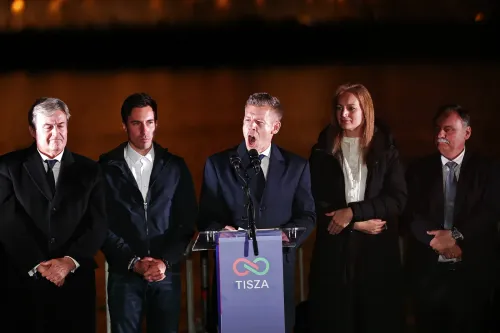
He was the sole candidate, nominated by the ruling Tisza party , which holds a two-thirds parliamentary majority .
Baka previously served at the European Court of Human Rights ( 1991–2008 ) and as Supreme Court president from 2009 until his mandate was cut short in 2011 by Viktor Orban 's Fidesz judicial reforms.
Former President Tamas Sulyok 's term ended on 20 July ; Speaker Agnes Forsthoffer served as acting president in the interim.
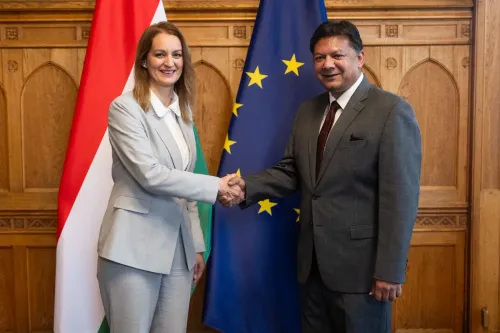
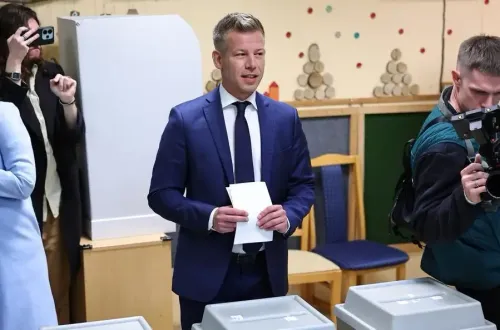
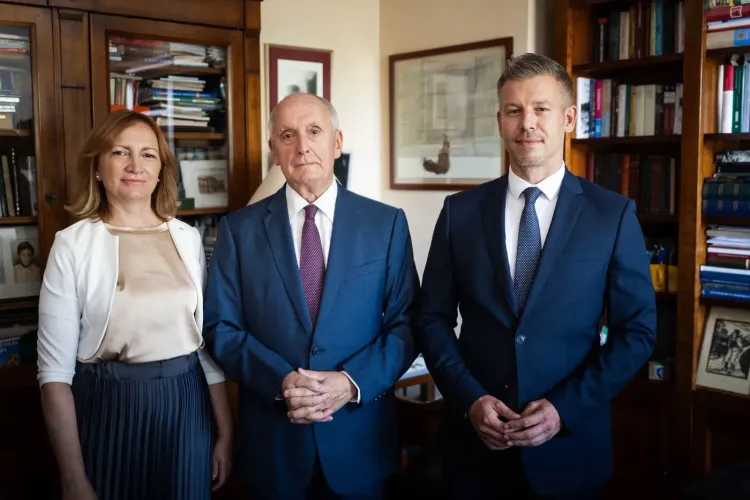
Prime Minister Peter Magyar met Baka and called him 'one of Hungary's most respected experts on European law and constitutional affairs.'
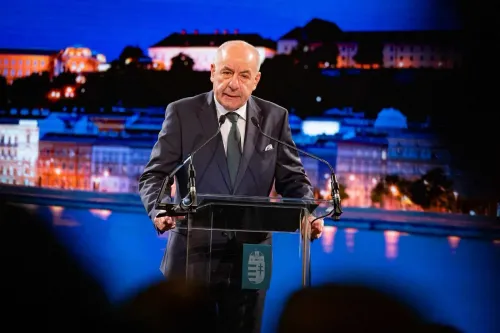
Hungary's parliament on Tuesday, 11 August 2025, elected Andras Baka, former chief of the country's Supreme Court, as the nation's new President. Baka, 73, was the sole candidate in the election and secured 140 votes in a secret parliamentary ballot, marking a significant moment in Hungary's evolving political landscape.
How the Election Unfolded
Baka was nominated on Saturday by the ruling Tisza party, which commands a two-thirds parliamentary majority — sufficient to elect the President without requiring opposition support. The party's parliamentary faction selected Baka through a secret ballot from a three-person shortlist. Under Hungarian law, a presidential nominee must secure the backing of at least one-fifth of lawmakers, or 40 MPs, to enter the ballot.
Tisza group leader Andrea Bujdoso had formally requested last week that the presidential election be placed on the agenda of an extraordinary parliamentary session scheduled for 10-11 August, with the vote proposed for 11 August.
Baka's Career and the 2011 Controversy
Baka served as a judge at the European Court of Human Rights from 1991 to 2008, before Hungary's parliament elected him president of the Supreme Court in 2009. His mandate was cut short in 2011 following judicial reforms introduced by then Prime Minister Viktor Orban's Fidesz government — a move that drew significant criticism from rule-of-law advocates at the time. Baka subsequently continued serving as a judge at Hungary's top court.
Tisza described Baka as someone who had 'consistently defended the rule of law, judicial independence and the separation of powers' — a pointed contrast to the Fidesz era that truncated his earlier tenure.
The Transition of Power
Former President Tamas Sulyok's mandate ended at midnight on 20 July under the 17th amendment to Hungary's Fundamental Law. Since then, Speaker of Parliament Agnes Forsthoffer has been serving as acting president. Hungary's Fundamental Law requires parliament to elect a new president within 30 days of a vacancy — a deadline that Tuesday's vote fulfilled.
Prime Minister Magyar's Remarks
Also on Wednesday, Prime Minister Peter Magyar confirmed he had met Baka. In a Facebook post, Magyar described Baka as 'one of Hungary's most respected experts on European law and constitutional affairs,' adding that the two had 'plenty to discuss' — without elaborating on the specifics of their conversation. The remark signals that the new presidency may carry active policy engagement from the outset.
With Baka's election, Hungary enters a new presidential chapter — one shaped by a figure whose career has been defined by judicial independence, and whose own past clashes with executive power may colour his approach to the role.
Point of View
And whose career has been synonymous with judicial independence. Whether Baka's presidency translates that symbolism into institutional substance is the real question. Hungary's presidency is largely ceremonial, but the moral authority of the office matters in a country where the rule-of-law debate has been central for over a decade. The 140-vote tally — secured without opposition support — also underscores Tisza's consolidation of parliamentary power, a dynamic that will shape Hungarian politics well beyond this election.
NationPress
26 Sept 2026
Frequently Asked Questions
Who is Andras Baka, Hungary's new President?
Andras Baka, 73, is a former chief of Hungary's Supreme Court and a veteran judge who served at the European Court of Human Rights from 1991 to 2008. He was elected Hungary's President on 11 August 2025 with 140 parliamentary votes, nominated by the ruling Tisza party.
How was Andras Baka elected as Hungary's President?
Baka was elected through a secret ballot in Hungary's parliament on 11 August 2025, receiving 140 votes as the sole candidate. The Tisza party, which holds a two-thirds parliamentary majority, nominated him from a three-person shortlist selected by its parliamentary faction.
Why was Andras Baka's earlier Supreme Court mandate cut short?
Baka's tenure as president of Hungary's Supreme Court, which began in 2009, was ended in 2011 following judicial reforms introduced by then Prime Minister Viktor Orban's Fidesz government. He subsequently continued serving as a judge at Hungary's top court.
Who was Hungary's President before Andras Baka?
Former President Tamas Sulyok held the office until his mandate ended at midnight on 20 July, under the 17th amendment to Hungary's Fundamental Law. Speaker of Parliament Agnes Forsthoffer served as acting president until Baka's election.
What did Prime Minister Peter Magyar say about Andras Baka?
Prime Minister Peter Magyar, in a Facebook post, described Baka as 'one of Hungary's most respected experts on European law and constitutional affairs' and said the two had 'plenty to discuss,' without providing further details about their meeting.