AU chief hails India's role in AU G20 membership
Synopsis
African Union Commission chief Mahmoud Ali Youssouf used an accreditation ceremony in Addis Ababa to credit India for the AU's permanent G20 seat. Both sides then turned to education, energy, technology and trade, and flagged the fourth India-Africa Forum Summit for next year.
Key Takeaways
AUC Chairperson Mahmoud Ali Youssouf on Wednesday appreciated India's role, including the AU's permanent G20 membership during India's chairmanship.
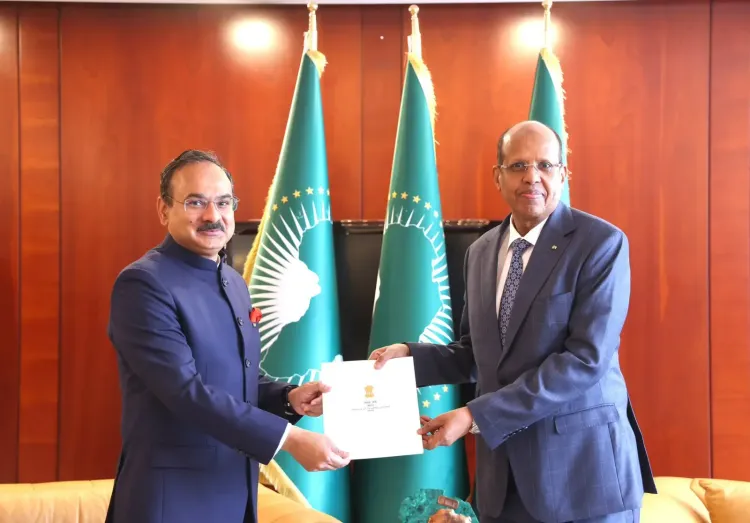
India's Ambassador to Ethiopia, Devesh Uttam , presented his letter of accreditation in Addis Ababa .
Talks covered education, skilling of youth, energy, emerging technologies, and trade and business.
Both sides discussed convening the fourth India-Africa Forum Summit next year.
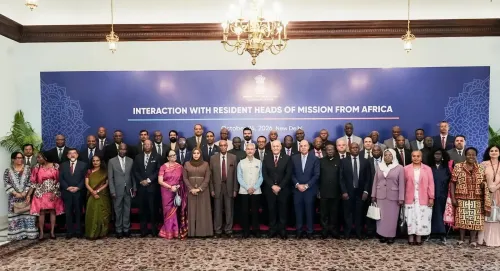
Jaishankar on 24 October hosted African Heads of Mission and has linked the 2023 G20 outcome to UN Security Council reform.
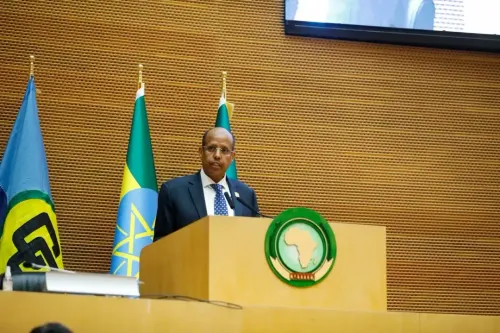
African Union Commission (AUC) Chairperson Mahmoud Ali Youssouf on Wednesday appreciated India's role and commitment across multiple spheres, including the African Union's permanent membership of the G20 during India's chairmanship, as India's Ambassador to Ethiopia, Devesh Uttam, presented his letter of accreditation in Addis Ababa. The two sides also discussed ways to further enhance cooperation in education, skilling of youth, energy, emerging technologies and trade, according to the Indian Embassy in Ethiopia.
What the AU Commission chief said
The Chairperson's remarks came as Ambassador Uttam presented his letter of accreditation. The Indian Embassy in Ethiopia, in a post on X, said the Chairperson appreciated India's role and commitment across multiple spheres, particularly building on historical ties, education, capacity building, health, manufacturing, peacekeeping and permanent membership of the AU in the G20 during India's chairmanship.
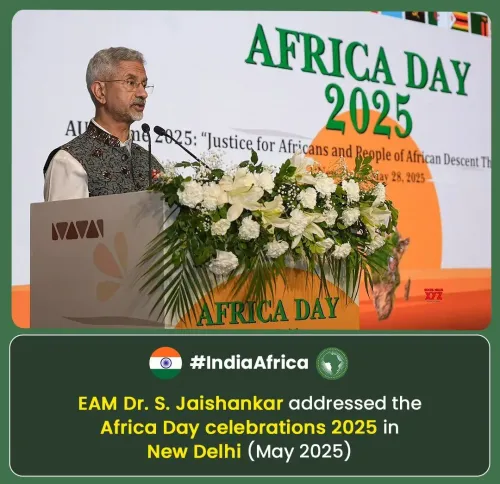
The framing treats the G20 outcome as part of a wider India–Africa ledger rather than a standalone diplomatic episode. This comes amid a renewed outreach by New Delhi that has sought to recast the partnership around people-centric cooperation, after External Affairs Minister S. Jaishankar hosted African Heads of Mission in October and earlier addressed audiences in Addis Ababa.
Where both sides want to deepen ties
Both sides discussed ways to further enhance cooperation in education and skilling of youth, energy, emerging technologies, and trade and business, the Embassy said. The clusters are practical: youth skilling speaks to Africa's demographic weight, while energy, emerging technologies and trade sit at the centre of industrialisation and market-access debates on the continent.
They reaffirmed the strength of the India–Africa partnership and noted the many areas where the two can jointly advance South-South cooperation. Notably, the discussion also covered the convening of the fourth India-Africa Forum Summit next year — a leaders-level marker that would give the partnership a political calendar after the G20 breakthrough of 2023.
Jaishankar's Africa outreach and the UNSC argument
On 24 October, External Affairs Minister S. Jaishankar hosted Heads of Mission from African countries, with talks focusing on various aspects of the India–Africa partnership, the rise of Africa in a multipolar world and new possibilities for people-centric cooperation.
In a post on X, Jaishankar said: “Delighted to host Heads of Mission from Africa this afternoon. The India-Africa partnership is one of shared histories, common aspirations and Deep South-South solidarity. We discussed its different aspects, the rise of Africa in a multipolar world and new possibilities for our people-centric cooperation.”
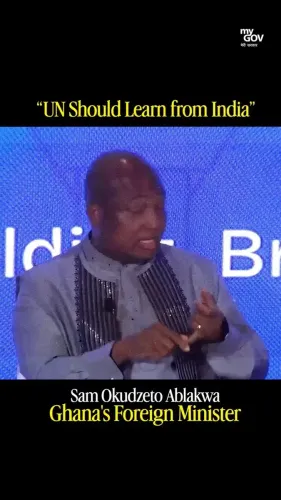
Earlier in October, in an address in Addis Ababa, Jaishankar said India worked resolutely during its G20 Presidency in 2023 to secure permanent membership for the African Union, and that “the same logic now applies to the reform process of the UN Security Council”.
Why the G20 seat still matters
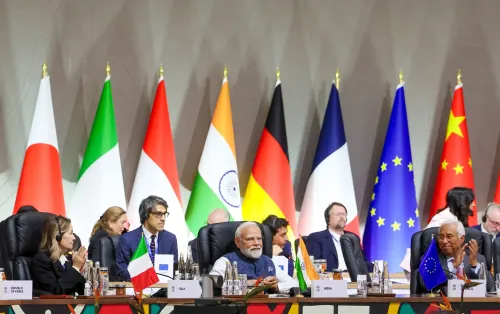
The African Union's permanent G20 membership, secured during India's 2023 presidency, remains New Delhi's most cited deliverable in its Africa diplomacy. Youssouf's public appreciation, delivered in the AU's host city, restates that credit at the Commission level. Jaishankar has explicitly tied the same outcome to the unfinished debate on UN Security Council reform — a pairing that keeps both files on one diplomatic canvas.
Wednesday's exchange does not itself alter multilateral voting arithmetic. It does, however, keep India's G20 role visible in Addis Ababa at the moment an Indian ambassador is formally accredited, and it links that political capital to a forward agenda of education, energy, technology and trade.
What happens next
Ambassador Uttam's accreditation formalises India's diplomatic representation to the AU Commission as both sides have flagged the fourth India-Africa Forum Summit for next year. Follow-through will be watched in the four clusters named on Wednesday: education and youth skilling, energy, emerging technologies, and trade and business. How those files advance before the summit will indicate whether the G20 solidarity story is being converted into a working economic and human-capital agenda.
Point of View
And using that credit at a credentials ceremony in Addis Ababa is deliberate sequencing. The conversation then pivots, as New Delhi prefers, to skilling, energy, technology and trade — the files that will decide whether the partnership is more than a talking point. Jaishankar's analogy from G20 expansion to UN Security Council reform is politically potent but structurally harder: one was a consensus decision in a limited club, the other is blocked by a far higher legal threshold. The fourth India-Africa Forum Summit, now flagged for next year, is the real test of whether this solidarity narrative gets a calendar and deliverables, not just another round of appreciation.
NationPress
25 Nov 2026
Frequently Asked Questions
What did the AU Commission chief say about India?
AUC Chairperson Mahmoud Ali Youssouf appreciated India's role and commitment across multiple spheres, including historical ties, education, capacity building, health, manufacturing, peacekeeping and the AU's permanent G20 membership during India's chairmanship. The remarks were made as India's Ambassador to Ethiopia, Devesh Uttam, presented his letter of accreditation in Addis Ababa.
Why is India credited for the African Union's G20 membership?
India worked to secure permanent G20 membership for the African Union during its G20 Presidency in 2023. External Affairs Minister S. Jaishankar has repeatedly cited that outcome, including in an address in Addis Ababa in October, as a core deliverable of India's Africa diplomacy.
What did India and the AU discuss in Addis Ababa?
Both sides discussed ways to further enhance cooperation in education and skilling of youth, energy, emerging technologies, and trade and business. They also reaffirmed the India–Africa partnership and South-South cooperation, and discussed convening the fourth India-Africa Forum Summit next year.
When is the fourth India-Africa Forum Summit?
The fourth India-Africa Forum Summit was discussed as being convened next year, according to the Indian Embassy in Ethiopia. No specific month or host city was announced in Wednesday's readout.
How does this relate to UN Security Council reform?
Jaishankar has said the same logic that secured the AU a permanent G20 seat during India's 2023 presidency now applies to reform of the UN Security Council. Wednesday's appreciation of India's G20 role in Addis Ababa keeps that political argument visible at the AU Commission, even though it does not itself change the Council's composition.