African Union condemns Houthi Red Sea attacks, warns of regional security threat
Synopsis
The African Union has stepped squarely into the Red Sea crisis, framing Houthi tanker attacks not just as a Middle East conflict but as a direct threat to African trade and energy security. With the AU demanding an immediate ceasefire and US President Trump threatening 'major military punishment' for Iran, the stakes around one of the world's most critical waterways are escalating fast.
Key Takeaways
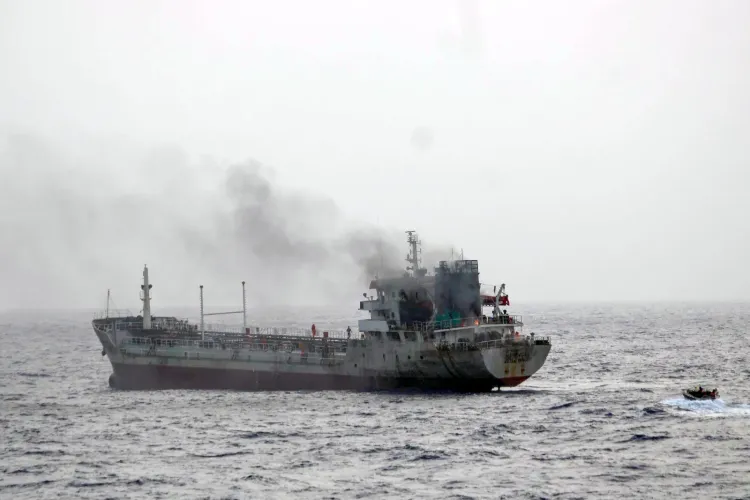
The African Union formally condemned Houthi attacks on commercial oil tankers in the Red Sea on 23 July .
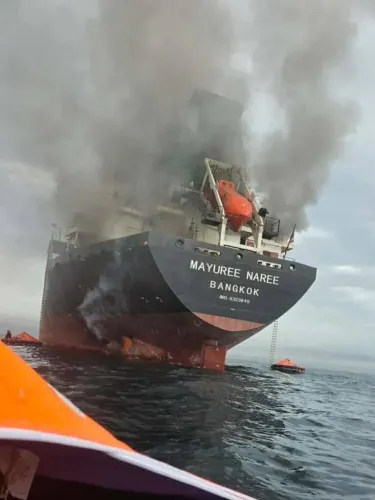
AU Commission Chairperson Mahmoud Ali Youssouf expressed full solidarity with Saudi Arabia and called the attacks a 'grave threat to international maritime security.' The Houthi group claimed it targeted two Saudi oil tankers , alleging the vessels violated its self-declared maritime embargo on ships calling at Saudi ports.
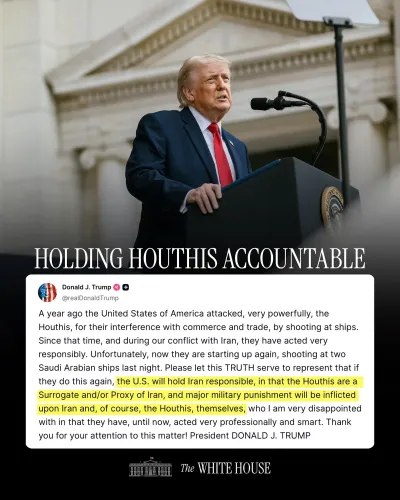
US President Donald Trump warned of 'major military punishment' for the Houthis and Iran if attacks continue, posting the warning on Truth Social .
The AU warned that shipping disruptions risk damaging the 'economic interests of numerous African states' dependent on Red Sea trade routes.
The African Union (AU) on Thursday, 23 July strongly condemned attacks by Yemen's Houthi group on commercial oil tankers in the Red Sea, warning that the strikes represent a dangerous escalation with grave implications for regional peace and maritime security. The condemnation came hours after the Houthis claimed a military operation targeting two Saudi oil tankers, citing alleged violations of their self-declared maritime restrictions.
What the African Union Said
AU Commission Chairperson Mahmoud Ali Youssouf issued a formal statement expressing full solidarity with Saudi Arabia and reaffirming the bloc's 'unwavering support for the security, sovereignty, and stability' of the country. Youssouf stated that attacks against commercial vessels and any attempt to obstruct the free movement of maritime traffic 'constitute a grave threat to international maritime security and to the stability of one of the world's most strategic waterways.'
He underscored that the security of maritime routes in the Red Sea is of 'vital strategic importance to Africa,' warning that disruptions to commercial shipping risk undermining 'regional maritime connectivity, global supply chains, energy security, and the economic interests of numerous African states whose trade depends on safe, secure, and uninterrupted access to these sea lanes.'
The Houthi Claim and Justification
On the same day, the Houthi group claimed responsibility for targeting the two Saudi oil tankers, asserting that the vessels had violated maritime restrictions recently announced by the group. The Houthis stated the ships were struck for breaching an embargo imposed by their armed forces on vessels calling at Saudi ports — a justification rejected by international observers and now formally condemned by the AU.
Notably, this is part of a sustained pattern of Houthi maritime operations in the Red Sea that has roiled global shipping since late 2023, forcing major commercial carriers to reroute around the Cape of Good Hope and significantly inflating freight costs worldwide.
Trump Issues Warning to Houthis and Iran
Also on Thursday, US President Donald Trump issued a sharp warning, threatening Yemen's Houthi group and Iran with 'major military punishment' if the attacks on ships continue. In a post on Truth Social, Trump said he was 'very disappointed' with the Houthis, accusing the group of 'shooting at two Saudi Arabian ships last night.' He added that the United States would hold Iran directly responsible if the strikes persist.
Why This Matters for Africa and Global Trade
The AU's intervention signals that the Red Sea crisis is no longer a concern confined to Middle Eastern geopolitics — it is increasingly being framed as an African economic security issue. Several East African and North African nations depend heavily on Red Sea shipping lanes for energy imports and export revenues. A prolonged disruption risks compounding existing inflationary pressures across the continent.
The AU called on the Houthi group to 'immediately cease all attacks against commercial shipping, refrain from any action that could further escalate tensions, and fully respect international law governing maritime navigation.' With the United States now explicitly linking continued attacks to consequences for Iran, the diplomatic and military stakes around the Red Sea are rising sharply. How the Houthis and Tehran respond in the coming days will be closely watched by governments and shipping operators alike.
Point of View
Not merely a Gulf security dispute. Yet the AU's statement, however forceful in language, carries no enforcement mechanism — and the Houthis have shown little regard for multilateral appeals throughout this campaign. The more consequential signal came from Washington: Trump's explicit threat to hold Iran responsible shifts the conflict's centre of gravity. If the US follows through, the Red Sea could become the flashpoint that draws in multiple powers simultaneously, with African trade routes caught in the crossfire.
NationPress
24 Jul 2026
Frequently Asked Questions
Why did the African Union condemn the Houthi Red Sea attacks?
The African Union condemned the attacks because the Houthis targeted commercial oil tankers in the Red Sea on 23 July, which the AU said constitutes a grave threat to international maritime security and to the economic interests of African states that depend on Red Sea shipping lanes for trade and energy imports.
What did the Houthis claim about the Saudi tanker attacks?
Yemen's Houthi group claimed it carried out a military operation targeting two Saudi oil tankers, asserting the vessels violated a maritime embargo the group had imposed on ships calling at Saudi ports. The justification was rejected by the AU and condemned by the international community.
What did US President Trump say about the Houthi attacks?
President Donald Trump warned on 23 July that the Houthi group and Iran would face 'major military punishment' if the attacks on ships continue. In a Truth Social post, he said he was 'very disappointed' with the Houthis and accused them of 'shooting at two Saudi Arabian ships last night,' adding that the US would hold Iran responsible.
How does the Red Sea crisis affect African countries?
AU Commission Chairperson Mahmoud Ali Youssouf warned that any disruption of commercial shipping risks undermining regional maritime connectivity, global supply chains, energy security, and the economic interests of numerous African states whose trade depends on uninterrupted access to Red Sea sea lanes.
What has the AU demanded from the Houthi group?
The African Union has called on the Houthi group to immediately cease all attacks against commercial shipping, refrain from any action that could further escalate tensions, and fully respect international law governing maritime navigation.