Aurat March protests Quetta acid attack on doctor Mahnoor Nasir
Synopsis
An acid attack on a female doctor inside a government hospital in Quetta has brought Pakistan's gender-based violence crisis into sharp focus. Aurat March's Islamabad protest — and the controversy over the accused being killed by police rather than tried — signals that this case has become a flashpoint for deeper demands around state accountability and women's safety.
Key Takeaways
Aurat March held a protest outside the Islamabad Press Club on 17 June over the acid attack on Dr Mahnoor Nasir in Quetta.
The attack occurred on 6 June at Sandeman Civil Hospital , Quetta, allegedly carried out by lift operator Humayun Shah .
Dr Nasir was transferred to Karachi for further treatment after receiving initial care in Quetta.
Aurat March leader Farzana Bari criticised the police killing of the accused, arguing courts — not police — should determine punishment.
The Human Rights Council of Pakistan condemned the attack as a 'grave security failure' and demanded full protection for healthcare workers.
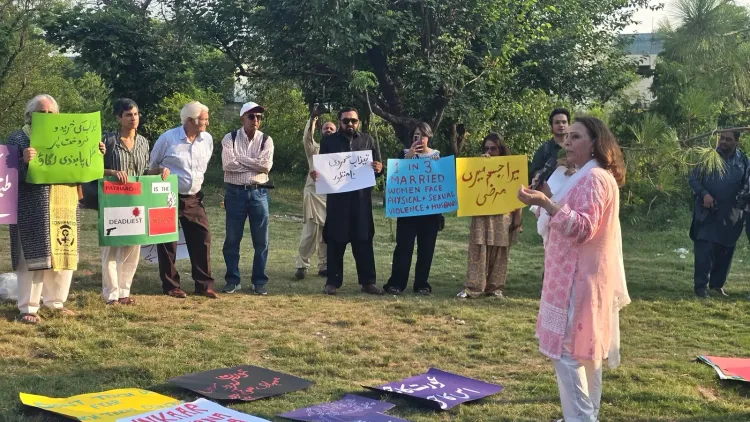
Pakistan's women's rights movement Aurat March staged a protest outside the Islamabad Press Club on 17 June, demanding justice for Dr Mahnoor Nasir, a female doctor who was attacked with acid at the Sandeman Civil Hospital in Quetta, Balochistan. The demonstration drew human rights activists, political leaders, and representatives of civil society organisations, all condemning the escalating violence against women in Pakistan.
The Quetta Acid Attack
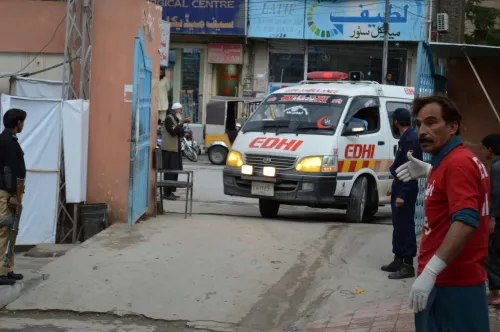
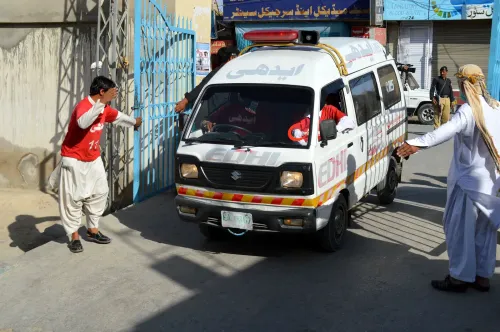
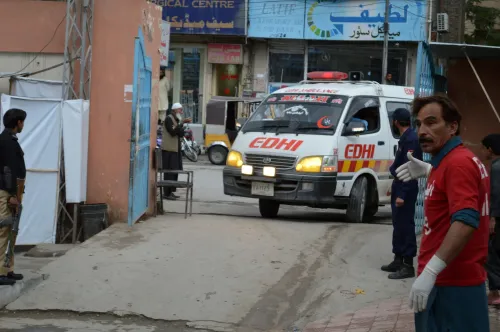
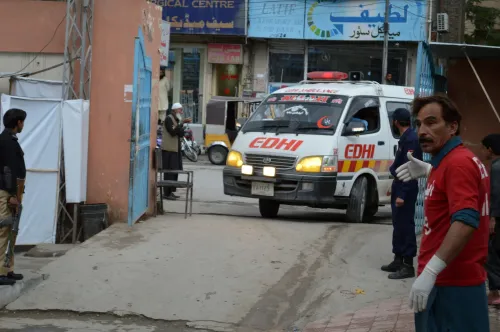
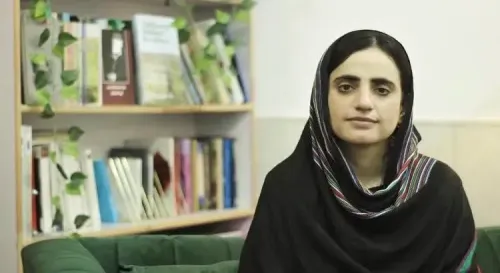
The incident took place on 6 June in the surgical ward of Sandeman Civil Hospital, Quetta, when a lift operator identified as Humayun Shah allegedly threw acid on Dr Mahnoor Nasir, leaving her with severe injuries. She received initial medical treatment at the hospital before being transferred to Karachi, where she is reportedly continuing further treatment. According to reports, the accused was subsequently killed by police — a development that itself drew criticism from protest leaders.
What Protesters Said
Prominent human rights activist and Aurat March leader Farzana Bari voiced alarm over the broader pattern of violence. 'Too many incidents of violence against women are surfacing each day, showing us that this country is becoming like a graveyard for women, and the state and state institutions are completely failing to provide protection to us,' she said, according to digital media platform Voicepk.net.
Bari also criticised the circumstances surrounding the perpetrator's death. 'The police have killed the perpetrator, but I consider this to be unnecessary, as the police's job is to arrest criminals while it is the job of the courts to sentence them,' she said, adding that the 'patriarchal mindset has become so dangerous in Pakistan today that women are not safe in their homes, on the streets, or in their workplaces.'
Alia Amir Ali, representing the Awami Workers Party (AWP) Marxist, linked the attack to systemic inequalities. 'We are here to raise our collective voice against the recent rise of gender-based violence and discrimination. Gender oppression and violence are linked to both class and national oppression. In a society where the tradition of might is right is growing deeper, such rising incidents are a very dangerous sign,' she said.
Human Rights Council Condemns the Attack
The Human Rights Council (HRC) of Pakistan described the incident as 'barbaric and regrettable', stating that a woman engaged in 'serving humanity and saving lives' being targeted with 'brutal violence right at her workplace is not only a slap in the face to the medical community but also to the entire society and humanity.' The Council characterised the attack as a grave security failure and called on the government and law enforcement agencies to guarantee full protection to medical staff, particularly female doctors at hospitals.
Wider Context
The Quetta attack is part of a documented pattern of gender-based violence in Pakistan, with rights groups consistently flagging the inadequacy of state response mechanisms. Notably, the fact that the attack occurred inside a government hospital — a workplace considered relatively secure — has intensified demands for institutional accountability. The Aurat March movement, which has organised annual protests since 2018, has increasingly become a focal point for mobilising public pressure on Pakistan's legislature and law enforcement to act on gender-based crimes.
With Dr Nasir still undergoing treatment in Karachi, activists say the case will continue to be a rallying point until comprehensive legal and institutional reforms are enacted.
Point of View
Rather than his arrest and prosecution, is as troubling as the attack itself — and Farzana Bari is right to call it out. Extrajudicial outcomes deny victims the due process that a functioning justice system requires, and they erase the evidentiary record that could inform systemic reform. Pakistan's gender-based violence problem is not a law-and-order failure alone; it is a structural one, visible in the fact that the attack happened inside a government hospital in broad daylight. Until institutional accountability — not just reactive condemnation — becomes the norm, protests like Aurat March's will remain necessary, not symbolic.
NationPress
19 Sept 2026
Frequently Asked Questions
What happened to Dr Mahnoor Nasir in Quetta?
Dr Mahnoor Nasir, a female doctor at Sandeman Civil Hospital in Quetta, was attacked with acid by a lift operator identified as Humayun Shah on 6 June, reportedly inside the hospital's surgical ward. She sustained severe injuries and was transferred to Karachi for further treatment.
What is Aurat March and why did it protest?
Aurat March is a Pakistani women's rights movement that has organised public demonstrations since 2018 to highlight gender-based violence and demand state accountability. It staged a protest outside the Islamabad Press Club on 17 June to demand justice for Dr Mahnoor Nasir and condemn the broader rise in violence against women in Pakistan.
What happened to the accused in the Quetta acid attack?
The accused, lift operator Humayun Shah, was killed by police following the incident. Aurat March leader Farzana Bari criticised this outcome, arguing that it was the police's role to arrest suspects and the courts' role to sentence them, not for police to act as judge and executioner.
What did the Human Rights Council of Pakistan say about the attack?
The Human Rights Council of Pakistan condemned the attack as 'barbaric and regrettable', describing it as a grave security failure. It called on the government and law enforcement agencies to guarantee full protection to medical staff, especially female doctors working in hospitals.
Why is the Sandeman Civil Hospital attack significant?
The attack is significant because it occurred inside a government hospital — a workplace presumed to offer a degree of institutional safety — highlighting how pervasive gender-based violence has become in Pakistan. Rights groups argue it exposes systemic failures in state protection mechanisms for women, particularly healthcare workers.