Bangladesh measles outbreak death toll hits 499 as UNICEF warns of vaccine failures

Synopsis
Nearly 500 children are dead from a measles outbreak that UNICEF says it warned Bangladesh's former government about for two years — through letters and 10 formal meetings — before a single preventable vaccine order was placed. The death toll, now at 499, is one of the worst measles episodes in South Asia in recent memory, and a formal investigation has only just begun.
Key Takeaways
Bangladesh's measles death toll reached 499 as of 8 am Friday , with 11 new fatalities recorded in the preceding 24 hours.
Total suspected cases stand at 60,540 ; confirmed cases at 8,329 , per the DGHS .
UNICEF says it sent 5–6 letters and held 10 meetings with Bangladesh health officials warning of vaccine shortages — dating back to 2024 .
Ted Chaiban , UNICEF Deputy Executive Director, raised the issue directly with Bangladesh's foreign ministry in August last year .
The BNP -led government has launched a formal investigation; UNICEF has offered documentary evidence.
Of 47,511 hospitalised patients since 15 March , 43,411 have recovered.
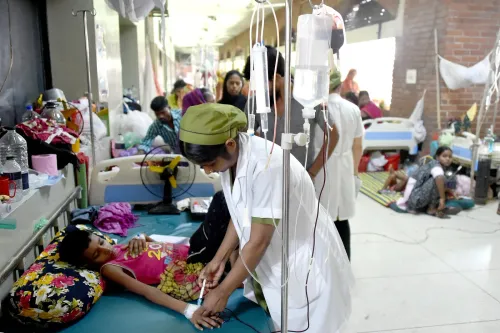
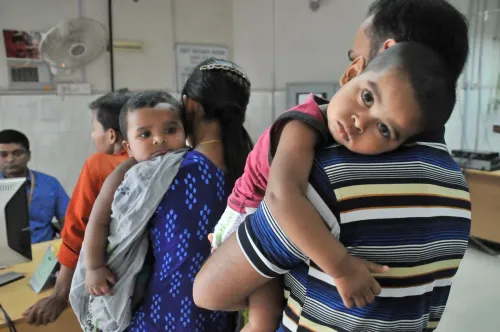
The measles outbreak in Bangladesh has claimed 499 lives since 15 March, after 11 more children died in the 24 hours ending 8 am on Friday, according to the country's Directorate General of Health Services (DGHS). Of the latest fatalities, nine were suspected measles-related and two were confirmed, pushing cumulative deaths to 414 suspected and 85 confirmed.
Scale of the Outbreak
The DGHS recorded 1,261 new suspected cases in the same 24-hour window, lifting the total suspected case count to 60,540. An additional 54 confirmed cases were logged in the period, bringing confirmed cases to 8,329. Since 15 March, a total of 47,511 suspected patients have been hospitalised across Bangladesh, of whom 43,411 have recovered, according to reports.
UNICEF's Repeated Warnings Went Unheeded
Rana Flowers, UNICEF Representative to Bangladesh, said at a press briefing in Dhaka that the agency had sent five to six letters to health authorities and raised the issue in 10 separate meetings with the health ministry during the tenure of the former interim government led by Muhammad Yunus. 'From 2024, we were warning the government that the shortage of vaccines could lead to an outbreak. From 2024 to 2025 into 2026, we sent letters, and we had 10 different meetings signalling this was a problem and that orders for vaccines needed to be given. They could not,' Flowers was quoted as saying by Bangladesh's The Daily Star.
Flowers further noted that Ted Chaiban, Deputy Executive Director of UNICEF, had personally raised vaccine-shortage concerns with Bangladesh's foreign ministry during a visit in August last year. The warnings, spanning nearly two years, went unacted upon — a sequence that critics argue constitutes a foreseeable and preventable public health failure.
Investigation Underway
The Bangladesh Nationalist Party (BNP)-led government has launched a formal investigation into the outbreak. Flowers confirmed that UNICEF would provide evidence to assist the probe. The inquiry is expected to examine whether procurement delays and administrative lapses in the vaccine supply chain directly contributed to the death toll.
Why This Matters
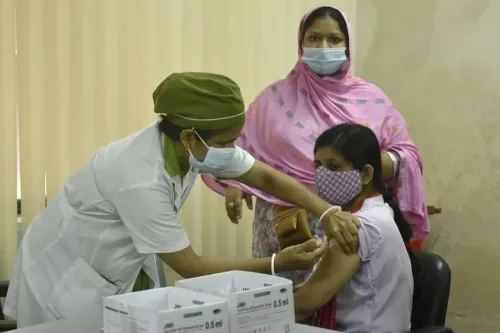
Measles is a vaccine-preventable disease; outbreaks of this scale are rare in countries with functioning immunisation programmes. This is one of the deadliest measles episodes in South Asia in recent years, and it comes against a backdrop of institutional disruption following Bangladesh's political transition. Notably, the outbreak underscores how supply-chain failures in routine immunisation — often invisible until they cascade — can rapidly become mass-casualty events. With the investigation ongoing and UNICEF's documentation on record, accountability questions are likely to intensify in the weeks ahead.
Point of View
Documented in letters and across 10 formal meetings, points to a procurement failure that was both foreseeable and preventable. What makes this particularly damning is the scale: nearly 500 dead from a disease that a functioning vaccination programme should render near-impossible to spread at this rate. The BNP government's investigation is necessary, but its credibility will depend on whether it holds the previous administration's health bureaucracy to account or becomes a political exercise. Bangladesh's immunisation infrastructure clearly needs structural reform — not just a post-mortem inquiry.
NationPress
26 Sept 2026
Frequently Asked Questions
What is the current death toll from the Bangladesh measles outbreak?
As of 8 am on Friday, the measles outbreak in Bangladesh has claimed 499 lives since 15 March, including 414 suspected and 85 confirmed measles-related deaths. Eleven new fatalities were recorded in the 24 hours preceding that update.
How many measles cases have been reported in Bangladesh?
The DGHS has recorded 60,540 total suspected cases and 8,329 confirmed cases as of the latest update. In the preceding 24 hours alone, 1,261 new suspected and 54 confirmed cases were logged.
Why did UNICEF warn Bangladesh about a measles outbreak?
UNICEF repeatedly flagged a shortage of measles vaccines to Bangladesh's health authorities, warning that the gap in immunisation coverage could trigger a major outbreak. The agency sent five to six letters and raised the issue in 10 formal meetings between 2024 and 2026, according to UNICEF Representative Rana Flowers.
Who is investigating the Bangladesh measles outbreak?
The BNP-led government has launched a formal investigation into the outbreak. UNICEF has said it will provide documentary evidence, including records of its communications with the former interim government, to assist the inquiry.
Is the Bangladesh measles outbreak under control?
The outbreak is ongoing, with over 1,000 new suspected cases reported daily as of the latest data. While 43,411 of 47,511 hospitalised patients have recovered, the continued rise in daily cases and fatalities indicates the situation has not yet been contained.