Bangladesh probes measles vaccine failures under Yunus interim govt
Synopsis
Bangladesh's 2026 measles outbreak was not an accident — it was the documented result of a procurement overhaul that starved the country of vaccines. With a formal inquiry now underway and a GCDG report pinning blame on both the Yunus-era interim government and the current BNP administration, the commission's findings could become a landmark accountability moment for South Asian public health governance.
Key Takeaways
Bangladesh has set up a three-member inquiry commission on 5 November 2026 to probe measles vaccine procurement and distribution failures.
The commission is led by former High Court justice Mamun Rahman and covers the period 8 August 2024 to 17 February 2026 under the Muhammad Yunus -led interim government.
The panel must submit its findings within 60 working days and can inspect any location or summon any individual in Bangladesh.
Only 17.8 million of the required 70 million annual vaccine doses were procured between August and November 2025, according to UNICEF .
Measles vaccination coverage fell to 56.2 per cent in 2025 — the lowest in the 2017–2025 period — per EPI data cited by the GCDG .
The GCDG also criticised the current BNP government for a slow response to 'known and measurable risks' after taking power in 2026.
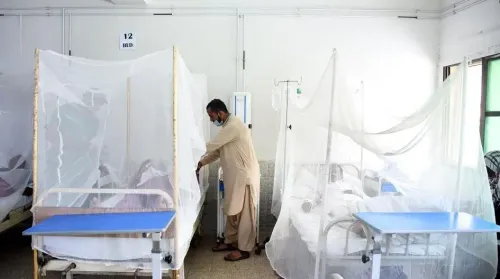
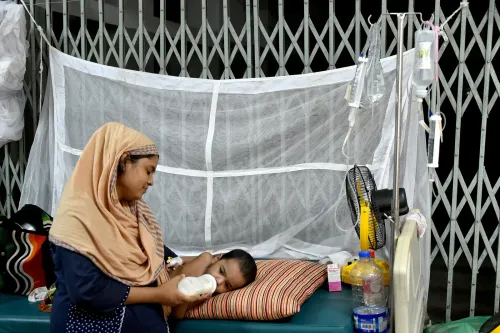
Bangladesh has constituted a three-member inquiry commission to investigate irregularities and systemic failures in the procurement and distribution of measles vaccines during the tenure of the interim government led by Muhammad Yunus, according to local media reports dated 5 November 2026. The move follows what an international advocacy group has described as one of the country's worst public health crises in recent history.
Composition and Mandate of the Commission
The commission is headed by former Bangladesh High Court justice Mamun Rahman and includes Mawdud Hossain Alamgir, president of the Bangladesh College of Physicians and Surgeons (BCPS), and ABM Moinul Islam, Additional Secretary to the Health Services Division. The panel has been empowered to inspect any location in Bangladesh and summon any individual for questioning.
The commission is tasked with establishing liability for delays, irregularities, and administrative failures that occurred between 8 August 2024 and 17 February 2026 — the period corresponding to the Yunus-led interim administration. It must submit its report to the government within 60 working days. The Health Services Division will provide secretarial support. The findings were reported by Dhaka-based daily The Daily Star.
How the Outbreak Unfolded
In August 2026, the Canada-based Global Centre for Democratic Governance (GCDG) released a report titled 'Preventable Tragedy: Bangladesh's 2026 Measles Outbreak', characterising the crisis as foreseeable from an epidemiological standpoint rather than a sudden development. The GCDG identified a convergence of systemic failures under the former interim government as the primary drivers.
According to the GCDG, the interim government replaced Bangladesh's established procurement channel — WHO-approved vaccines sourced through UNICEF's international supply chain — with an open tender process. UNICEF reportedly issued between five and six formal letters and held approximately 10 meetings between 2024 and 2026 to warn the administration of an impending vaccine shortage, but the warnings went unheeded.
The GCDG further noted that Bangladesh's routine immunisation programme requires approximately 70 million doses of various vaccines annually. However, only 17.8 million doses were procured using UNICEF advance funding between August and November 2025 — less than a quarter of the annual requirement — owing to 'indecision over the procurement method and the lengthy open tender process,' according to UNICEF.
Vaccination Coverage at a Decade Low
Citing data from Bangladesh's Expanded Programme on Immunisation (EPI), the GCDG highlighted that measles vaccination coverage fell to 56.2 per cent in 2025, the lowest recorded level in the period between 2017 and 2025. The World Health Organisation (WHO) subsequently identified a nationwide stock-out of the measles-rubella (MR) vaccine during 2024–2025 and the breakdown of regular vaccination schedules as the principal contributors to declining immunity and the 2026 outbreak.
The GCDG's report catalogued a range of compounding failures: a 'programmatic vacuum' under the interim government, disruptions in vaccine transportation and supply, cancelled EPI sessions, falling coverage for both the MR1 and MR2 doses, and the suspension of supplementary immunisation activities.
Current Government Also Under Scrutiny
The GCDG did not limit its criticism to the Yunus-era administration. The organisation stated that the current Bangladesh Nationalist Party (BNP) government, which came to power earlier in 2026, also failed to respond swiftly to 'known and measurable risks' — an assessment that adds political complexity to what might otherwise be framed as a purely bureaucratic inquiry.
The commission's findings, expected within 60 working days, could have significant implications for accountability within Bangladesh's public health governance. How the BNP government handles the commission's recommendations will be closely watched by health advocates and international partners alike.
Point of View
But its credibility will hinge on whether it assigns liability beyond bureaucratic scapegoats. The GCDG's finding that UNICEF issued up to six formal warnings and held roughly ten meetings — all ignored — points to a failure of political will, not merely administrative oversight. What is equally significant is the report's indictment of the current BNP government for a slow post-outbreak response: this is not a clean narrative of one administration's failures being corrected by its successor. Bangladesh's pattern of disrupting established UN-linked procurement systems for ideological or procurement-reform reasons — without securing equivalent replacement capacity — is a governance risk the commission must address structurally, not just episodically.
NationPress
5 Nov 2026
Frequently Asked Questions
Why has Bangladesh set up a measles vaccine inquiry commission?
Bangladesh has constituted a three-member commission to investigate irregularities in measles vaccine procurement and distribution between August 2024 and February 2026, a period corresponding to the interim government led by Muhammad Yunus. The move follows a 2026 measles outbreak that the GCDG described as one of the country's worst public health crises in recent history.
Who are the members of the Bangladesh measles vaccine inquiry commission?
The commission is chaired by former Bangladesh High Court justice Mamun Rahman. The other two members are Mawdud Hossain Alamgir, president of the Bangladesh College of Physicians and Surgeons, and ABM Moinul Islam, Additional Secretary to the Health Services Division.
What caused the Bangladesh measles outbreak in 2026?
According to the GCDG report 'Preventable Tragedy,' the outbreak resulted from disruptions to vaccine supply caused by the interim government's switch from UNICEF's established procurement channel to an open tender process, leading to severe vaccine shortfalls. UNICEF reportedly warned the administration through five to six formal letters and around 10 meetings, but the warnings were not acted upon in time.
How low did measles vaccination coverage fall in Bangladesh?
Measles vaccination coverage in Bangladesh dropped to 56.2 per cent in 2025, the lowest level recorded between 2017 and 2025, according to EPI data cited by the GCDG. WHO later confirmed a nationwide stock-out of the measles-rubella vaccine during 2024–2025 as a key driver of the outbreak.
Is the current BNP government also held responsible for the measles crisis?
Yes. The GCDG stated that the current Bangladesh Nationalist Party government, which came to power in 2026, also failed to respond swiftly to 'known and measurable risks' after assuming office. The inquiry commission's scope, however, formally covers the Yunus interim government's tenure from August 2024 to February 2026.