Bangladesh measles death toll crosses 870 as outbreak deepens in 2026
Synopsis
Bangladesh's 2026 measles outbreak has claimed 873 lives — and a new international report says it was entirely preventable. Vaccination coverage collapsed to a record-low 56.2% in 2025 after the former interim government scrapped UNICEF's supply chain, ignored repeated warnings, and cancelled immunisation drives. The current BNP government is now also under fire for a slow and opaque response.
Key Takeaways
Six children died with measles-like symptoms in Bangladesh in the 24 hours ending 8 am, 9 August 2026 , raising the 2026 toll to 873 .
Laboratory-confirmed fatalities stand at 98 ; suspected deaths at 775 , per the DGHS .
Total suspected cases nationwide reached 136,320 ; confirmed infections stand at 17,115 .
Measles vaccination coverage fell to 56.2% in 2025 — the lowest in eight years — after procurement disruptions under the former interim government.
The GCDG says UNICEF issued five to six formal warnings about a vaccine shortage, which were not acted upon.
The current BNP government faces criticism for a slow response and 'information opacity' during the ongoing crisis.
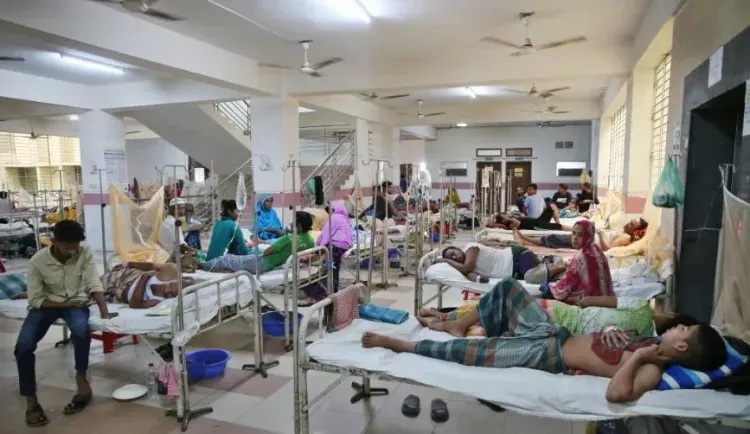
Bangladesh's measles outbreak claimed six more lives in the 24 hours ending 8 am on Sunday, 9 August 2026, pushing the total number of confirmed and suspected measles-related fatalities in 2026 to 873, according to the Directorate General of Health Services (DGHS). All six latest deaths were classified as suspected measles fatalities, leaving the laboratory-confirmed death count unchanged at 98 while suspected fatalities rose to 775.
Scale of the Outbreak
Within the same 24-hour window, 988 new suspected measles cases were recorded across Bangladesh, bringing the nationwide total of suspected infections to 136,320. An additional 75 laboratory-confirmed cases were added, raising cumulative confirmed infections to 17,115. The pace of new cases signals that the outbreak has not yet reached its peak, health observers warn.
What Went Wrong: Vaccine Failures and System Collapse
A new report by the Canada-based Global Centre for Democratic Governance (GCDG), titled Preventable Tragedy: Bangladesh's 2026 Measles Outbreak, describes the crisis as one of the country's worst public health emergencies in recent history. The report argues that while the outbreak appeared sudden to the public, it was not unexpected from an epidemiological standpoint.
According to GCDG, the crisis stemmed from a cascade of institutional failures during 2024–2025 under the former interim government led by Muhammad Yunus. These included disruptions to vaccine supply chains, cancellation of scheduled supplementary immunisation programmes, administrative delays in procurement, and a failure to identify at-risk populations in time.
Critically, the interim government replaced Bangladesh's longstanding procurement of WHO-approved vaccines through UNICEF's international supply chain with an open tender process. According to the GCDG report, citing UNICEF, the agency issued five to six formal warnings and held approximately 10 meetings with the interim government between 2024 and 2026 to flag the risk of a vaccine shortage — warnings that went unheeded.
Coverage Collapse: Vaccination Rates at an Eight-Year Low
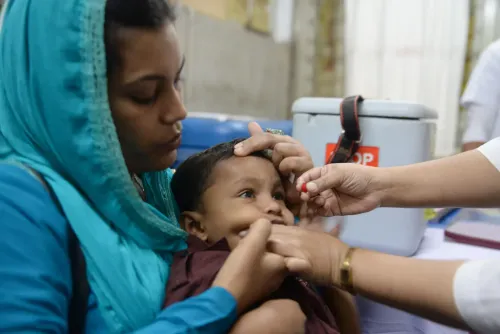
Citing Expanded Programme on Immunisation (EPI) data reported by Bangladeshi daily Samakal, the GCDG noted that measles vaccination coverage in Bangladesh fell to 56.2 per cent in 2025 — the lowest level recorded between 2017 and 2025. The World Health Organization (WHO) subsequently identified a nationwide stock-out of the measles-rubella (MR) vaccine during 2024–2025 and the absence of routine vaccination as the primary drivers of the immunity gap that fuelled the outbreak.
Current Government Under Fire
The GCDG also levelled criticism at the current Bangladesh Nationalist Party (BNP) government, which came to power earlier in 2026, for failing to respond swiftly to what it described as 'known and measurable risks.' The organisation specifically flagged 'information opacity' as a distinct failure of the government's medical response, arguing that a lack of transparency has compounded the public health emergency.
This is the second consecutive year in which institutional dysfunction — rather than the unavailability of an effective vaccine — has driven a large-scale measles crisis in South Asia, raising broader questions about health system resilience across the region. With the death toll now above 870 and case counts still climbing, the trajectory of the outbreak will depend heavily on how quickly Dhaka can restore vaccination coverage and rebuild public trust.
Point of View
Affordable vaccine, and the world knows how to deploy it. The decision to replace UNICEF's proven supply chain with an open tender process, despite repeated warnings, was not a technical misstep but a governance choice with lethal consequences. What is equally troubling is that the current BNP government, which inherited a collapsing immunisation system, has reportedly been slow and opaque in its response — suggesting the failure is bipartisan. With 56.2% vaccination coverage, Bangladesh is well below the 95% herd immunity threshold; until that gap closes, the death count will keep rising regardless of which party holds power in Dhaka.
NationPress
24 Sept 2026
Frequently Asked Questions
What is the current death toll from the Bangladesh measles outbreak in 2026?
As of 9 August 2026, the total number of confirmed and suspected measles-related fatalities in Bangladesh stands at 873, according to the Directorate General of Health Services (DGHS). Of these, 98 are laboratory-confirmed deaths and 775 are suspected measles fatalities.
Why did measles spread so rapidly in Bangladesh in 2026?
According to the GCDG report, the outbreak resulted from a collapse in vaccination coverage — which fell to 56.2% in 2025 — caused by disruptions to vaccine procurement, cancellation of immunisation programmes, and a nationwide stock-out of the measles-rubella vaccine during 2024–2025. WHO identified these supply failures as the primary contributors to the loss of herd immunity.
What role did the former interim government play in the crisis?
The GCDG report says the former interim government led by Muhammad Yunus replaced UNICEF's established vaccine supply chain with an open tender procurement process, despite UNICEF issuing five to six formal warnings and holding around 10 meetings between 2024 and 2026 to flag the risk of a shortage. The report links this decision directly to the vaccine stock-out that preceded the outbreak.
How many measles cases have been reported in Bangladesh so far in 2026?
As of 9 August 2026, Bangladesh has recorded 136,320 suspected measles cases and 17,115 laboratory-confirmed infections, with 988 new suspected cases and 75 new confirmed cases added in the 24 hours ending 8 am on Sunday alone.
What is the GCDG and what does its report say about the current government?
The Global Centre for Democratic Governance (GCDG) is a Canada-based international advocacy organisation. Its report, titled 'Preventable Tragedy: Bangladesh's 2026 Measles Outbreak', criticises the current Bangladesh Nationalist Party (BNP) government for failing to respond swiftly to known risks after coming to power in 2026 and for 'information opacity' that it describes as a distinct failure of the medical response.