Biden calls IMEC 'brilliant', credits Quad for stronger US-India ties
Synopsis
Joe Biden's memoir frames IMEC — the ship-and-rail corridor from Mumbai to southern Europe — as his signature geopolitical bet against China, while crediting the Quad for the sharpest upgrade in US-India ties in decades. With the book out now, it offers the clearest inside account yet of how Washington viewed New Delhi's centrality to its Indo-Pacific strategy.
Key Takeaways
Joe Biden 's memoir 'Promise Me, America' went on sale on 18 November 2026 .
Biden calls IMEC — announced at the September 2023 G20 summit in New Delhi — 'brilliant in its simplicity' and a tool to help the US compete with China .
The proposed corridor links Mumbai to southern Europe via the Arabian Peninsula and Israel's Haifa port , using alternating ships and trains.
Biden credits the Quad 's revival, beginning with a March 2021 virtual summit with PM Modi , Scott Morrison , and Yoshihide Suga , as producing a 'rapidly improving relationship with India'.
He cites the 2006 Hyde Act and the 2008 US-India civil nuclear agreement — both of which he voted for — as earlier milestones in the bilateral relationship.
Despite the China competition framing, Biden rejects inevitable conflict, writing that the world is 'big enough for all of us to live in'.
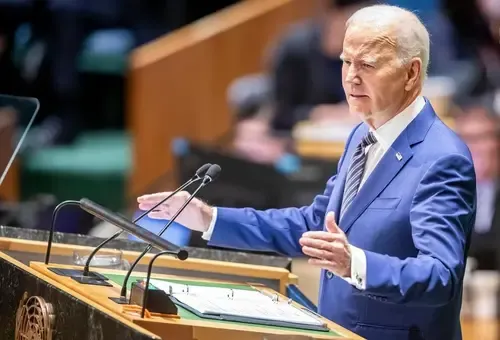
Former US President Joe Biden has described the India-Middle East-Europe Economic Corridor (IMEC) as a potentially transformative trade route that could help Washington compete with China and forge a new economic and political alignment across South Asia, the Gulf, and Europe — while also crediting the Quad with significantly strengthening US-India relations. The revelations come from his memoir, 'Promise Me, America', which went on sale on Tuesday, 18 November 2026.
Biden on IMEC: 'Brilliant in its simplicity'
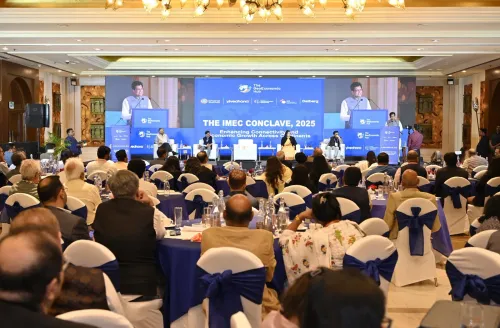
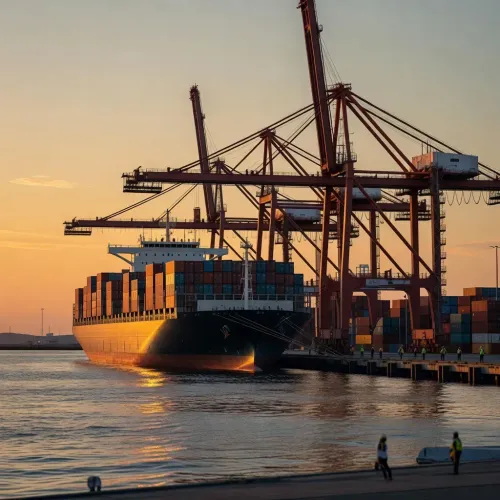
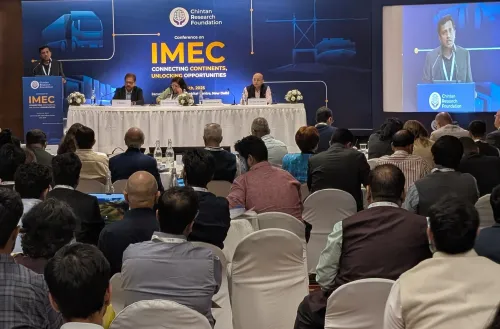
In the book, Biden recounts the strategic thinking behind IMEC, which was announced during the September 2023 G20 summit in New Delhi. He describes a proposed route alternating ships and trains to move goods from Mumbai through the Arabian Peninsula, across the Middle East to the Israeli port of Haifa, and onward by sea to southern Europe.
'It was brilliant in its simplicity,' Biden writes of the corridor. 'If IMEC could be built, it would not only help us to compete with China.'
Beyond trade logistics, Biden envisaged IMEC drawing India, Saudi Arabia, other Gulf states, Jordan, the West Bank, and Israel into a shared trading network — with economic cooperation serving as a bridge across deep political divides. 'The conversations around IMEC had a remarkable effect. They allowed for the possibility of a new economic and political alignment to emerge,' he writes. 'It involved many nations, but at the heart of it was a profoundly important new relationship between Saudi Arabia and Israel.'
Biden traces the groundwork for that bilateral relationship to his July 2022 trip to Israel, the West Bank, and Saudi Arabia. The September 2023 memorandum establishing IMEC's principles outlined two corridors — one connecting India with the Gulf, another linking the Gulf with Europe — alongside frameworks for electricity, digital connectivity, and clean hydrogen infrastructure. Notably, the document recorded political commitments rather than legally binding obligations.
The Quad and a 'rapidly improving' relationship with India
In a separate passage, Biden identifies the elevation of the Quad — comprising India, the United States, Japan, and Australia — as an early diplomatic priority of his presidency. He recalls convening a virtual meeting in March 2021 with Prime Minister Narendra Modi, then-Australian Prime Minister Scott Morrison, and then-Japanese Prime Minister Yoshihide Suga.
'A favourable dividend was a rapidly improving relationship with India,' he writes, adding that he had followed the bilateral relationship closely for decades. 'I had paid close attention to this relationship for decades, going back to my Senate days, and I was proud to shepherd a US-India nuclear agreement through the Senate in 2006. That had lifted the relationship to a higher level, and I fully intended to lift it some more.'
The 2006 legislation in question was the Hyde Act, which established the legal framework for US civil nuclear cooperation with India. Congressional approval of the bilateral nuclear agreement followed in 2008. Senate records confirm Biden voted in favour of both measures.
Quad's vaccine push and deepening strategic bonds
Biden writes that the Quad's cooperation on Covid-19 vaccines helped bring member nations closer together by confronting a shared threat. The March 2021 initiative included US financing intended to support Indian manufacturer Biological E's capacity to produce at least 1 billion vaccine doses by the end of 2022 — a production-capacity goal, as distinct from doses actually delivered. The four leaders held their first in-person summit in Washington on 24 September 2021.
Biden also highlights wider sources of US-India convergence, pointing to the growth of Indian immigration to the United States following the 1965 Immigration Act and joint scientific endeavours such as the NISAR satellite as pillars of a deepening relationship. He places India within a broader network of partners whose combined economic weight, he argues, gives Washington structural advantages in its strategic competition with Beijing.
Biden on China: Competition, not inevitable conflict
Despite the competitive framing, Biden rejects the notion that China's rise must necessarily produce direct conflict with the United States. Recalling his summit with Chinese President Xi Jinping in San Francisco, he endorses coexistence over confrontation. 'If we continue to defend our values and interests, while working with capable allies, we can build a future big enough for all of us to live in,' he writes.
This comes amid sustained global debate about the trajectory of US-China relations, and Biden's memoir is likely to be read closely in both New Delhi and Beijing for its articulation of Washington's strategic calculus during his tenure. The book's release also arrives as the Quad's relevance remains a live policy question for the incoming US administration.
Point of View
Raising real questions about whether the corridor's political underpinning survives changed circumstances. His claim that the Quad produced a 'rapidly improving' relationship with India is factually grounded, but the memoir sidesteps the persistent friction points — including India's Russia policy during the Ukraine war — that complicated that partnership in practice. For New Delhi, the book is a useful reminder that Washington's strategic embrace of India is structural and bipartisan, but it also underscores that US partners are always viewed instrumentally, as nodes in a broader competition with Beijing.
NationPress
18 Nov 2026
Frequently Asked Questions
What does Biden say about IMEC in his memoir?
Biden describes the India-Middle East-Europe Economic Corridor as 'brilliant in its simplicity' and argues it could help the US compete with China while drawing India, Gulf states, and Israel into a new trading and political alignment. He recounts the strategic thinking behind the corridor, which was announced at the September 2023 G20 summit in New Delhi.
What is the IMEC trade corridor and how would it work?
IMEC is a proposed ship-and-rail network connecting Mumbai through the Arabian Peninsula and across the Middle East to Israel's Haifa port, from where ships would carry goods to southern Europe. The September 2023 memorandum establishing its principles also envisaged electricity, digital, and clean hydrogen infrastructure, though it recorded political commitments rather than legally binding obligations.
How does Biden credit the Quad for improving US-India relations?
Biden identifies the elevation of the Quad — comprising India, the US, Japan, and Australia — as an early diplomatic priority of his presidency. He says a 'favourable dividend' of the Quad's revival, launched via a virtual summit in March 2021, was a rapidly improving relationship with India, building on foundations he helped lay with the 2006 Hyde Act and 2008 civil nuclear agreement.
What is Biden's position on conflict with China?
Despite framing IMEC and the Quad partly as tools to counter China's influence, Biden rejects the idea that China's rise must inevitably produce conflict with the United States. Recalling his San Francisco summit with President Xi Jinping, he writes that the world is large enough for both powers and that neither can afford to turn its back on the other.
When was Biden's memoir 'Promise Me, America' released?
Biden's memoir 'Promise Me, America' went on sale on Tuesday, 18 November 2026. The book covers his strategic thinking on IMEC, the Quad, US-India relations, and US-China competition during his presidency.