BIMSTEC Centre for Traditional Medicine set for Jamnagar; India hosts key regional health push
Synopsis
For the first time, BIMSTEC health ministers convened at the ministerial level — and the headline outcome was unanimous: a Centre for Traditional Medicine will come up in Jamnagar, India. With the Revised Plan of Action (2026–2030) also approved in Colombo, India has successfully positioned itself as the region's healthcare anchor, blending Ayushman Bharat's digital health story with Ayurveda's soft-power appeal.
Key Takeaways
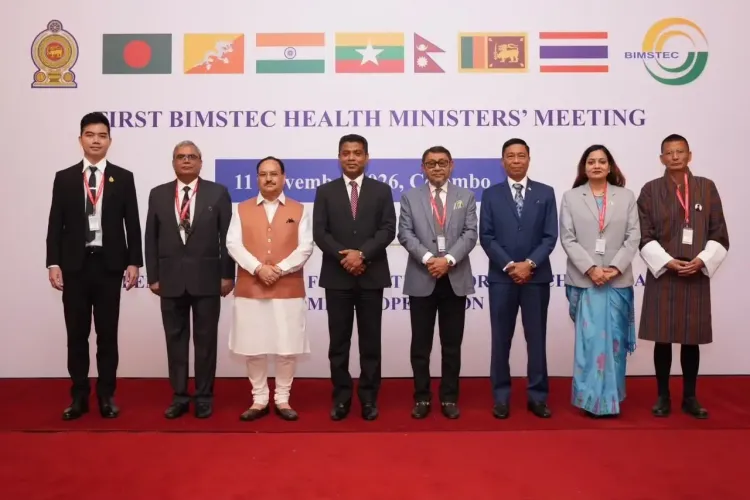
The inaugural BIMSTEC Health Ministers' Meeting was held in Colombo, Sri Lanka on 11 November 2026 .
All member states agreed to establish the BIMSTEC Centre for Traditional Medicine in Jamnagar, Gujarat, India .
The Revised Plan of Action (2026–2030) for regional health cooperation was formally approved.
Union Health Minister J P Nadda represented India and highlighted Ayushman Bharat , digital health, and pandemic preparedness as models for regional adoption.
The Jamnagar centre will focus on joint research, capacity building, and knowledge exchange in traditional medicine.
India on 11 November 2026 congratulated Sri Lanka for hosting the inaugural BIMSTEC Health Ministers' Meeting in Colombo, calling it an 'important milestone' in building regional health cooperation. The meeting concluded with all member states agreeing to establish the BIMSTEC Centre for Traditional Medicine in Jamnagar, Gujarat — a development that the Ministry of External Affairs (MEA) described as a step toward promoting traditional medicine and strengthening preventive healthcare across the region.
What Was Agreed at Colombo
All BIMSTEC member nations reached consensus on two consequential outcomes: the establishment of the BIMSTEC Centre of Excellence in Traditional Medicine in Jamnagar, and the approval of a Revised Plan of Action (2026–2030) to deepen collective health cooperation. The MEA, in a post on X, said the Plan of Action 'further reinforces our collective commitment to regional health cooperation.'
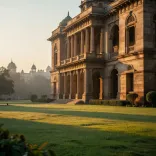
The Jamnagar centre is envisioned to drive joint research, capacity building, and knowledge exchange across member states, with India anchoring the initiative given its established expertise in Ayurveda and traditional systems of medicine. Jamnagar is already home to key national Ayurveda institutions, lending institutional credibility to the choice of location.
Nadda's Address and India's Health Pitch
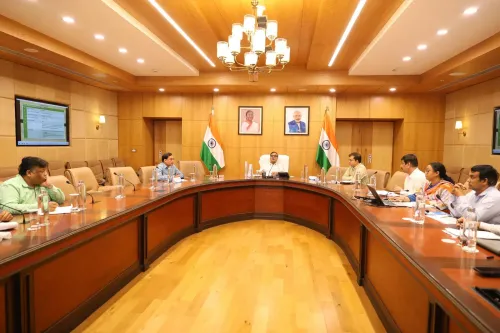
Union Health and Family Welfare Minister J P Nadda addressed the inaugural meeting in Colombo, reaffirming India's readiness to share its healthcare expertise with BIMSTEC nations. Nadda highlighted India's advances under the Ayushman Bharat scheme — including strengthened public health infrastructure and digital healthcare initiatives — as models for regional adoption.
'Emphasising regional solidarity, the Minister called for enhanced cooperation in health security, pandemic preparedness, One Health and traditional medicine, while reaffirming India's readiness to share its expertise and best practices with BIMSTEC member nations,' the Ministry of Health and Family Welfare said in a post on X.
Invoking Prime Minister Narendra Modi's framing, Nadda said: 'Guided by PM Shri Narendra Modi Ji's vision of One Earth, One Family, One Future, India remains committed to building a healthier, more inclusive and resilient BIMSTEC region.'
India's Broader Regional Health Strategy
Nadda arrived in Colombo on Tuesday and was received by Indian High Commissioner Santosh Jha. Upon arrival, he had said he was looking forward to 'engaging with counterparts from BIMSTEC member nations to strengthen regional health cooperation, advance shared public health priorities and foster greater collaboration in healthcare.'
The Colombo meeting is notably the first time health ministers of the Bay of Bengal Initiative for Multi-Sectoral Technical and Economic Cooperation (BIMSTEC) — which groups Bangladesh, Bhutan, India, Myanmar, Nepal, Sri Lanka, and Thailand — have convened at the ministerial level specifically on health. This comes amid a wider push by the grouping to deepen sectoral cooperation beyond trade and connectivity.
What Comes Next
With the Revised Plan of Action locked in for 2026–2030, member states are expected to operationalise specific cooperation mechanisms in health security, pandemic preparedness, and the One Health framework. The establishment timeline and governance structure of the Jamnagar centre have not yet been publicly detailed, but the unanimous agreement at the ministerial level gives the initiative strong political momentum.
Point of View
And anchoring a multilateral centre in Gujarat adds institutional weight to that strategy. The more substantive test is whether the Revised Plan of Action 2026–2030 produces binding health-security commitments or remains aspirational; previous BIMSTEC frameworks have struggled to translate ministerial-level consensus into on-the-ground action. The One Health and pandemic preparedness agenda, if operationalised, could be the grouping's most consequential deliverable — especially given that South and Southeast Asia remain hotspots for zoonotic spillover risk. Mainstream coverage is treating this as a diplomatic win; the harder question is what enforcement and funding mechanisms underpin the plan.
NationPress
11 Nov 2026
Frequently Asked Questions
What was decided at the first BIMSTEC Health Ministers' Meeting?
All BIMSTEC member states agreed to establish a Centre for Traditional Medicine in Jamnagar, India, and approved the Revised Plan of Action (2026–2030) for regional health cooperation. The meeting, hosted by Sri Lanka in Colombo on 11 November 2026, was the first ministerial-level health gathering in the grouping's history.
Where will the BIMSTEC Centre for Traditional Medicine be located?
The centre will be located in Jamnagar, Gujarat, India. It is envisioned to drive joint research, capacity building, and knowledge exchange in traditional medicine across BIMSTEC member nations.
What is BIMSTEC and which countries are members?
BIMSTEC — the Bay of Bengal Initiative for Multi-Sectoral Technical and Economic Cooperation — is a regional grouping comprising Bangladesh, Bhutan, India, Myanmar, Nepal, Sri Lanka, and Thailand. It focuses on multi-sectoral cooperation including trade, connectivity, and now health.
What did Union Health Minister J P Nadda say at the Colombo meeting?
Nadda highlighted India's progress on Universal Health Coverage through Ayushman Bharat, digital healthcare, and public health infrastructure as models for regional adoption. He also called for enhanced cooperation in health security, pandemic preparedness, One Health, and traditional medicine.
What is the Revised Plan of Action 2026–2030?
It is a framework adopted by all BIMSTEC member states at the Colombo meeting to guide and deepen regional health cooperation over the next five years. It reinforces collective commitments across areas including traditional medicine, health security, and pandemic preparedness.