Balochistan unrest: BNM chief slams Pakistan defence minister for blaming Afghanistan
Synopsis
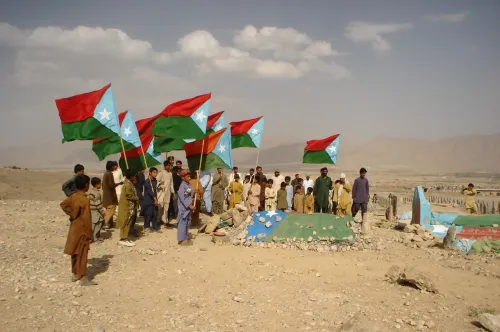
BNM chairman Naseem Baloch has publicly rejected Pakistan Defence Minister Khawaja Asif's attempt to pin Balochistan's instability on Afghanistan, calling it the latest in a decades-long pattern of blame-shifting that he argues only confirms Islamabad's inability to address the root causes of the Baloch liberation struggle.
Key Takeaways
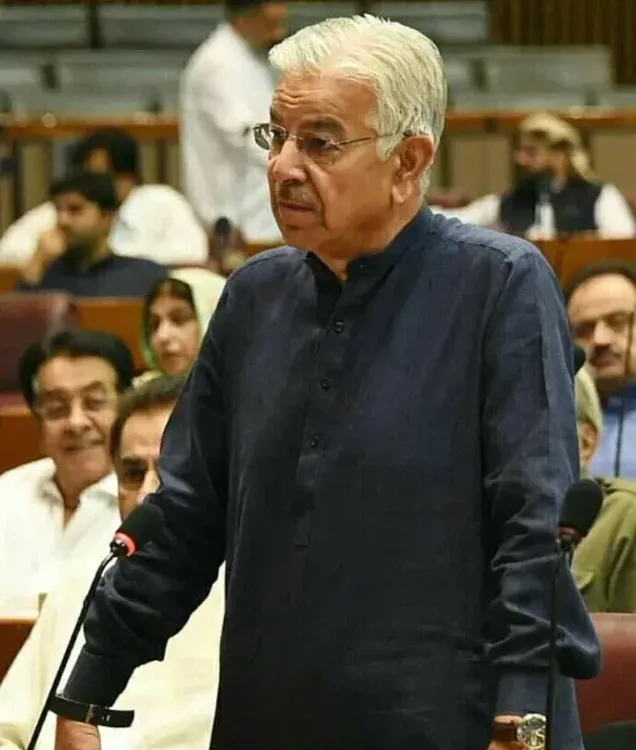
Naseem Baloch , chairman of the Baloch National Movement (BNM) , on 18 June condemned Pakistan Defence Minister Khawaja Asif for blaming Afghanistan for terrorism in Balochistan .
Asif had identified Afghanistan as the principal source of terrorism linked to instability in Balochistan and Khyber Pakhtunkhwa .
Naseem alleged the statement was propaganda against the indigenous Baloch national movement and called it an admission of Islamabad 's own policy failures.
He described Pakistan as an 'occupying state' and invoked the history of national liberation movements to assert the struggle would continue.
On Wednesday , Naseem also raised concern over 'secretive' trials of Baloch Yakjehti Committee (BYC) leaders conducted via remote links after over a year of detention.
Naseem Baloch, chairman of the Baloch National Movement (BNM), on Thursday, 18 June sharply criticised Pakistan Defence Minister Khawaja Asif for attributing terrorism in Balochistan and Khyber Pakhtunkhwa to Afghanistan, asserting that such accusations amount to an open admission of Islamabad's own policy failures. The remarks add to simmering tensions over the long-running insurgency in Pakistan's restive western province.
The Trigger: Asif's Afghanistan Accusation
Khawaja Asif had identified Afghanistan as the principal source of terrorism and linked it directly to instability across Balochistan and Khyber Pakhtunkhwa. The statement drew an immediate rebuttal from Baloch separatist leadership, who argued it was a deliberate attempt to externalise blame for a domestic political and security crisis.
BNM's Response: 'Propaganda Against an Indigenous Movement'
In a post on social media platform X, Naseem Baloch alleged that the Pakistani government's statement was nothing more than propaganda directed against the indigenous national movement of Balochistan. He pointed to a pattern of blame-shifting that has persisted for decades.
'Everyone knows that, at various times, Pakistan's rulers have blamed India, Afghanistan, the United States, Russia, and Iran for supporting the Baloch struggle, just in an effort to justify their occupation of Balochistan and conceal their own failures. In reality, such accusations are an admission of the failure of their own policies,' Naseem stated.
He further declared: 'We have repeatedly made it clear that this is a national liberation struggle being waged for the restoration of freedom of Balochistan. This struggle will continue until it reaches its ultimate objective.'
Historical Parallels and Direct Challenge to Asif
Naseem characterised Pakistan as an 'occupying state' and argued that neither state power nor official claims could override what he described as the legitimate national rights of the Baloch people. He drew a pointed historical parallel, urging Asif to reflect on the origins of Pakistan's own ally, the United States, which itself emerged from a colonial liberation struggle.
'History has repeatedly shown that national liberation movements cannot be permanently suppressed through force,' he said, adding that Balochistan 'will continue its struggle for the restoration of its national identity and freedom and will ultimately achieve its rightful destination.'
BYC Trial Controversy: Calls for Transparency
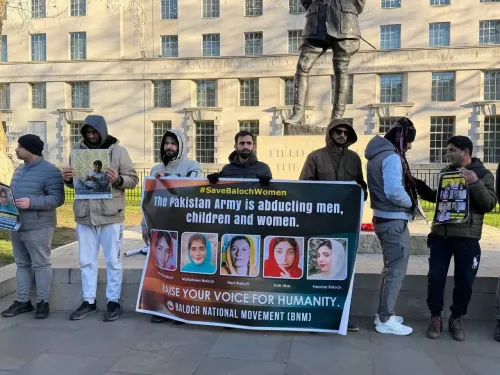
Separately, on Wednesday, Naseem raised alarm over what he described as 'secretive and prolonged' trials of leaders of the Baloch Yakjehti Committee (BYC). In another post on X, he said the proceedings — conducted via remote links after more than a year of detention — expose the Pakistani authorities' treatment of the people of Balochistan.
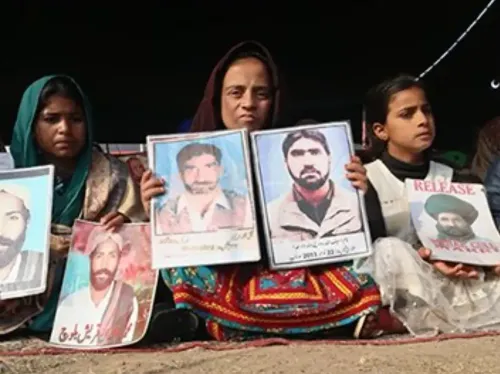
'For decades, Baloch people have witnessed enforced disappearances, arbitrary detentions, extrajudicial killings, and politically motivated prosecutions. Today no one trusts in Pakistan's courts and state institutions,' he posted.
He insisted that open and transparent trials are 'not privileges' but 'basic constitutional and legal safeguards,' and accused authorities of targeting peaceful political activists and human rights defenders in a pattern aimed at silencing Baloch voices. The unrest in Balochistan has drawn growing international scrutiny, and the BYC trial controversy is likely to sustain pressure on Islamabad in diplomatic forums in the weeks ahead.
Point of View
Afghanistan, the US, Iran, Russia at various points — has never resolved the underlying grievances, and Naseem Baloch's rebuttal underscores how little credibility that framing now commands. Khawaja Asif's Afghanistan accusation arrives at a moment when the BYC trial controversy is already drawing scrutiny over due process, compounding the optics problem for Islamabad. The harder question mainstream coverage avoids is why, after decades of military operations and repeated blame-shifting, the insurgency has not only persisted but broadened its political articulation. Until Islamabad engages with the structural causes — land rights, resource extraction, enforced disappearances — external attribution will continue to function as a pressure valve that releases nothing.
NationPress
24 Sept 2026
Frequently Asked Questions
Why did BNM chief Naseem Baloch criticise Pakistan's Defence Minister?
Naseem Baloch criticised Khawaja Asif for blaming Afghanistan for terrorism in Balochistan and Khyber Pakhtunkhwa, arguing the statement was propaganda designed to deflect from Islamabad's own policy failures. He said Pakistan has historically blamed multiple foreign countries to justify what he calls its occupation of Balochistan.
What did Khawaja Asif say about Afghanistan?
Pakistan Defence Minister Khawaja Asif identified Afghanistan as the principal source of terrorism and linked it to insecurity in Balochistan and Khyber Pakhtunkhwa. The remarks were made ahead of the BNM's public rebuttal on 18 June.
What is the Baloch National Movement (BNM)?
The Baloch National Movement is a separatist organisation that describes the Baloch cause as a national liberation struggle against what it terms Pakistan's occupation of Balochistan. It is led by Naseem Baloch, who regularly issues statements on political and human rights developments in the province.
What are the concerns over the Baloch Yakjehti Committee trials?
Naseem Baloch alleged on Wednesday that BYC leaders have been held for more than a year and are being tried through remote links without public scrutiny, which he called a violation of basic constitutional and legal safeguards. He linked the proceedings to a broader pattern of enforced disappearances, arbitrary detentions, and extrajudicial killings in Balochistan.
What is the broader context of unrest in Balochistan?
Balochistan has seen a long-running insurgency driven by grievances over political marginalisation, resource extraction, and alleged human rights abuses by Pakistani security forces. Separatist groups like the BNM reject Islamabad's authority and frame their struggle as a national liberation movement, while Pakistan attributes instability to foreign interference.