Baloch National Movement Denounces Pakistan's Assaults on Afghan Sovereignty
Synopsis
The Baloch National Movement has condemned recent Pakistani airstrikes in Afghanistan, emphasizing the attacks as violations of Afghan sovereignty and rights. They call for regional unity to address escalating tensions and highlight the plight of oppressed nations under Pakistan's policies.
Key Takeaways
Condemnation: The BNM strongly condemned Pakistan's airstrikes as violations of Afghan sovereignty.
Casualties: The airstrikes resulted in significant civilian casualties, including women and children.
Historical Context: Pakistan's policies have been a source of regional instability for nearly 79 years.
Support for Afghanistan: The BNM reaffirmed its support for Afghanistan's right to self-defence.
Call for Unity: The BNM stresses the importance of regional unity to address escalating tensions.
Quetta, Feb 24 (NationPress) The Baloch National Movement (BNM) has vehemently criticized Pakistan's military operations against Afghanistan, labeling these actions as a blatant violation of the sovereignty, territorial integrity, and freedom of the Afghan populace, aimed at unarmed civilians.
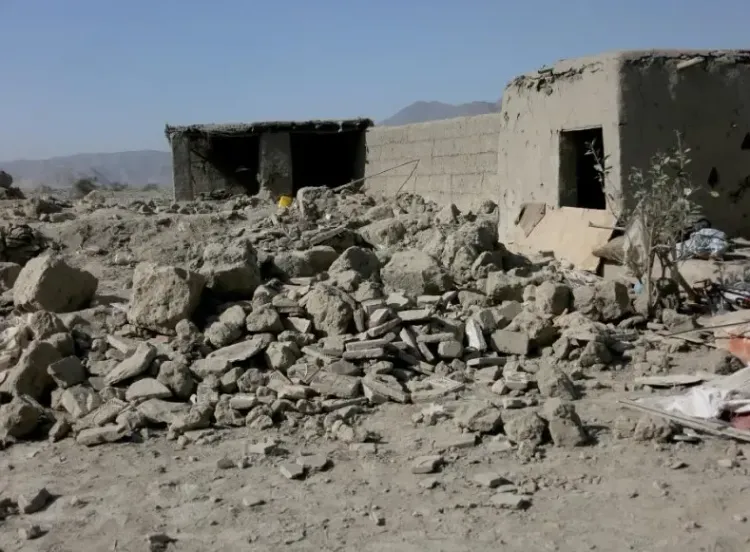
The statement came in response to a declaration from Afghanistan’s Ministry of National Defence following Pakistan's lethal airstrikes on various civilian locales in the Nangarhar and Paktika provinces, which claimed the lives of numerous civilians.
The Ministry reported that the strikes hit a madrasa and several homes, resulting in the death and injury of “dozens of civilians,” including women and children.
In a show of support for the bereaved Afghan families, the BNM reiterated its commitment to Afghanistan’s right to self-defence and sovereignty.
The organization stated that “for nearly 79 years, the root cause of instability in the region has been the policies of the State of Pakistan, fueled by its both overt and covert expansionist goals.”
The rights group further noted that shortly after its establishment, Pakistan commenced its occupation of Balochistan, robbing the area of its sovereignty and freedoms, keeping it under the control of a “dominant Punjabi regime.” It emphasized that the “oppressed nations” under Pakistan strive for their “national survival.”
“The global community can observe that Pakistan is politically and socially disintegrating, leading to a crisis for the state itself,” it remarked.
Despite the military oppression and violence directed towards political factions, the BNM asserted that Pakistan has persistently failed to address its internal challenges.
“Instead, it attempts to shift blame for its shortcomings onto neighboring nations, exacerbating instability and a war-like environment in the region,” the Baloch group concluded.
It cautioned that Pakistan’s military capabilities represent a significant threat, not only locally but globally. To counter this situation, it emphasized the necessity for “unity and the establishment of a joint front among the nations in the region.”
Point of View
It is imperative to acknowledge the complex dynamics between Pakistan and Afghanistan. The Baloch National Movement's condemnation of Pakistani airstrikes highlights a broader issue of sovereignty and regional stability. This situation warrants careful attention as it directly impacts both nations and the larger geopolitical landscape.
NationPress
2 Oct 2026
Frequently Asked Questions
What did the Baloch National Movement say about Pakistan's airstrikes?
The Baloch National Movement condemned Pakistan's airstrikes on Afghanistan, calling them a violation of Afghan sovereignty and a direct attack on unarmed civilians.
What were the consequences of the airstrikes in Afghanistan?
The airstrikes resulted in the death and injury of numerous civilians, including women and children, according to Afghanistan's Ministry of National Defence.
How has Pakistan's actions affected regional stability?
The BNM stated that Pakistan's expansionist policies have been a root cause of instability in the region for nearly 79 years.
What is the BNM's stance on Afghanistan's right to defend itself?
The BNM expressed solidarity with Afghan families and reaffirmed support for Afghanistan’s sovereignty and right to self-defence.
What does the BNM propose for addressing regional tensions?
The BNM emphasizes the need for unity and collaboration among regional nations to counteract the threats posed by Pakistan's military actions.