US border wall to be finished before Trump exits, says Homeland Security chief
Synopsis
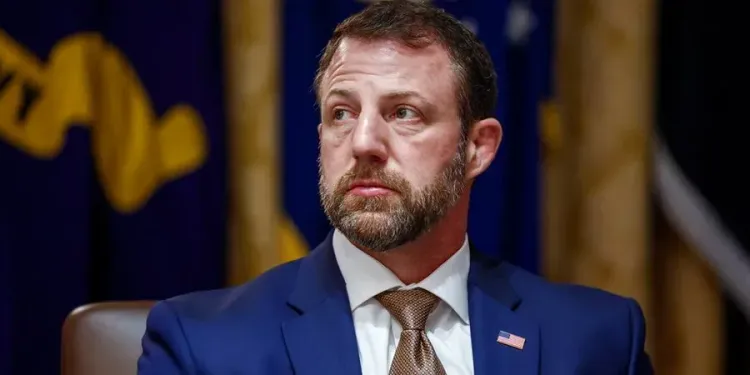
US Homeland Security Secretary Markwayne Mullin pledged to Congress that both the primary and secondary US-Mexico border wall will be finished before Trump's term ends — a sweeping commitment backed by smart fencing, heat-sensor drones and UAS deployment. Even a ranking Democrat acknowledged falling crossing numbers, though he argued walls alone aren't the answer.
Key Takeaways
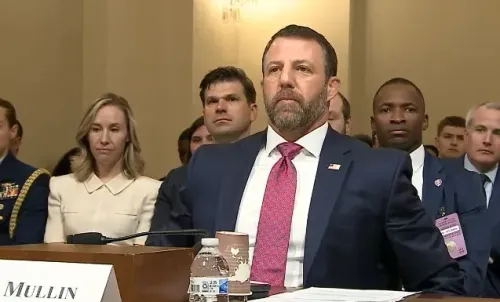
Homeland Security Secretary Markwayne Mullin told Congress on 26 June the full primary and secondary border wall will be completed before President Trump leaves office.
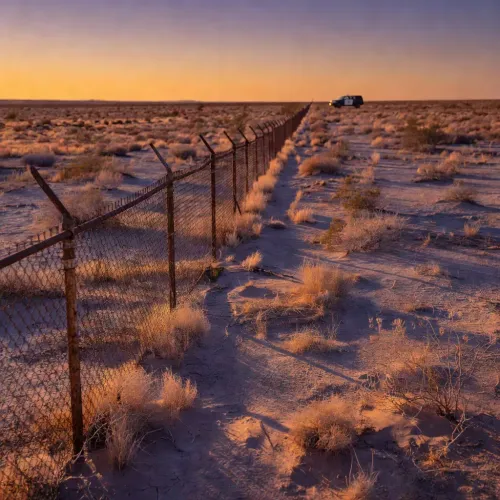
The DHS is deploying smart fences, heat-sensor drones and unmanned aerial systems along the nearly 2,000-mile US-Mexico border.
Mullin said the first cartel tunnel in years was discovered, citing it as evidence the existing wall is working.
Ranking Democrat Congressman Henry Cuellar acknowledged declining illegal crossings but argued the drop occurred without new wall construction.
Cuellar invited Mullin to visit Laredo to address community concerns about wall alignment and private property impact; Mullin accepted.
US Homeland Security Secretary Markwayne Mullin told Congress on 26 June that the Trump administration intends to complete both the primary and secondary border wall along the US-Mexico border before President Donald Trump leaves office, while simultaneously expanding smart fencing, drone surveillance and sensor technology to counter the evolving tactics of Mexican drug cartels.
What Mullin Told Lawmakers
Appearing before the House Appropriations Subcommittee on Homeland Security, Mullin said the administration was adapting its border strategy as criminal organisations increasingly turned to tunnels, drones and other bypass methods. 'The more walls we put, the more we can focus on trafficked areas,' he said. 'We just discovered our first tunnel in years because our wall is being effective. We are pushing them into what we consider chokepoints.'
Mullin was unequivocal about the timeline. 'I'll have it done before President Trump is out of office,' he said. 'We'll have the complete primary and secondary wall done.' He added that the secondary barrier would give Border Patrol agents critical response time after cartels breached the first fence.
Smart Fencing and Drone Technology
Beyond physical barriers, Mullin outlined a layered security approach. 'We're putting in smart fences, which allows us to respond when they're tampering with the wall,' he said. The department is also deploying unmanned aerial systems (UAS) equipped with heat sensors to track movement in real time.
Mullin acknowledged that cartels were constantly adapting. 'There's not one inch of Mexico's northern border that isn't covered by a plaza,' he told the subcommittee, referring to cartel territorial control. The Department of Homeland Security (DHS) is studying vulnerable sections of the nearly 2,000-mile US-Mexico border while balancing security needs with concerns raised by border communities.
Bipartisan Debate on the Best Approach
The hearing drew bipartisan discussion, though lawmakers differed sharply on strategy. Congressman Henry Cuellar, the ranking Democrat on the subcommittee whose district spans part of the Texas-Mexico border, acknowledged a significant decline in illegal crossings but urged the administration to consult border communities before expanding wall construction.
'I believe in strong border security,' Cuellar said. 'But it's got to be more than physical barriers.' He argued that technology, intelligence sharing and trained personnel had driven the improvement. 'The numbers went down without a single foot of border wall being constructed,' Cuellar said. He invited Mullin to visit Laredo to discuss concerns about wall alignment and its impact on private property — an invitation Mullin accepted.
Broader Context and What Comes Next
Border security and immigration have remained central pillars of Trump's second-term agenda. The administration has sought billions of dollars from Congress to expand physical barriers, recruit additional enforcement personnel and deploy advanced surveillance technologies aimed at disrupting transnational criminal organisations.
This comes amid a broader push by the administration to frame border security as a multi-layered effort — combining artificial intelligence, drone fleets, sensor-equipped surveillance towers and a completed wall system. How quickly DHS can deliver on Mullin's commitment, and whether Congress will fund the full scope, remains to be seen.
Point of View
000 miles before a presidential term ends is a logistical undertaking that has defeated past administrations. The bipartisan acknowledgement that illegal crossings fell without new wall construction quietly undercuts the administration's central argument, even as Republicans frame it as proof that enforcement posture — not just barriers — matters. The more revealing detail is the cartel tunnel discovery: it suggests that walls do displace, rather than eliminate, smuggling routes, validating the case for layered technology but also raising the question of whether a completed wall simply shifts the problem underground rather than solving it.
NationPress
26 Jun 2026
Frequently Asked Questions
What did Homeland Security Secretary Markwayne Mullin promise about the border wall?
Mullin told the House Appropriations Subcommittee on 26 June that the Trump administration will complete both the primary and secondary US-Mexico border wall before President Trump leaves office. He also outlined plans to deploy smart fencing, drones and heat sensors alongside the physical barriers.
What is a secondary border wall and why does it matter?
The secondary wall is a second physical barrier set behind the primary fence along the US-Mexico border. According to Mullin, it gives Border Patrol agents additional time to respond after cartels breach the first fence, closing the window for illegal crossings.
How are cartels adapting to existing border barriers?
According to Mullin, Mexican drug cartels are increasingly using tunnels, drones and other bypass methods as physical barriers expand. DHS said it recently discovered its first cartel tunnel in years, which Mullin cited as evidence that the wall is pushing smuggling activity into detectable chokepoints.
What did Democratic Congressman Henry Cuellar say about the border wall?
Cuellar, the ranking Democrat on the subcommittee, acknowledged a sharp decline in illegal crossings but argued it occurred without new wall construction, crediting technology, intelligence sharing and trained personnel instead. He invited Mullin to Laredo to discuss community concerns about wall alignment and its impact on private property.
What technology is DHS deploying alongside the physical border wall?
DHS is rolling out smart fencing that alerts agents when the wall is tampered with, unmanned aerial systems (UAS) equipped with heat sensors, artificial intelligence tools, and sensor-equipped surveillance towers as part of a layered border security strategy.