Brazil grain output 2027: IBGE forecasts 2.6% fall to 346.6 mn tonnes
Synopsis
After a record grain harvest of 355.8 million tonnes in 2026, Brazil is set to produce 9.2 million tonnes less in 2027, according to the IBGE. The culprits: El Niño-driven rainfall disruptions and rising oil-linked input costs — a combination that could ripple through global soybean and corn markets well beyond Brazilian borders.
Key Takeaways
Brazil's grain output is forecast at 346.6 million tonnes in 2027 , down 2.6% from the projected record of 355.8 million tonnes in 2026 .
The forecast was released by the Brazilian Institute of Geography and Statistics (IBGE) on Friday, 14 November 2026 .
Planted area is set to contract by 78,500 hectares to 83.2 million hectares in 2027 .
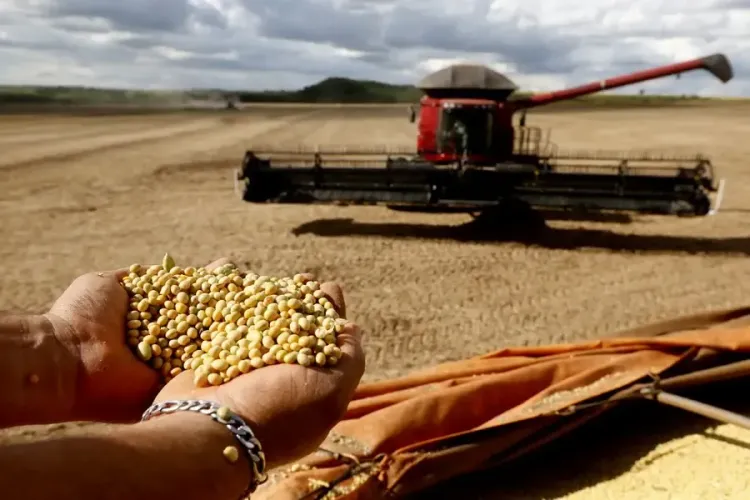
Soybeans (175 mn tonnes) and corn (145.5 mn tonnes) dominate Brazil's 2026 grain mix.
The El Niño climate phenomenon and higher oil-driven input costs are the primary risks flagged for 2027 .
Brazil's grain harvest is projected to decline to 346.6 million tonnes in 2027, a drop of 2.6% — or 9.2 million tonnes — from the previous year, according to a forecast released by the Brazilian Institute of Geography and Statistics (IBGE) on Friday. The projection marks a notable reversal after 2026, when output is estimated to reach a record 355.8 million tonnes.
Planting Area and Output Projections
The area planted with grain crops is projected to reach 83.2 million hectares in 2027, a marginal decrease of 78,500 hectares compared to 2026. While the reduction in planted area is relatively small, the steeper fall in output reflects the anticipated impact of adverse weather and rising input costs rather than a large-scale withdrawal from cultivation.
Soybeans remain Brazil's dominant crop, with output in 2026 expected to reach 175 million tonnes. Corn ranks second at an estimated 145.5 million tonnes — a critical feedstock for both animal feed and ethanol production. Rice and wheat output in 2026 are estimated at 11.3 million tonnes and 5.3 million tonnes, respectively.
What Drove the 2026 Record
Favourable weather conditions across most of Brazil's major grain-producing states underpinned the strong 2026 harvest, pushing total output up 2.8% from the 346.1 million tonnes recorded in 2025. The record-breaking season set a high baseline that the 2027 crop cycle is now expected to fall short of.
El Niño and Rising Costs Cloud 2027 Outlook
The El Niño climate phenomenon is expected to disrupt growing conditions in key producing regions in 2027, with shifting rainfall patterns potentially weighing on yields. This comes amid a broader cost squeeze: higher global oil prices are pushing up farm production expenses, including energy, fertilisers, crop protection products, and fuel, compounding the climatic risk. Notably, this dual pressure — weather shock plus input-cost inflation — mirrors challenges that have periodically crimped Latin American harvests over the past two decades.
Brazil's Role in Global Food Supply
Brazil is among the world's largest agricultural producers and exporters, with soybeans and corn accounting for the bulk of its grain output. Any significant shortfall in Brazilian supply has direct implications for global commodity markets, animal feed prices, and food import-dependent economies across Asia and Africa. The IBGE's 2027 forecast, if realised, would return output levels roughly to those of 2026 before the record year — a correction rather than a collapse, but one with tangible downstream effects on trade flows and food prices.
All eyes will now be on seasonal weather monitoring as the 2027 planting season progresses and updated IBGE estimates emerge in coming months.
Point of View
But the context matters: this is a retreat from an all-time record, and the twin triggers — El Niño and oil-price-driven input inflation — are not short-lived shocks. Global soybean and corn benchmarks are sensitive to Brazilian supply signals, and any downward revision to the IBGE's initial estimate as the 2027 season unfolds could amplify commodity price pressure disproportionate to the volume drop. For food-import-dependent economies, particularly in South and Southeast Asia, the IBGE number is an early warning worth watching.
NationPress
14 Nov 2026
Frequently Asked Questions
What is Brazil's grain output forecast for 2027?
The Brazilian Institute of Geography and Statistics (IBGE) projects Brazil will harvest 346.6 million tonnes of grain in 2027, down 2.6% — or 9.2 million tonnes — from the estimated record of 355.8 million tonnes in 2026. The forecast was released on 14 November 2026.
Why is Brazil's grain production expected to fall in 2027?
The El Niño climate phenomenon is expected to alter rainfall patterns in key grain-producing regions, potentially reducing crop yields. Rising oil prices are also increasing farm production costs, including fertilisers, fuel, and crop protection products, adding further pressure on output.
Which crops dominate Brazil's grain production?
Soybeans are Brazil's leading grain crop, with 2026 output estimated at 175 million tonnes. Corn is second at 145.5 million tonnes, used extensively in animal feed and ethanol production. Rice and wheat output in 2026 are estimated at 11.3 million tonnes and 5.3 million tonnes, respectively.
How significant is Brazil in global food supply?
Brazil is one of the world's largest agricultural producers and exporters. Soybeans and corn account for most of its grain output and are among its chief agricultural exports, meaning supply changes in Brazil directly influence global commodity prices and food security in import-dependent nations.
How does the 2027 forecast compare to recent years?
The 2027 projection of 346.6 million tonnes is below the record 355.8 million tonnes expected in 2026 but roughly in line with the 346.1 million tonnes harvested in 2025. It represents a correction from an exceptional year rather than a structural decline in Brazilian agriculture.