British national shot dead by Pakistani forces in PoK protests

Synopsis
A 50-year-old British resident of Peterborough was killed by a stray bullet fired by Pakistani security forces during PoK protests on 9 June — a death his family kept quiet out of fear of reprisals. A second UK national from Nottingham has been held without charge in Mirpur for over two months. These are the first known British casualties of a crackdown that has already claimed dozens of lives in Pakistan-occupied Kashmir.
Key Takeaways
Mohammad Akhtar , 50 , a British resident of Peterborough , was shot dead by Pakistani security forces in Kotli, PoK , on 9 June .
His family says he was struck by a stray bullet and was not participating in the protests; they have not filed a complaint, fearing reprisals.
Waqas Arif , 38 , from Nottingham , has been detained in Mirpur, PoK for more than two months without charge following the 5 June protests.
The UK FCDO has expressed grave concern and updated travel advice on 7 August to advise against all but essential travel to affected areas.
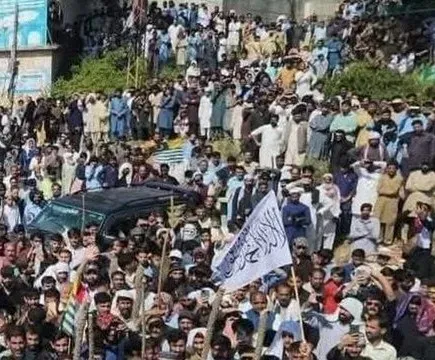
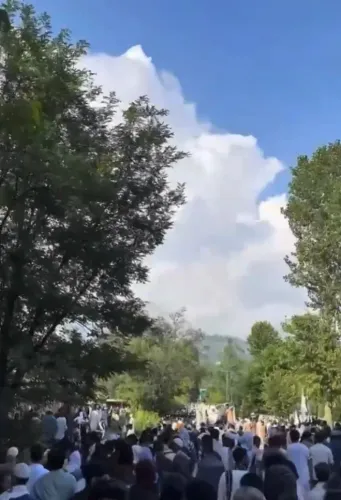
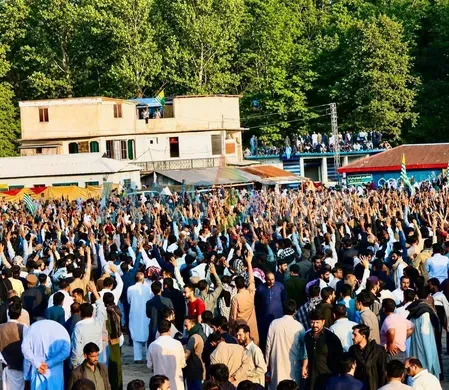
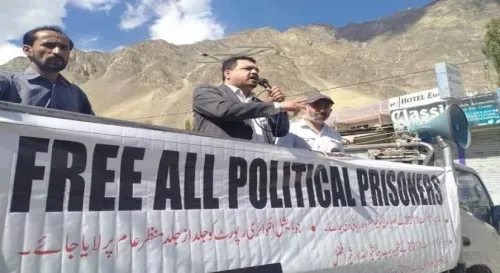
The PoK protests, demanding economic and electoral reforms, have killed dozens and represent one of the biggest challenges to Pakistani authorities in recent years.
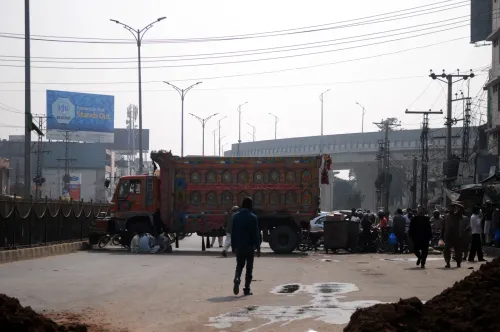
A British national, Mohammad Akhtar, 50, was shot and killed by Pakistani security forces during protests in Pakistan-occupied Kashmir (PoK) on 9 June, according to a report by British daily The Guardian citing his family. Akhtar, a resident of Peterborough in the United Kingdom, was staying in Kotli city in PoK when he was struck by a stray bullet amid clashes that have killed dozens and posed one of the gravest challenges to Pakistani authorities in recent years.
What Happened in Kotli
Akhtar was not participating in the demonstrations, according to his family. The protests had erupted near his residence, where crowds had gathered to demand economic and electoral reforms in PoK. His cousin, Mohammad Saad, told The Guardian: “He wasn’t taking part in protests, but the demonstrations were happening close to his house. There was firing by the forces that day, and he was hit by a stray bullet. There was a bullet wound on the side of his chest.”
Saad added that Akhtar’s children chose not to raise the matter with British authorities. The family has also been unable to file a police complaint in PoK, reportedly fearing that drawing attention to the case could put them at further risk.
Second British National Detained in Mirpur
Separately, Waqas Arif, 38, a British national from Nottingham, has been held in a regional prison in Mirpur city, PoK, for more than two months following the 5 June protests, despite his family’s insistence that he did not take part in the demonstrations. His sister, Sumera, told The Guardian: “Waqas was not involved in any kind of protests. But since my other two brothers were involved and they went for the protests with everybody else, the Pakistani forces along with the Rangers came into my house, and they took my brothers away.”
Sumera further said: “There is no charge. He hasn’t done anything… I think there are thousands of other brothers like him from everywhere who they have put in (prison) so they can minimise the protest power… they have not even been taken to court.” Family efforts to secure Arif’s release through the intervention of the UK’s Foreign Office have so far not produced results, according to reports.
UK Government Response
The UK’s Foreign, Commonwealth and Development Office (FCDO) said it has expressed grave concern over the situation in PoK. “FCDO ministers and the UK high commissioner in Islamabad are in touch with their counterparts, and UK travel advice was updated on 7 August and continues to advise against all but essential travel to affected areas,” the office stated.
Broader Context
The violence in PoK, triggered by protests demanding economic relief and democratic reforms, has reportedly claimed dozens of lives and represents one of the most significant civil unrest episodes the region has seen in years. The cases of Akhtar and Arif are among the first to surface involving British nationals with familial ties to the region, highlighting the cross-border human cost of the crackdown. Notably, details of both cases had not been previously reported before The Guardian’s account.
With the FCDO now publicly flagging concern and the UK high commissioner engaged with Pakistani counterparts, diplomatic pressure on Islamabad over the treatment of British nationals in PoK is likely to intensify in the coming weeks.
Point of View
But London’s room for diplomatic ambiguity narrows with every British passport-holder caught in the crossfire. If more such cases surface — and Sumera’s reference to ‘thousands’ suggests they might — the pressure on the UK government to take a harder public line on Pakistan will be difficult to resist.
NationPress
25 Sept 2026
Frequently Asked Questions
Who was Mohammad Akhtar and how was he killed in PoK?
Mohammad Akhtar was a 50-year-old British national from Peterborough who was shot dead by a stray bullet fired by Pakistani security forces in Kotli, PoK, on 9 June. His family says he was not participating in the protests and was near his residence when the firing occurred.
Who is Waqas Arif and why is he detained in PoK?
Waqas Arif is a 38-year-old British national from Nottingham who has been held in a prison in Mirpur, PoK, for more than two months following the 5 June protests. His family maintains he did not take part in the demonstrations, and he has not been charged or brought before a court, according to his sister Sumera.
What has the UK government said about British nationals in PoK?
The UK’s Foreign, Commonwealth and Development Office (FCDO) has expressed grave concern over the situation in PoK. It confirmed that FCDO ministers and the UK high commissioner in Islamabad are engaged with Pakistani counterparts, and updated travel advice on 7 August to advise against all but essential travel to affected areas.
What triggered the protests in Pakistan-occupied Kashmir?
The protests in PoK were driven by demands for economic relief and electoral reforms in the region. The unrest has reportedly claimed dozens of lives and is considered one of the most significant challenges Pakistani authorities have faced in the territory in recent years.
Why did Akhtar’s family not report his death to British authorities?
According to his cousin Mohammad Saad, Akhtar’s children chose not to approach British authorities. The family has also been unable to file a police complaint in PoK, fearing that raising the matter publicly could put them at further risk from Pakistani authorities.