CCP's Tibet policy a textbook case of empire-building through assimilation: Report
Synopsis
A report by the Dalai Lama's nephew frames the CCP's Tibet policy as a historically doomed assimilation project — just as Amnesty International condemns the arrest of pro-democracy activist Zhang Yi for showing a Dalai Lama photograph at a Lhasa monastery. The two cases together offer a rare, simultaneous view of Beijing's ideological and legal machinery at work in Tibet.
Key Takeaways
A report in the European Times by Khedroob Thondup , nephew of the Dalai Lama , calls the CCP 's Tibet policy a textbook case of empire-building through assimilation.
Thondup argues the CCP uses modernisation, surveillance, and demographic engineering to integrate Tibet, while mandating the sinicisation of Tibetan Buddhism .
Amnesty International condemned the arrest of pro-democracy activist Zhang Yi , detained on 1 July at Sera Monastery , Lhasa, for displaying a photograph of the Dalai Lama .
Zhang was formally arrested on 28 July on suspicion of 'inciting separatism', according to his family.
His detention coincided with the entry into force of China's Promoting Ethnic Unity and Progress Law .
Amnesty International Deputy Regional Director Sarah Brooks called the case a 'chilling reminder' of China's crackdown on peaceful expression in Tibetan areas.
The Chinese Communist Party (CCP)'s approach to Tibet represents a textbook case of empire-building through forced assimilation — one that, according to a new report, carries the structural fragilities that have historically undone every imperial project. The analysis, published in the European Times, draws on historical parallels to argue that rigid assimilation strategies ultimately face systemic limits, regardless of the power behind them.
The CCP's Strategy in Tibet
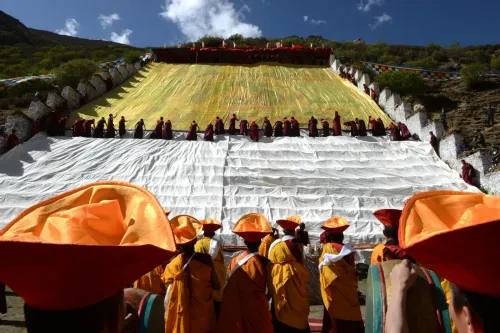
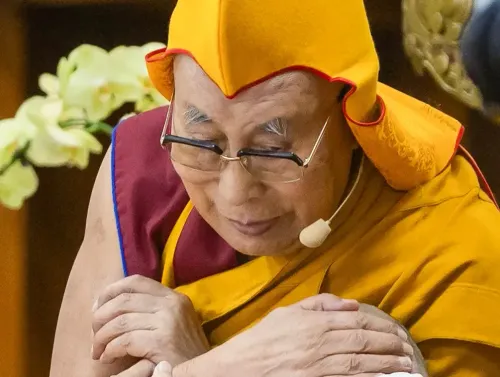
Khedroob Thondup, nephew of Tibetan spiritual leader the Dalai Lama, authored the report, outlining how the CCP views the Tibetan Plateau through three overlapping lenses: a national security buffer, an economic resource base, and a geopolitical anchor. Infrastructure projects and military deployments, he wrote, reinforce Tibet's strategic role, while party policies mandate the sinicisation of Tibetan Buddhism — erasing doctrinal and institutional distinctions that define Tibetan religious identity.
'The CCP's Tibet policy is a textbook case of empire-building through assimilation. But history teaches that no empire is permanent. The wax and wane of power is inexorable. Tibet's story is not one of disappearance but of resilience; an enduring reminder that identity, faith, and culture often outlast the structures that seek to erase them,' Thondup wrote.
Historical Parallels and the Limits of Assimilation
Thondup drew comparisons with Rome, the Ottoman Empire, and the British Raj — each of which, he argued, believed its dominion permanent, only to discover that power is cyclical. He contended that the CCP's drive to eliminate cultural difference and impose uniformity introduces precisely the kind of rigidity that produces fragility over time. Empires, he noted, have historically collapsed through a combination of external challenge and internal contradiction.
In the near term, Thondup anticipated that China would likely intensify surveillance, expand policing, and accelerate demographic shifts designed to dilute Tibetan identity. Yet he argued that Tibetan civilisation — having withstood centuries of external pressure — retains both the resistance and resilience to outlast such measures.
Amnesty International Condemns Arrest at Sera Monastery
The report's publication coincides with a separate case that rights groups say illustrates the CCP's posture in Tibet. Leading international human rights organisation Amnesty International strongly condemned the arrest of prominent Chinese pro-democracy activist Zhang Yi after he displayed a photograph of the Dalai Lama during a visit to Sera Monastery in Lhasa.
Zhang was detained by police on 1 July while visiting the monastery with his younger brother. According to his family's account cited by Amnesty International, after being unable to communicate verbally with a Tibetan worshipper from whom he wished to borrow a prayer mat, Zhang showed the person a photograph of the Dalai Lama on his mobile phone. Two plainclothes individuals reportedly observed the interaction and appeared to record Zhang and his brother as they left the prayer area. Zhang was detained before he could exit the monastery.
He was formally arrested on 28 July on suspicion of 'inciting separatism', according to an arrest notice received by his family.
What Amnesty International Said
Amnesty International's Deputy Regional Director Sarah Brooks described the case as carrying 'all the hallmarks of the Chinese authorities' long-standing misuse of the offence of inciting separatism to criminalise peaceful expression in Tibetan areas and in relation to Tibetan history, culture and religious belief.'
'The arrest of Zhang Yi after he showed a photograph of the Dalai Lama while visiting a monastery is a chilling reminder of how far the Chinese authorities will go to police the peaceful exercise of human rights,' Brooks said. She called on authorities to ensure Zhang has prompt access to his family and a lawyer of his own choosing, and to protect him from torture and other ill-treatment while in detention.
Notably, Zhang's detention occurred on the same day that China's new Promoting Ethnic Unity and Progress Law came into force — a coincidence that rights observers say underscores the law's potential to further criminalise Tibetan cultural and religious expression.
Broader Context
The dual developments — Thondup's historical analysis and the Zhang Yi case — arrive at a moment of heightened international scrutiny over Beijing's Tibet policies. Critics argue that the sinicisation drive, combined with new legal instruments and pervasive surveillance infrastructure, is systematically narrowing the space for Tibetan religious and cultural life. The Tibetan government-in-exile and multiple UN human rights bodies have previously flagged similar concerns, though Beijing consistently characterises its Tibet policies as development-oriented and sovereignty-protecting. How the international community responds to cases like Zhang Yi's will likely shape the diplomatic pressure — or lack thereof — that Beijing faces in the months ahead.
Frequently Asked Questions
What does the report say about the CCP's Tibet policy?
The report, published in the European Times and authored by Khedroob Thondup — nephew of the Dalai Lama — argues that the CCP's Tibet policy is a textbook case of empire-building through forced assimilation. It contends that Beijing uses modernisation, surveillance, demographic engineering, and the sinicisation of Tibetan Buddhism to integrate Tibet, but that history shows such rigid strategies ultimately face systemic limits.
Who is Khedroob Thondup and why does his analysis matter?
Khedroob Thondup is the nephew of the Tibetan spiritual leader the Dalai Lama and a prominent voice on Tibetan affairs. His report draws on historical comparisons with Rome, the Ottoman Empire, and the British Raj to argue that no imperial assimilation project is permanent, giving his analysis both personal authority and historical grounding.
Why was Zhang Yi arrested in Tibet?
Zhang Yi, a Chinese pro-democracy activist, was detained by police on 1 July at Sera Monastery in Lhasa after he showed a photograph of the Dalai Lama on his mobile phone to a Tibetan worshipper. He was formally arrested on 28 July on suspicion of 'inciting separatism', according to an arrest notice received by his family.
What has Amnesty International said about Zhang Yi's arrest?
Amnesty International strongly condemned the arrest, with Deputy Regional Director Sarah Brooks calling it 'a chilling reminder of how far the Chinese authorities will go to police the peaceful exercise of human rights.' The organisation has called for Zhang to be given prompt access to his family and a lawyer, and to be protected from torture or ill-treatment in detention.
What is China's Promoting Ethnic Unity and Progress Law?
China's Promoting Ethnic Unity and Progress Law is a new legal framework that came into force on 1 July — the same day Zhang Yi was detained. Rights observers have flagged concerns that the law could be used to further criminalise Tibetan cultural, religious, and historical expression under the guise of promoting ethnic unity.