China accused of misusing 'inciting separatism' charges in Tibet activist arrest
Synopsis
A mainland Chinese pro-democracy activist was arrested at a Tibetan monastery simply for showing a photo of the Dalai Lama on his phone — and the timing, the same day Beijing's sweeping new Ethnic Unity Law took effect, is no coincidence. Amnesty International warns this case is a blueprint for how China intends to use the new legislation to silence peaceful expression across Tibet.
Key Takeaways
Zhang Yi , a Chinese pro-democracy activist, was detained at Sera Monastery , Lhasa , on 1 July after showing a photograph of the Dalai Lama on his mobile phone.
He was formally arrested on 28 July on suspicion of 'inciting separatism' , according to an arrest notice received by his family.
Amnesty International Deputy Regional Director Sarah Brooks condemned the arrest as a misuse of separatism charges to criminalise peaceful expression.
The detention occurred on the same day China's Promoting Ethnic Unity and Progress Law came into force, raising concerns about expanded repression.
Amnesty International has repeatedly documented similar charges being used against Tibetans for peaceful advocacy of language rights and religious freedom.
Amnesty International has strongly condemned the arrest of Chinese pro-democracy activist Zhang Yi in Tibet, calling it a stark example of China's systematic criminalisation of peaceful expression through the misuse of 'inciting separatism' charges. Zhang was formally arrested on 28 July after showing a photograph of the Dalai Lama on his mobile phone while visiting a monastery — an act the rights body says should never have attracted criminal liability.
What Happened at Sera Monastery
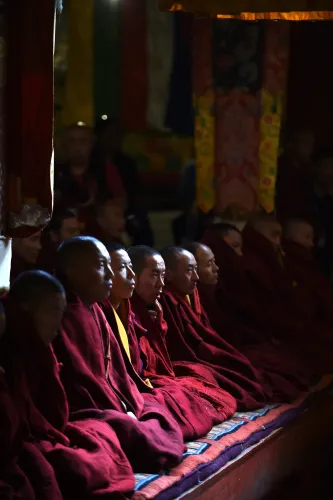
According to Amnesty International, Zhang Yi was detained by police at Sera Monastery in Lhasa on 1 July while visiting with his younger brother. Unable to communicate verbally with a Tibetan worshipper from whom he wished to borrow a prayer mat, Zhang showed the person a photograph of the Dalai Lama on his phone.
His family's account, cited by the rights organisation, states that two plainclothes men observed the exchange and appeared to record Zhang and his brother as they left the prayer area. Zhang was detained before he could exit the monastery. An arrest notice received by his family on Wednesday confirmed he was formally placed under arrest on suspicion of 'inciting separatism'.
Amnesty International's Condemnation
Amnesty International's Deputy Regional Director Sarah Brooks described the case as carrying 'all the hallmarks' of a pattern the organisation has documented repeatedly. 'The arrest of Zhang Yi after he showed a photograph of the Dalai Lama while visiting a monastery is a chilling reminder of how far the Chinese authorities will go to police the peaceful exercise of human rights,' Brooks said.
She added that authorities must ensure Zhang has 'prompt access to his family and a lawyer of his own choosing' and must protect him from torture or ill-treatment while in detention.
Beijing's New Ethnic Unity Law
Zhang's detention came on 1 July — the same day Beijing's new Promoting Ethnic Unity and Progress Law came into force. Amnesty International flagged that the legislation contains broad and vaguely worded provisions requiring the promotion of 'ethnic unity' and a shared national identity, creating additional legal grounds for restricting freedom of expression, religion or belief, and cultural rights.
Critics argue the law effectively provides authorities with expanded tools to suppress Tibetan religious and cultural identity under the cover of national cohesion mandates.
A Documented Pattern of Repression
This case is not isolated. Amnesty International says it has repeatedly documented the Chinese authorities' use of 'inciting separatism' charges against Tibetans for peaceful acts — including advocating for Tibetan-language education and expressing views on religious freedom and the Dalai Lama. The organisation characterises such prosecutions as a long-standing instrument of political control in the Tibetan region.
As international scrutiny of China's human rights record in Tibet intensifies, the fate of Zhang Yi — a mainland Chinese activist rather than a Tibetan — is being watched closely by rights groups as a signal of how broadly Beijing is willing to apply these charges.
Point of View
Not narrowing. The simultaneous activation of the Ethnic Unity Law and Zhang Yi's detention is unlikely to be coincidental; it reads as an early enforcement signal. What mainstream coverage underplays is that this law's vague 'ethnic unity' mandate now gives Chinese authorities near-unlimited discretion to define any expression of Tibetan religious identity as a threat to national cohesion. The international community's leverage here is limited, but the naming and documentation by groups like Amnesty International remains the only meaningful check on a system designed to operate without transparency.
NationPress
21 Sept 2026
Frequently Asked Questions
Who is Zhang Yi and why was he arrested in Tibet?
Zhang Yi is a Chinese pro-democracy activist who was detained at Sera Monastery in Lhasa on 1 July after showing a photograph of the Dalai Lama on his mobile phone to a Tibetan worshipper. He was formally arrested on 28 July on suspicion of 'inciting separatism', according to an arrest notice received by his family.
What is the 'inciting separatism' charge China used against Zhang Yi?
'Inciting separatism' is a criminal offence under Chinese law that carries severe penalties. Amnesty International says Chinese authorities have repeatedly misused the charge to prosecute Tibetans and others for peaceful acts — including displaying images of the Dalai Lama, advocating for Tibetan-language education, and expressing views on religious freedom.
What is China's new Promoting Ethnic Unity and Progress Law?
The Promoting Ethnic Unity and Progress Law came into force on 1 July — the same day Zhang Yi was detained. Amnesty International warns that the law contains broad, vaguely worded provisions requiring promotion of 'ethnic unity' and a shared national identity, creating additional legal grounds to restrict freedom of expression, religion, and cultural rights in minority regions including Tibet.
What has Amnesty International demanded from Chinese authorities?
Amnesty International has called for Zhang Yi's release and demanded that, pending release, authorities grant him prompt access to his family and a lawyer of his own choosing. The organisation has also called on Beijing to protect him from torture or ill-treatment while in detention.
Is this the first such case of 'inciting separatism' charges in Tibet?
No. Amnesty International says it has repeatedly documented the Chinese authorities using 'inciting separatism' charges against Tibetans for peaceful acts, including advocating for Tibetan-language education and expressing views on the Dalai Lama. The organisation describes it as a long-standing pattern of criminalising peaceful expression in Tibetan areas.