China tariffs: Global trade war, not just a US-China dispute, report finds
Synopsis
A new report flips the script on the tariff story: this is not a US-China trade war — it is China versus the world. With 19 nations backing a G20 surplus-reduction proposal that China alone vetoed, and tariff walls stretching from the US to Indonesia, Pakistan to Egypt, the global trading order is quietly realigning against Beijing's industrial model.
Key Takeaways
A new report argues the global tariff wave against China is a worldwide trade confrontation, not merely a US-China bilateral dispute.
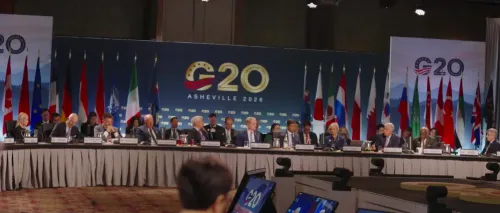
At a recent G20 finance ministers' meeting , 19 nations backed a proposal urging surplus-reduction — China was the sole dissenter, according to analyst Ross Babbage .
Tariff rates on Chinese goods now range from 60% in Pakistan to 200% on light manufactured goods in Indonesia , spanning vastly different political systems.
China's manufacturing output, half that of the US in 2004 , is now reportedly double — underpinned by state subsidies and a currency the IMF estimates is undervalued by 20–40% .
The report also alleged state-backed IP theft , cyber operations , and corruption of foreign officials in support of Chinese commercial interests abroad.
The escalating wave of tariffs targeting Chinese goods is not a bilateral dispute between Washington and Beijing, but a sweeping global trade confrontation pitting China against much of the rest of the world, according to a new report cited by Defense.info. The finding reframes a narrative that has long centred on US-China tensions as a far broader and more coordinated international pushback.
A G20 Flashpoint
The report drew on analysis published in The Australian Financial Review, which highlighted a proposed joint statement at a recent G20 finance ministers' meeting. The draft called on countries with 'excessive and persistent external surpluses' to eliminate the distortions generating them. Of the nations present, 19 backed the proposal — and China alone voted against it. Analyst Ross Babbage characterised the lone dissent as a clear signal of China's growing international isolation.
The Tariff Wall: Who Has Built It
The report catalogued tariff rates that democracies, developing economies, and industrial powers — with little else in common — have independently imposed on Chinese goods, particularly electric vehicles and light manufactured products. The figures span a wide range of political systems:
102% in the United States; 75–125% in India; 80–125% in Thailand; 60% in Pakistan; 65–95% in Egypt; a quota-plus-100% arrangement in Canada; and a flat 200% on Chinese light manufactured goods in Indonesia. The breadth of this convergence, the report argued, cannot be explained as a US-led trade bloc — it reflects independently arrived-at defensive responses to the same economic pressure.
China's Manufacturing Scale and Structural Advantages
The scale of China's production dominance underlies the anxiety. According to the report, China's manufacturing output was roughly half that of the United States in 2004; it is now approximately double. This rise, the report noted, rests on several structural pillars: a protected domestic market that allows Chinese firms to scale; state subsidies reportedly far above those available in other major economies; and a currency that the International Monetary Fund (IMF) has assessed as undervalued by 20–40%, making Chinese exports artificially cheap and foreign imports into China artificially expensive.
Allegations of State-Backed Commercial Practices
Beyond conventional trade levers, the report also alleged 'an extensive state apparatus, commercial intelligence, industrial-scale IP theft, cyber operations, information campaigns, and the corruption of foreign officials and executives, that operates alongside and in support of Chinese companies abroad.' These claims, attributed to the report's authors, go beyond tariff economics into the realm of strategic competition — and reflect a hardening consensus among Western and non-Western governments alike.
What This Means for Global Trade
The convergence of so many diverse economies on similar protective measures marks a structural shift in the global trading order. If the trend holds, China faces not a temporary political headwind but a sustained realignment of supply chains and market access. The coming months, particularly as G20 deliberations continue and bilateral trade agreements are renegotiated, will test whether the international front holds or fractures under economic interdependence.
Point of View
Autocracies, and developing nations on the same defensive trade posture. That Pakistan and the United States have independently erected high tariff walls against Chinese goods tells you more about the structural distortions in China's model than any bilateral negotiation ever could. What mainstream coverage underweights is the G20 vote: 19-to-1 is not a bloc — it is near-unanimity, and China's lone dissent on a surplus-reduction text will be cited in trade litigation for years. The deeper question is whether this convergence is durable enough to alter Chinese industrial policy, or whether economic interdependence eventually splinters the coalition.
NationPress
26 Sept 2026
Frequently Asked Questions
Why are so many countries imposing tariffs on Chinese goods?
According to a new report, the tariffs reflect a broad international response to structural distortions in China's trade model — including state subsidies, a protected domestic market, and a currency the IMF estimates is undervalued by 20–40%. The report argues the result is a global trade confrontation, not a bilateral US-China spat.
What happened at the G20 finance ministers' meeting regarding China?
A proposed joint statement called on countries with 'excessive and persistent external surpluses' to remove the distortions behind them. Nineteen of the twenty nations present supported the proposal; China was the sole country to vote against it, which analyst Ross Babbage described as evidence of China's growing international isolation.
What are the current tariff rates on Chinese goods in key countries?
The report lists tariff rates of 102% in the United States, 75–125% in India, 80–125% in Thailand, 60% in Pakistan, 65–95% in Egypt, a quota-plus-100% arrangement in Canada, and a flat 200% on light manufactured goods in Indonesia. These figures span countries with very different political systems and economic priorities.
How dominant is China's manufacturing sector globally?
China's manufacturing output was roughly half that of the United States in 2004 and is now approximately double, according to the report. This rise has been supported by state subsidies, a protected home market, and a currency the IMF judges undervalued by 20–40%.
What broader allegations does the report make about Chinese commercial practices?
Beyond trade policy, the report alleged an 'extensive state apparatus' that includes commercial intelligence, industrial-scale intellectual property theft, cyber operations, information campaigns, and the corruption of foreign officials and executives to support Chinese companies operating abroad. These claims are attributed to the report's authors and have not been independently verified by NationPress.