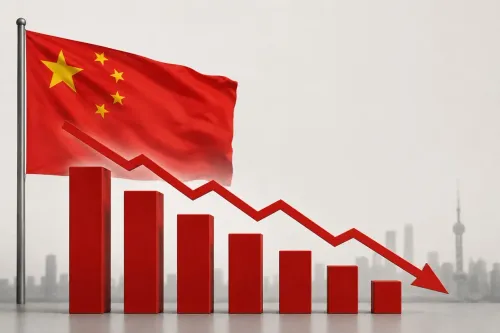
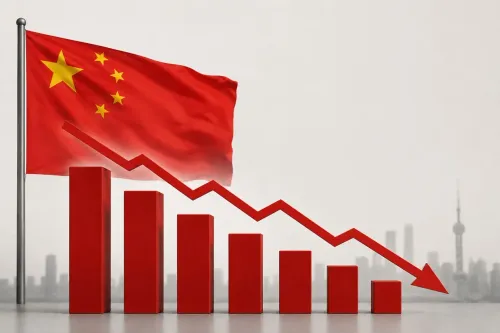
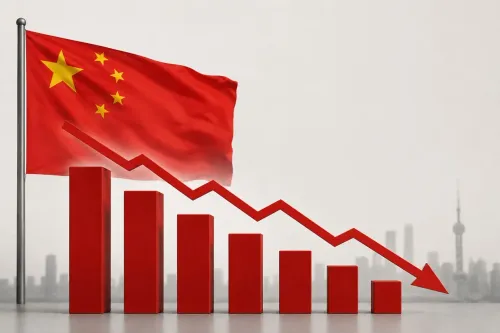
China deflation trap: Why Beijing struggles to boost consumption in 2025

Synopsis
China's deflation problem runs deeper than stimulus can fix. With real estate investment down 17.2%, consumer confidence fragile, and 62.3% of citizens preferring to save rather than spend, a new report argues that Beijing cannot expand consumption without overhauling social security, income structures, and decades of savings-first culture — a reform the system has so far resisted.
Key Takeaways
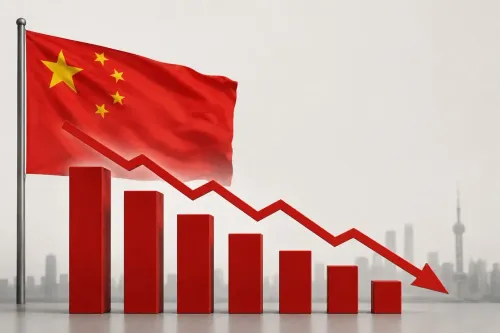
China's real estate development investment fell by 17.2 per cent in 2025 , with new home sales down 8.7 per cent .
A survey found 62.3 per cent of Chinese respondents preferred saving over spending, compared with just 19.2 per cent who favoured spending more.
Household consumption as a share of China's GDP stood at just 40 per cent in 2024 , far below the 46.8 per cent recorded in 2000 .
Final consumption contributed only 2.6 percentage points to China's 5 per cent growth in 2025 .
The report warns that without reforms to social security, income structures, and cultural attitudes, Beijing cannot meaningfully expand domestic consumption.
China is grappling with persistent deflationary pressure and chronically weak household spending, according to a new analysis published in The Diplomat, which warns that without deep structural reforms — spanning social security systems, income redistribution, and cultural attitudes toward saving — Beijing faces an uphill battle in making consumption a genuine engine of growth.
The Property Collapse and Its Economic Fallout
For decades, real estate served as the cornerstone investment for China's first-generation middle class. That foundation has since cracked. According to the report, real estate development investment fell by 17.2 per cent in 2025, while new home sales declined by 8.7 per cent. The property meltdown has created what the analysis describes as 'severe negative effects on the economy,' and neither central nor provincial-level stimulus measures have meaningfully altered the trajectory.
Consumer confidence has deteriorated in tandem. A recently published survey in China found that 62.3 per cent of respondents said they preferred to save more, compared with only 19.2 per cent who favoured spending more and 18.5 per cent who preferred to invest more — a striking snapshot of a risk-averse public.
Consumption's Shrinking Role in China's GDP
The structural imbalance between consumption and investment in China is not new, but the numbers underscore how entrenched it has become. Household consumption accounted for 46.8 per cent of GDP in 2000, before sliding to a low of 34.6 per cent in 2010 — the same year investment peaked at 46.1 per cent of GDP.
By 2024, consumption had recovered only modestly to an average of 40 per cent of GDP, while investment stood at 40.5 per cent. In 2025, final consumption contributed just 2.6 percentage points to China's reported 5 per cent economic growth — a figure that critics argue overstates the health of domestic demand.
Demographic Pressures Compound the Challenge
The report also flags China's rapidly ageing population and shrinking workforce as a structural headwind. An older society, it argues, will require substantially more spending on care and health services than on manufactured consumer goods. This demographic shift complicates the Chinese Communist Party's (CCP) strategy of using trade-in coupons and goods subsidies to stimulate demand.
Notably, the analysis suggests the CCP may pivot toward stimulating demand for services — healthcare, eldercare, education — rather than goods. However, achieving that pivot 'requires the very investment in people that the system has so far been reluctant to make,' according to the report.
Why Structural Reform Remains Elusive
Analysts have long pointed out that China's savings-heavy culture is not purely a matter of preference — it reflects rational responses to inadequate public social safety nets. Without robust state-backed healthcare, retirement security, and unemployment insurance, households have strong incentives to self-insure through savings. The report argues that until these systemic gaps are addressed, consumption-led growth will remain aspirational rather than actual.
This comes amid broader global concern about China's economic model, with trading partners and multilateral institutions closely watching whether Beijing can rebalance away from export and investment dependence — a rebalancing that has been promised, but not delivered, for well over a decade.
Whether the CCP can engineer the cultural and institutional shifts required to unlock household spending will likely determine the trajectory of not just China's economy, but global demand dynamics in the years ahead.
Point of View
Not cyclical — and that distinction matters enormously. Trade-in coupons and rate cuts cannot substitute for the social safety nets that would give households the confidence to spend. What the report surfaces, but mainstream coverage often glosses over, is that China's savings culture is a rational response to state underinvestment in healthcare and retirement security, not simply a cultural quirk. Until Beijing is willing to redirect fiscal resources toward people rather than infrastructure, the rebalancing story will remain a forecast that never quite arrives — and global demand will continue to absorb the consequences.
NationPress
14 Nov 2026
Frequently Asked Questions
Why is China struggling to boost domestic consumption?
China faces persistent deflationary pressure, a collapsed property market, and a deeply savings-oriented public. According to a report in The Diplomat, without structural reforms to social security systems, income distribution, and cultural attitudes, it is not easy for Beijing to expand household spending.
How far has China's real estate market fallen in 2025?
Real estate development investment in China fell by 17.2 per cent in 2025, while new home sales declined by 8.7 per cent. The property sector, once the primary investment vehicle for China's middle class, has become a significant drag on the broader economy.
What does the Chinese consumer savings survey show?
A recently published survey in China found that 62.3 per cent of respondents preferred to save more, while only 19.2 per cent preferred to spend more and 18.5 per cent to invest more — reflecting deep-seated caution about the economic outlook.
What share of China's GDP does household consumption represent?
Household consumption averaged 40 per cent of China's GDP in 2024, down from 46.8 per cent in 2000. In 2025, final consumption contributed just 2.6 percentage points to China's 5 per cent economic growth, underscoring its weakened role as a growth driver.
How does China's ageing population affect its consumption outlook?
China's shrinking and ageing population will increasingly demand healthcare and eldercare services rather than manufactured goods. The report argues this demographic shift requires significant investment in people — something the system has historically been reluctant to prioritise.