China's industry-first policy risks deflation trap and long-term growth: Report
Synopsis
China's leadership knows its consumers aren't spending enough — but won't change course. A Foreign Affairs report warns that Beijing's bet on industrial investment over household stimulus is producing an overproduction trap, falling prices and rising trade friction. With deflation threatening a Japan-style stagnation, the world economy may yet pay the price of China's ideological commitment to state-guided growth.
Key Takeaways
A Foreign Affairs report warns China's investment- and export-led growth model is deepening economic imbalances despite acknowledged weak consumer demand.
Beijing continues to prioritise advanced manufacturing , technology and strategic industries , resisting large-scale household stimulus.
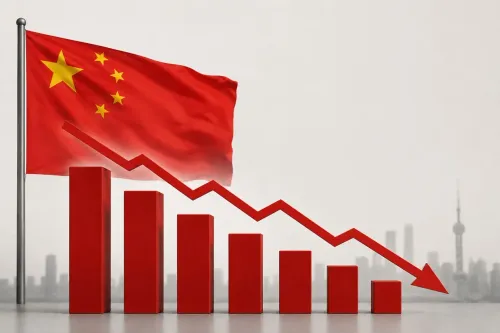
China's overproduction is forcing heavy reliance on exports, contributing to falling producer prices and weak corporate profitability .
The report warns persistent deflation poses a greater long-term threat than sector-specific weaknesses, potentially suppressing investment and wages.
Between 2022 and 2025 , lower- and middle-income countries paid $436.1 billion more in debt service than they received in new financing, though a reversal was recorded in 2025 .
China's leadership has correctly diagnosed weak domestic consumption as one of its gravest economic vulnerabilities, yet continues to double down on an investment- and export-led growth model, according to a report by Foreign Affairs. Critics warn this approach is deepening economic imbalances, raising the spectre of prolonged deflation and intensifying trade tensions with major global partners.
The Core Policy Contradiction
Despite slowing household income growth, anaemic consumer demand and mounting trade frictions, Beijing has chosen to channel resources into advanced manufacturing, technology and strategic industries. Authorities have largely resisted calls for large-scale stimulus to boost household spending, opting instead to direct credit toward industrial expansion and preferred sectors.
Chinese policymakers, the report notes, hold a long-standing belief that economic development is driven primarily by capital accumulation, technological advancement and state-guided investment — not by consumption-led growth. The expectation is that sustained industrial investment will eventually generate productivity gains, wage growth and higher consumer spending. Critics argue this sequencing has yet to materialise at the required scale.
Overproduction and Export Dependency
The report contends that China's economy is increasingly producing more than domestic consumers can absorb, forcing manufacturers into heavy reliance on exports. This structural imbalance is contributing to falling producer prices, weak corporate profitability and growing dependence on overseas demand — precisely at a moment when global trade scrutiny of Chinese goods is intensifying.
Notably, this dynamic echoes earlier episodes of investment-driven overbuilding in China's property and solar sectors, where excess capacity eventually translated into price collapses and systemic stress. The difference now is that the overproduction is concentrated in strategically sensitive industries such as electric vehicles, semiconductors and green technology — sectors where the geopolitical stakes are significantly higher.
The Deflation Warning
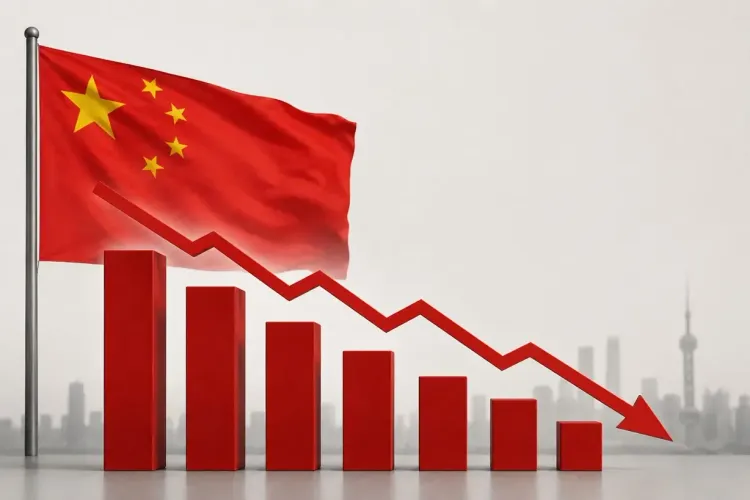
The report issues a pointed warning that persistent deflation poses a greater long-term threat than any sector-specific weakness. Falling prices can suppress investment incentives, reduce credit demand, weaken wages and further erode consumer confidence — creating a self-reinforcing downward spiral. This is the same mechanism that rendered Japan's 'lost decade' so difficult to escape.
Beijing has responded to these economic headwinds by increasing state support for strategic industries and expanding intervention in resource allocation, while offering only limited measures to directly strengthen household consumption.
Emerging Markets in the Crossfire
The report also flags the broader global consequences of China's trade-dependent model. According to the report, between 2022 and 2025, lower- and middle-income countries (LMICs) paid approximately $436.1 billion more in debt service than they received in new financing. However, the trend reportedly reversed in 2025, with long-term debt flows shifting from a net outflow of $118.4 billion in 2024 to a net inflow of $45.4 billion.
What Comes Next
The central question is whether Beijing will recalibrate its approach if export channels face further restriction through tariffs or trade barriers — particularly from the United States and the European Union. Without a meaningful shift toward domestic consumption, analysts warn, China risks entrenching the very imbalances its leadership has acknowledged. The world economy, increasingly intertwined with Chinese industrial output, would absorb the consequences.
Point of View
In other words, is inseparable from the governance model.
NationPress
6 Nov 2026
Frequently Asked Questions
What is the core concern raised about China's economic model?
The core concern is that China is prioritising investment in advanced manufacturing and exports over domestic consumption, deepening economic imbalances that risk prolonged deflation and trade tensions. The Foreign Affairs report argues the economy is producing more than domestic consumers can absorb, forcing unsustainable reliance on exports.
Why is deflation considered a bigger threat than sector-specific problems?
Persistent deflation can create a self-reinforcing spiral — falling prices suppress investment incentives, reduce credit demand, weaken wages and erode consumer confidence further. The report warns this dynamic poses a greater long-term threat to China's economy than any individual sector weakness.
Why isn't China shifting toward consumption-led growth?
Chinese policymakers hold a long-standing belief that growth is driven by capital accumulation, technological advancement and state-guided investment rather than consumer spending. Authorities expect that industrial investment will eventually generate productivity gains and wage growth that lift consumption — a sequencing critics say has not materialised at the required scale.
How does China's model affect lower-income countries?
According to the report, between 2022 and 2025, lower- and middle-income countries paid approximately $436.1 billion more in debt service than they received in new financing, partly reflecting the pressures of a global trade environment shaped by China's export-heavy model. The trend reportedly shifted in 2025, with net debt flows turning positive at $45.4 billion.
What would need to change for China to avoid a prolonged slowdown?
Analysts and the report suggest China would need a meaningful rebalancing toward household consumption, potentially through direct income support or redistribution from the state and corporate sectors. Without such a shift, overproduction, deflation risk and trade friction are likely to persist.